
Trusted by 2000+ Happy Clients, Including Fortune 500 Companies


iOS Development Services Our Developers Provide
Hire iOS developers who can support the complete application lifecycle, from app architecture and native implementation through API integrations, performance optimization, App Store deployment, and ongoing maintenance.
Custom iOS App Development
Build native iOS applications designed around your business requirements and user workflows. Our developers build consumer applications, SaaS mobile apps, enterprise applications, eCommerce apps, healthcare apps, financial apps, productivity applications, and connected-device applications.
Native iPhone App Development
Develop applications for iPhones through the use of technologies provided by Apple. The development platform uses components including Swift, SwiftUI, UIKit, Device APIs, Push notifications, Local storage, Authentication, Native Animations, and App Store distribution.
iPhone Duo (Foldable) App Development
Prepare your mobile software for modern hardware formats and layouts. Our developers design adaptive structures by working expertly with Swift language features, Swift Concurrency, Swift Package Manager, Protocol-oriented design, Strong typing, and Modern Apple SDKs.
SwiftUI App Development
Create new user interfaces for Apple applications using SwiftUI. The user interfaces will be based on adaptation, navigation, data flow, animation, accessibility, components, widgets, and platform adaptation.
UIKit Application Development & Modernization
Revamp existing UIKit-based applications using UIViewController, UITableView, UICollectionView, Auto Layout, and transitions. Perform per-screen UIKit-to-SwiftUI migrations, navigation upgrades, and state transitions, or Objective-C-to-Swift codebase migrations via bridging techniques and module conversion, based on CMARIX's expertise in 100+ app migrations.
Enterprise iOS App Development
Develop critical business applications that require higher security, integration, offline capability, and robustness. We can integrate enterprise features, including security, SSO, enterprise APIs, offline capabilities, secure storage, document management, workflow, MDM, and auditing.
iPad Application Development
Design apps that work only on iPad's large screen. Make sure the app works perfectly on the tablet form factor, accounting for features like adaptive layout, multicolumn interfaces, multitasking, Apple Pencil support, drag and drop, and keyboard navigation.
Apple Watch & Apple TV App Development
Increase system touchpoints by creating stand-alone or accessory watchOS apps for fitness, health stats, physical tracking, and easy access to device controls. Provide content for the large screen through tvOS configurations customized for streaming media, fitness training, and business enterprise display solutions.
App Intents, Siri & Apple Intelligence Integration
Connect application behaviors and information to Apple platform behaviors using App Intents, Siri conversation capabilities, Shortcuts, Spotlight, widgets, and operating system integration. Analyze Apple Intelligence and Apple Foundation Models for supported hardware for tasks such as summarization, content understanding, structured information generation, intelligent suggestion, text processing, and workflows utilizing tools and server-based artificial intelligence.
Core ML, Vision & ARKit Development
Incorporate machine learning and computer vision technology into native iOS applications to enable inference, image classification, object detection, text recognition, and recommendations. Use ARKit technology to enable augmented reality features that will blend digital content with the real-world for product visualization and interaction in retail, education, navigation, and training industries.
HealthKit Application Development
Develop design applications based on the approved Apple HealthKit framework. The components include activity data, workout data, health data, authorization, Apple Watch, and data visualization.
Apple Pay, StoreKit & In-App Purchase Development
Offer payment methods using Apple Pay in eCommerce, bookings, deliveries, and services. Provide digital transactions and subscription experiences using StoreKit for tiered pricing models, subscription payments, purchase validation, purchase restoration, offer management, and testing.
WidgetKit, Live Activities & Location Services
Go beyond the basic interface with Home Screen widgets, Lock Screen widgets, and Live Activities to provide dynamic, real-time updates. Create location-based apps with Core Location, MapKit, Geofencing, routing, location permissions, and custom maps.
IoT, Bluetooth & iOS Backend Integration
Bridge your iOS apps with hardware and connected devices using Core Bluetooth, BLE, Core NFC, device pairing, sensor readings, and real-time analytics. Connect native apps with backends through REST, GraphQL, WebSockets, gRPC, Firebase, and cloud services.
iOS App Performance Optimization & Security
Optimize your application for start-up time, memory management, CPU usage, UI responsiveness, and battery usage, with CMARIX delivering performance improvements of up to 40%. Make sure you have all your data secure with Keychain Services, App Transport Security, Encryption, Face ID, Touch ID, and Sign in with Apple.
Top iOS Developers For Hire Ready To Join Your In-House Team
Handpicked, pre-vetted iOS developer profiles matched to the exact stack and seniority your project needs.
iOS Developer
Tech Stack:
Swift, SwiftUI, UIKit, URLSession, Core Data, Firebase, REST APIs, Git, XCTest, Auto Layout, APNs.
Best-Fit Use Case:
Building new screens and features, API integrations, authentication, push notifications, local storage, UI implementation, bug fixing, and maintaining existing iPhone applications.
Senior iOS Developer
Tech Stack:
Swift, SwiftUI, UIKit, Swift Concurrency (async/await, Actors), Combine, SwiftData, Core Data, StoreKit, HealthKit, Core ML, GraphQL, CI/CD, MVVM, Clean Architecture, App Intents, Performance profiling.
Best-Fit Use Case:
Enterprise apps, consumer products, complex native integrations, architecture modernization, payments, health applications, performance optimization, and production releases.
Lead iOS Developer / Mobile Architect
Tech Stack:
Swift Architecture, SwiftUI, UIKit, Objective-C, Swift Concurrency, Modular Architecture, Apple Frameworks, Cloud, CI/CD, Mobile architecture, Modular applications, Legacy modernization, Application security, Performance architecture, Native integrations, Engineering standards, App Store strategy, Technical leadership.
Best-Fit Use Case:
Enterprise mobile architecture, legacy modernization, multi-module applications, large development teams, Apple ecosystem integration, security-sensitive applications, and technical leadership.
Hire iOS Developers on Flexible Engagement Models
Full Time Monthly Hire
Hours: 180 hours / 4 weeks
Minimum Duration: 1 Month
Methodology: Agile/ SCRUM
Communication: eMail, Chat, Phone
Hourly Hire
Hours: Flexible (Customizable based on project needs)
Minimum Duration: 1 Month
Methodology: Agile/ SCRUM
Communication: eMail, Chat, Phone
Benefits of Hiring iOS Developers from CMARIX
- Pre-vetted developers: experienced across Swift, UIKit, and APIs.
- Top 3% iOS developers: hired for complex native requirements.
- Native applications: optimized specifically for Apple's ecosystem.
- Swift and modern concurrency: used to develop maintainable code.
- Modern declarative interfaces: built with SwiftUI and UIKit.
- Migrate UIKit applications: to SwiftUI without full rewrites.
- Modernize legacy applications: using Swift migration strategies.
- Experience across 100+ engagements: for iOS app migrations.
- Up to 99.9% data integrity: maintained across suitable migrations.
- Up to 40% performance gains: targeted across optimization work.
- Integrate Apple capabilities: including HealthKit, Core ML, and Pay.
- System-level experiences: built using App Intents and Siri.
- AI-enabled experiences: through Core ML and Vision.
- Companion experiences: for Apple Watch, iPad, and Apple TV.
- Secure local storage: with Keychain and native auth controls.
- Integrate Face ID: Touch ID, and Sign in with Apple controls.
- Connect iOS applications: with REST, GraphQL, and backend systems.
- In-app purchases: and subscription functionality using StoreKit.
- Automated testing: developed using XCTest and CI/CD workflows.
- Test application behavior: using real devices and TestFlight.
- Follow Apple guidelines and App Store submission requirements.
- Assigned iOS developers: work directly with your team.
- Technical Project Manager support: with no added PM charge.
- Scale your team: with backend, QA, UI/UX, and AI specialists.
Why Hire Dedicated iOS Developers from CMARIX?
Hiring dedicated iOS developers from CMARIX empowers your business with customized, high-performance custom mobile solutions that drive scalability and user engagement. Their veteran technical team turns complex concepts into powerful, intuitive Apple applications, ensuring seamless ecosystem integrations and high-level security compliance.
Top 3% iOS Developers
Hire pre-vetted iOS engineers experienced in Swift, SwiftUI, UIKit, Objective-C, Apple frameworks, Architecture, APIs, Testing, and App Store delivery.
Swift & Objective-C Expertise
New apps can take advantage of current Swift development, while older Objective-C apps can be maintained or gradually brought up to date. This lets you improve older applications without assuming you must rewrite every module immediately.
SwiftUI + UIKit Expertise
Production-level iOS development requires skills in both UI frameworks. Our developers can build UIs in SwiftUI, upgrade UIKit to SwiftUI, use UIKit controls in SwiftUI, and make incremental upgrades to applications.
Apple Ecosystem Integration
Our iOS engineers work with Apple technologies across iPhone, iPad, Apple Watch, Apple TV, CloudKit, App Intents, HealthKit, StoreKit, Core ML, and Apple Pay.
App Store-Ready Engineering
Each stage in our process of development takes into consideration the App Store requirements. Our team works on signing, entitlements, privacy settings, permissions, in-app purchasing, metadata, TestFlight, and review submission.
Enterprise-Grade Security
Security options may include Keychain, Encryption, ATS, biometric security, secure tokens, role-based backend security, API security, and local data protection. Engineering controls for compliant apps can help meet the requirements of GDPR, HIPAA, ISO 27001, or other compliance standards.
Agile Development & Transparent Delivery
Maintain project visibility through sprint planning, developer communication, Git, pull requests, demo builds, TestFlight, and reporting. Features may be released weekly, biweekly, monthly, or based on your product roadmap.
Technical Project Management
Applicable dedicated engagements include Technical Project Manager support without additional project-management charges. Support can include sprint planning, requirement tracking, team coordination, delivery monitoring, risk management, and stakeholder communication.
Dedicated Resources with 100% Client Alignment
Our team will work with you for 9 hours a day, 5 days a week, ensuring our services align fully with your product development roadmap, sprint goals, engineering needs, and delivery priorities.
How CMARIX Vets iOS Developers Before You Interview Them
Solid iOS development is about more than just understanding the Swift language. All our in-house developers go through a multi-step evaluation process before we add them to any client shortlists. Our assessment covers Swift, Apple frameworks, architecture, concurrency, APIs, testing, performance, security, the App Store, and problem-solving.
-
iOS Role & Project Fit
Our process begins by screening candidates against your specific mobile standards. Screening can include Swift, SwiftUI, UIKit, Objective-C, mobile app architecture, Apple SDKs, industry experience, and seniority.
Deliverables: Shortlisted iOS developer profiles matched to your application.
-
Swift Technical Assessment
We evaluate developers on value and reference types, optionals, protocols, generics, closures, error handling, memory management, Automatic Reference Counting (ARC), protocol-oriented programming, and dependency management.
Deliverables: Technical profile validation, core coding skill assessment, and a Swift protocol and memory management proficiency report.
-
Swift Concurrency & Data Flow
The assessment will cover async/await, Tasks, Actors, structured concurrency, MainActor, thread safety, Combine, the Observation framework, and reactive app state. Candidates need to comprehend the trade-offs of concurrency rather than just 'backgroundifying' all tasks.
Deliverables: Thread safety verification, concurrency overhead audit, and reactive data flow architecture validation.
-
SwiftUI & UIKit Assessment
They are rated on SwiftUI, UIKit, navigation, view cycle, state management, Auto Layout, adaptive layout, animation, accessibility, and SwiftUI/UIKit interoperability. Developers should understand when to keep existing UIKit and when migration can add real value to their app.
Deliverables: Interface compliance review, adaptive UI layout audit, and SwiftUI/UIKit interoperability stability score.
-
Architecture & Data Assessment
Assessment includes MVVM, Clean Architecture, Coordinator Pattern, modular architecture, dependency injection, SwiftData, Core Data, offline storage, repository/service layers, and API architecture.
Deliverables: Modular architecture integrity check, local storage database query efficiency evaluation, and dependency injection pattern audit.
-
Native Apple Framework Assessment
Based on each project's requirements, we may analyze HealthKit, StoreKit, Core ML, Vision, Core Location, MapKit, Core Bluetooth, Core NFC, AVFoundation, WidgetKit, ActivityKit, App Intents, and CloudKit.
Deliverables: Native framework integration matrix, device-side system permission review, and framework background task performance report.
-
Testing, Performance & Security
Evaluation can use XCTest, XCUITest, the Swift Testing framework, Instruments, memory profiling, networking, Keychain, ATS, authentication, dependency security, and app lifecycle debugging.
Deliverables: Automated test suite coverage report, Instruments memory-leak diagnostic audit, and security compliance and Keychain storage proofing review.
-
Communication & Client Interview
Shortlisted developers are evaluated for requirement understanding, technical communication, problem-solving, ownership, documentation, agile collaboration, and remote teamwork. You can directly interview suitable developers before making your final selection.
Deliverables: Communication assessment, collaboration and ownership evaluation, and workflow alignment report.
Hire Professional iOS Developers in 4 Quick Steps
-
1. Share Your iOS Requirements
Please share details about the development phase, codebase, Swift/Objective-C requirements, Apple devices, backend systems, third-party services, development timeline, and the experience level of the developers you need.
-
2. Review Matched iOS Developer Profiles
We filter candidates based on Swift coding experience, SwiftUI/UIKit knowledge, familiarity with Apple frameworks, architecture capabilities, relevant industry experience, suitability for the project, and current availability.
-
3. Interview & Select Developers
Conduct direct interviews to assess candidates' technical capabilities, architectural approach to mobile development, relevant iOS project experience, analytical and problem-solving skills, and communication abilities.
-
4. Onboard & Start Development
Coordinate access to the repository, Apple Developer account permissions, local development environment, communication methods, sprint workflow, milestone definition, and security considerations before starting your project.

How Our iOS Developers Maintain Code Quality
Swift Coding Best Practices & Architecture Quality
- Follow consistent Swift coding standards and use meaningful types.
- Apply dependency injection where appropriate and use protocols.
- Break complex functionality into focused modules and error handling.
- Use SwiftLint or appropriate static-analysis tooling and Git.
- Document complex application logic and review workflows.
- Architecture can use patterns such as MVVM and Clean Architecture.
- Implement the Coordinator Pattern, VIPER where justified, or similar systems.
- Use The Composable Architecture where suitable or feature models.
- Selection depends on application complexity, team size, and roadmap.
- Ensure testability and long-term roadmap planning.
Swift Concurrency, Unit & UI Testing
- Our developers consider async/await, Actors, Tasks, and MainActor.
- Manage Cancellation, Structured concurrency, and Thread safety.
- This helps prevent unnecessary blocking and unsafe state handling.
- Testing can include Swift Testing, XCTest, and XCUITest.
- Run Snapshot testing, mocked services, API tests, and regression.
Security Practices & Performance Profiling
- Store secrets appropriately and use Keychain for local data.
- Follow App Transport Security and protect authentication tokens.
- Validate server communication and apply biometric authentication.
- Keep dependencies updated and avoid logging sensitive data.
- Our developers use profiling, not guesswork, for reviews.
- Performance reviews can examine CPU, Memory, Leaks, and threads.
- Monitor Networking, Disk access, Launch time, and responsiveness.
CI/CD & Release Quality
- Development workflows can include Xcode Cloud or GitHub Actions.
- Utilize Bitrise, Fastlane, Automated tests, and Code signing.
- Manage TestFlight deployment and official Release workflows.
Build high-performing, dynamic iOS apps with expert iOS developers.
Transform Your iOS Application!Our Stellar Projects
A Glimpse of Our Work


Our Client-Centric Principles That Drive iOS Development Success
At CMARIX, we engineer high-performing iOS applications customized to your unique business workflows and goals. We go beyond basic development, delivering highly optimized, secure, and scalable mobile ecosystems that produce measurable digital growth.
User-First iOS Experiences
Native Apple applications should align intuitive navigation, accessibility, responsive interactions, and platform conventions with actual customer goals. CMARIX's existing user-focused development work includes a project that improved user retention by up to 7on. Working 9 hours a day, 5 days a week, our dedicated engineers maintain deep operational alignment with your product goals, ensuring 100% Client Alignment across every milestone, sprint priority, and interactive design layer.
Security-First Development
We can incorporate security considerations across local data, authentication, APIs, network configuration, cloud platforms, analytics, and CI/CD. We also use technical controls to meet specific project requirements for GDPR, HIPAA, ISO 27001, and more.
Innovation with Practical Business Value
Our iOS development teams evaluate technologies like Apple Intelligence, AI/ML, AR, IoT, wearables, and real-time systems based on their relevance to the product and users' needs. We manage the software development process through sprints, working builds, testing, code reviews, milestones, releases, and product feedback.
Client References

Terri Villafana Digital Development Manager - Nutranext, LLC
We are Clorox- an American global manufacturer and marketer of consumer and professional products. I hired CMARIX in 2015 to assist our in-house team in our first migration to Magento 1. After that, we migrated all sites to Magento 1, and we launched a B2B portal. Since then, we have migrated all sites to Magento 2, and CMARIX continues to be a strong daily contributor of our projects and day-to-day tasks. The team has been extremely accommodating, patient, and has always remained professional and reliable.

Guillaume Bleau Chief Executive Officer at UPentreprise
I am the president of a consulting and business solutions company. CMARIX has proven to be a reliable vendor that consistently offers practical website solutions. The team communicates well across multiple time zones and is flexible with existing practices.
Hire top iOS developers to bring your ideas to life.
Build Your iOS Development Team!Technologies Our iOS Developers Use
Our iOS developers build high-performance, future-proof mobile ecosystems by combining native Apple frameworks alongside modern, scalable software architectures. They leverage Swift Concurrency, state-of-the-art interface paradigms, and secure cloud integrations to deliver intuitive, checkout-optimized, and deeply immersive digital experiences.
User Interface
Architecture
Concurrency & Reactive Development
Data & Persistence
Apple Frameworks
AI & Machine Learning
Networking & APIs
Authentication
Payments & Commerce
Push Notifications
Analytics & Monitoring
Cloud Platforms
Testing
CI/CD
Distribution
Version Control
Project Management
Popular iOS Integrations Our Developers' Expertise In
Partnering with CMARIX gives businesses high-performing, scalable, secure iOS integrations. Our specialized developers seamlessly connect your mobile frontend with top-tier backend systems, powerful cloud networks, and leading-edge AI technologies to supercharge application efficiency.
Hire iOS Developers for Enterprise & Product Applications
At CMARIX, we deploy elite iOS development teams to engineer high-performing, resilient mobile ecosystems for global brands and enterprise-level operations. Our engineering specialists combine advanced native Swift customization with modern cloud architectures to convert your complex business workflows into uninterrupted, high-growth mobile applications.
-
Consumer iPhone Apps
Build native mobile products for lifestyle, social, productivity, entertainment, personal finance, and travel.
-
Enterprise iOS Applications
Develop applications for field teams, internal workflows, employee productivity, approvals, reporting, and secure business data.
-
Healthcare & Wellness Apps
Build applications supporting HealthKit, wellness tracking, appointments, patient engagement, remote monitoring, and fitness. Regulated healthcare functionality requires appropriate privacy, security, and compliance planning.
-
FinTech & Financial Applications
Develop applications for banking, payments, budgeting, investment, insurance, and financial dashboards.
-
eCommerce Applications
Build native shopping experiences with product catalogs, search, cart, Apple Pay, orders, notifications, and personalization.
-
IoT & Connected Device Apps
Connect iPhones with BLE devices, sensors, smart devices, hardware accessories, and tracking systems.
-
AI-Powered iOS Applications
Develop native AI experiences such as AI assistants, intelligent search, recommendations, image understanding, summarization, on-device intelligence, and AI workflow automation.
-
AR Applications
Build AR experiences for retail, education, training, navigation, product visualization, and entertainment.
-
iPadOS & Multi-Device Applications
Extend mobile capabilities to larger screens with adaptive layouts, Apple Pencil integrations, multi-window multitasking, and seamless cross-device synchronization.
When Should You Hire Native iOS Developers?
Native iOS development is a strong fit when iPhone users are a strategic priority and you need unparalleled platform performance. You should hire native iOS developers if your project fits into these core categories:
- Deep Ecosystem & Hardware Integration: Your application requires advanced device APIs or specialized native frameworks such as HealthKit, Apple Watch functionality, CoreML, and secure biometrics.
- Payment Systems & StoreKit: Your product relies on seamless transactional logic, Apple Pay integration, and strict StoreKit compliance for subscriptions or in-app purchases.
- High-Performance Animations & Graphics: You require complex UI rendering, hardware-accelerated animations, or precise graphic processing that only native frameworks can deliver smoothly.
- Legacy Modernization & Codebase Updates: Your existing product uses Swift or Objective-C, and you need to modernize a legacy UIKit application into a clean, maintainable SwiftUI architecture.
- Precise UX Control & App Store Deployment: You need complete control over the iOS user experience to match Apple's Human Interface Guidelines and require seasoned expertise to navigate App Store submission pipelines.
- Long-Term Platform Optimization: You prioritize continuous technical performance, rapid adaptation to new iOS version releases, and dedicated support for a scaling mobile application.
Other Dedicated Developer Profiles We Offer
Extend your mobile engineering team with related expertise.
iOS & Mobile App Development Insights
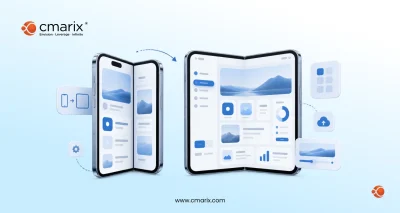
iPhone Duo App Development: How to Prepare Your iOS App for Apple’s Foldable iPhone
iOS App Development Cost Breakdown 2026: iPhone App Budget and Estimates for Startups


Supabase SwiftUI Integration: Building a Modern Backend for Your iOS App
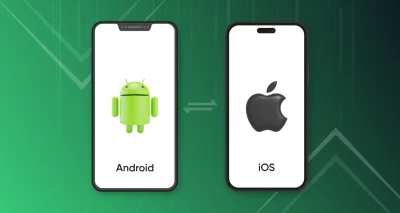
A Comprehensive Guide on Mastering the Art of Converting Android to iOS App or Vice Versa
Frequently Asked Questions About Hiring iOS Developers
- What does an iOS developer do?
An iOS developer builds and maintains native applications for Apple platforms using technologies such as Swift, SwiftUI, UIKit, APIs, and Apple frameworks.
- How do I hire an iOS developer from CMARIX?
The process includes sharing your requirements, reviewing matched developer profiles, interviewing shortlisted candidates, and selecting and onboarding your preferred developer.
- Can I interview an iOS developer before hiring?
Yes. You can directly interview shortlisted developers to assess their Swift expertise, project experience, architecture knowledge, communication, and project fit.
- What skills should I look for when hiring an iOS developer?
Key skills include Swift, SwiftUI, UIKit, Swift Concurrency, REST APIs, architecture, data persistence, Git, testing, and App Store distribution. Senior roles may also require Core ML, HealthKit, StoreKit, CI/CD, security, and Objective-C.
- How much does it cost to hire an iOS developer?
Cost depends on developer seniority, application complexity, integrations, existing codebase, project duration, engagement model, and working-hour overlap. Share your requirements with CMARIX for a customized estimate.
- Can I hire an iOS developer hourly?
Yes. CMARIX supports hourly hiring, full-time monthly developers, and project-based development.
- Should I build my app using SwiftUI or UIKit?
New applications often benefit from SwiftUI, while existing UIKit applications may not require a complete rewrite. The right approach depends on deployment targets, UI complexity, dependencies, and your product roadmap.
- Can CMARIX migrate Objective-C to Swift?
Yes. Objective-C applications can be migrated incrementally, keeping stable functionality in place while introducing Swift progressively.
- Can iOS developers integrate AI models?
Yes. AI functionality can use Core ML, Vision, Apple Foundation Models, cloud AI services, and third-party AI APIs. The appropriate approach depends on privacy, latency, model size, cost, and device requirements.
- Does CMARIX provide post-launch iOS maintenance?
Yes. Ongoing support can include bug fixes, Apple platform compatibility, SDK upgrades, security updates, crash resolution, performance optimization, App Store releases, and new features.
Let's Launch Your Business.
Your unique conceptual workflows will be cleanly crafted into an elite digital system by our specialized engineers.