



Quick Summary: Travel apps are still among the most crowded categories in app stores, but most of them solve the same three problems: book something, find something, and translate something. The ideas below split into three groups: booking-and-money apps, discovery-and-guidance apps, and the newer AI-and-sustainability apps that are pulling ahead in 2026. Each of these travel app ideas includes what it needs to work, not just what it should do.
Open any app store and search “travel,” and you’ll get a wall of near-identical booking engines fighting over the same flight-and-hotel searches Booking.com and Expedia already dominate. That’s the wrong fight for a startup to pick. The travelers actually worth building for aren’t looking for another place to search flights — they’re stuck on something smaller and more specific: a payment that won’t clear abroad, a language barrier at a market stall, a city with no obvious way to get from the airport to the hotel. Those narrow, unglamorous problems are where a small team can actually win, and where the ideas below are pointed.
The Market Is Bigger Than The App Store Makes It Look
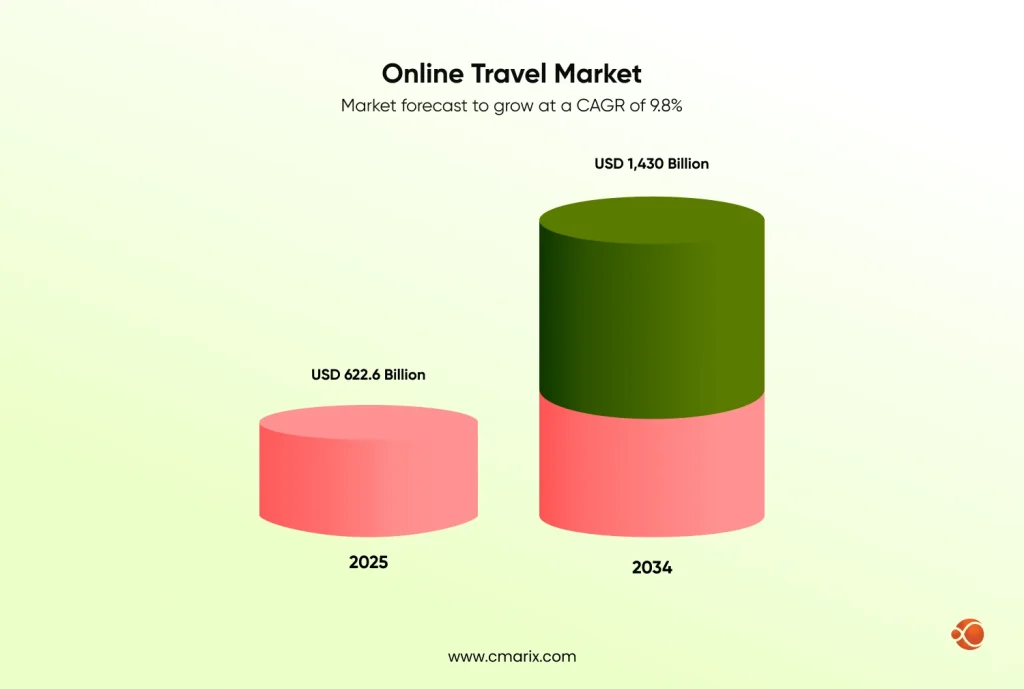
The global online travel market size reached USD 622.6 billion in 2025 and is expected to reach USD 1.43 trillion by 2034, representing an impressive CAGR of 9.75% for 2026-2034. The majority of the current online travel app market share is held by the Asia Pacific region (31.8%). Some of the key drivers behind this increase in demand in the online travel market include improved high-speed internet connectivity, a growing number of business travelers, and the rising popularity of solo travel.
How to Choose a Future-Proof Travel App Idea
A traveler downloads five or six apps before a trip and deletes most of them within a month of getting home. The problem usually isn’t the idea — it’s that the app tries to be a mini-OTA instead of solving one specific frustration. Given that mobile device users consistently account for 62% to 64% of worldwide web traffic, a travel app built mobile-first, for one clear job, has a real shot at staying on someone’s phone past the first trip.
Before choosing a travel app idea, it is important to understand where it fits into the traveler journey. The strongest concepts focus on a specific need, whether it is trip planning, booking, navigation, local experiences, or post-trip engagement.
| Trip Stage | What Travelers Need | App Ideas That Fit |
| Planning | Budgeting, routes, itineraries | Cost-saving itinerary app, AI trip assistant, deal finder |
| Booking | Payments, accommodation, transport | Travel payment app, contactless hotel booking app |
| On the ground | Guidance, translation, transport, safety | Tour guide app, translation app, local transport app, roadside utility finder |
| After the trip | Community, reviews, sharing | Social travel app |
| Values-driven | Sustainability, authenticity | Eco-travel app, anti-tourist / local-first app |
Validate your concept and build a clear product roadmap.
Top 13 Travel App Ideas in 2026
1) A Real-Time, Cost-Saving Itinerary Planner
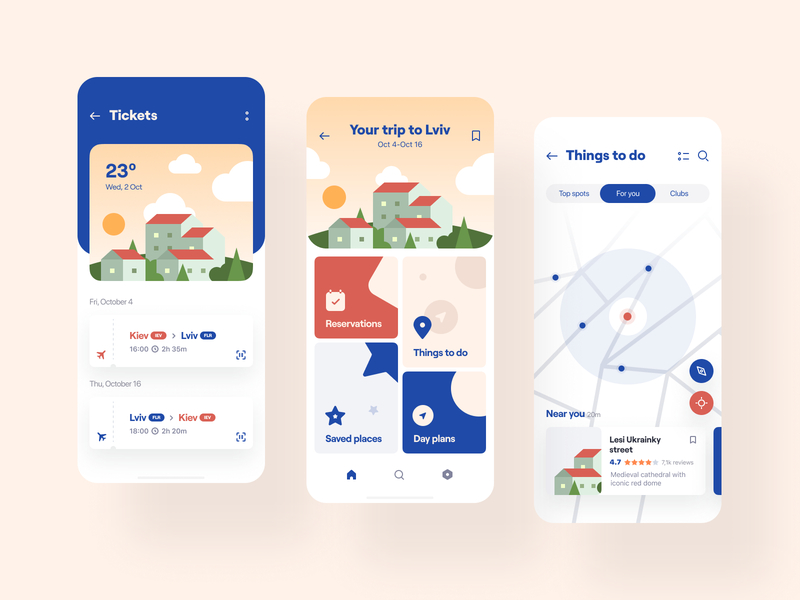
People do not usually cancel trips simply because they do not want to travel, but because the equation no longer works out. A travel itinerary app that dynamically reorganizes the schedule, finds cheaper time frames, and shows up offers as prices change can save a trip that an outdated spreadsheet would have ruined. Add up the cost as the traveler makes additions to his/her itinerary, and you end up creating a budgeting tool, just a special kind for travelers.
2) A Social Travel Networking App
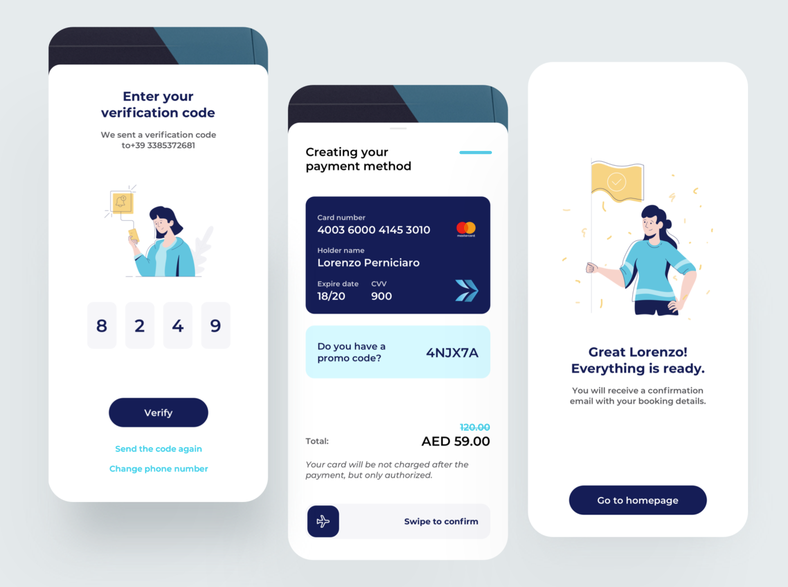
Travel forums are still effective, and there is actually a good amount of demand for them. Questions are asked, pictures are posted, and discussions take place over the “right” way to visit a city – but it gets lost among all the other posts on a social networking site meant for general use. With a social networking travel website that caters to a specific niche (solo travelers, van lifers, culinary trips, whatever), users have an incentive to log in to their accounts outside their trip.
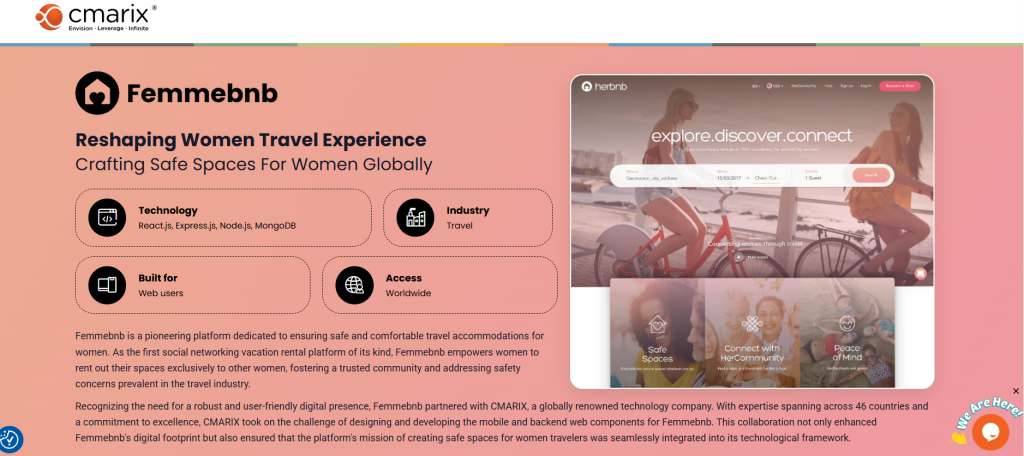
Femmebnb is one such example: a social networking holiday-booking website for women travelers, worked on by CMARIX. It combines community elements and safety-focused designs into the standard holiday booking process – clear evidence that “social plus travel” can be done successfully.
3) A Travel Payment and Expense App
As mobile payment apps get more common, a payment app built specifically for people on the move, currency conversion, digital travel card integration, ride-booking payments, and simple travel expense management tools rolled into one solves a genuinely annoying problem. Many hotel and restaurant chains already run their own travel cards; integrating those into a single wallet, and handling the country-by-country rules that trip up global travelers, is where the real product work is.
4) An AI-Powered Local Tour Guide
The classic tour guide app format goes something like: points of interest, ticket info, restaurant lists, traveler reviews. This still works, but an AI-powered travel assistant layered on top changes what it can do. Instead of a static list, the app can build a route on the fly based on how much time someone actually has, flag the local dish worth detouring for, and adjust when a museum turns out to be closed. This is also one of the lower-cost ideas on this list to prototype, which matters if you’re still working out travel app development costs before committing to a full build.
5) A Translation and Language Help App
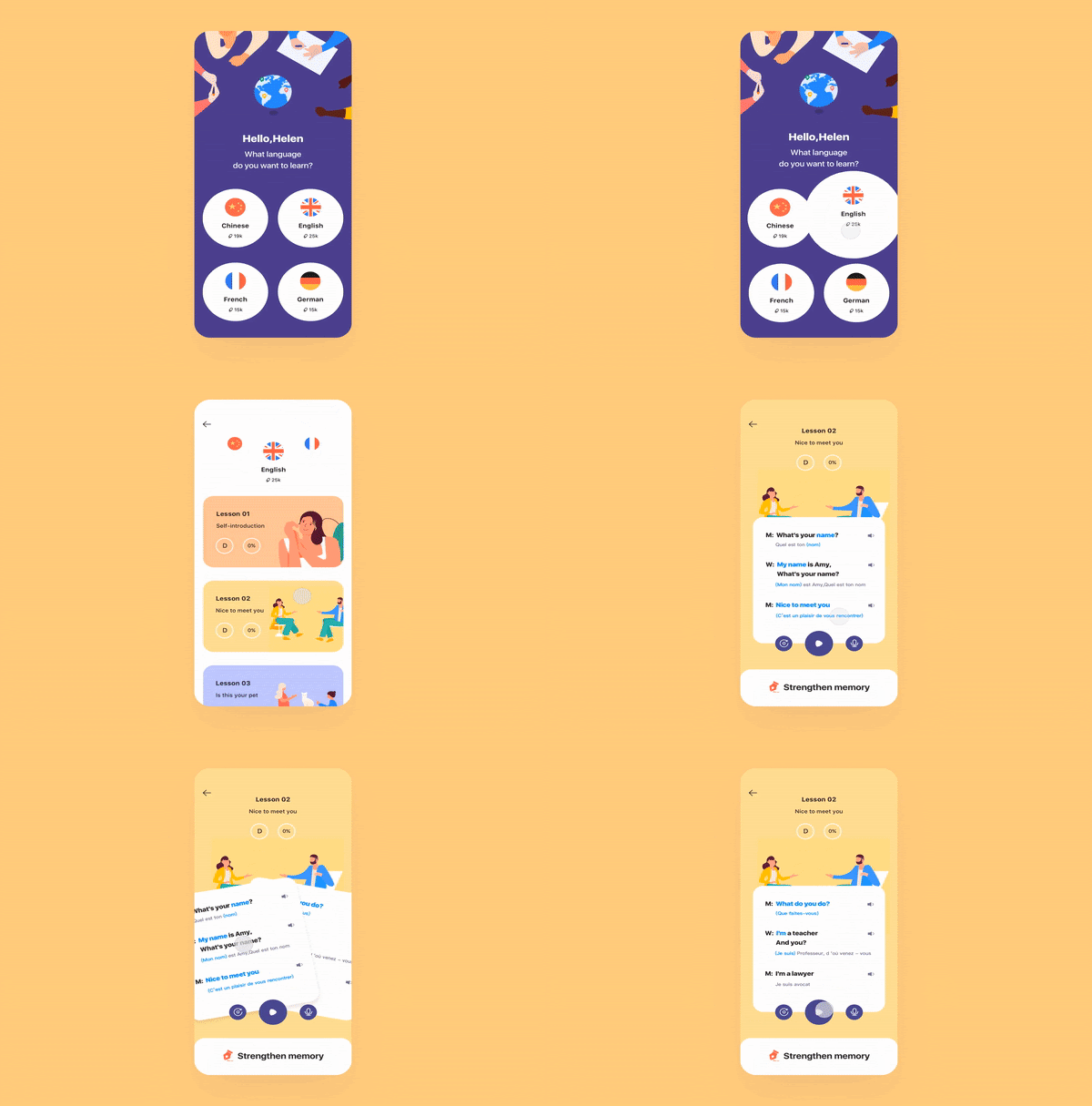
This is not a novel concept, but this is certainly underdeveloped. Voice translation, offline capabilities, and scanning text with the phone camera are now the bare minimum required to stand out, not vice versa. Where you can still differentiate yourself is the speed and efficiency of processing in the presence of noise, such as a train station or market.
6) A Weather Forecast App Built for Travelers
The weather application will tell you the overall temperature. The travel application will tell you how to pack for the trip because it will be in a climate that’s very different from where you live. It will warn you about rain that might ruin your outdoor activities and adapt its suggestions based on regions and not cities. The application is very focused, which makes it quite inexpensive to develop.
7) A Local Public Transport Access App
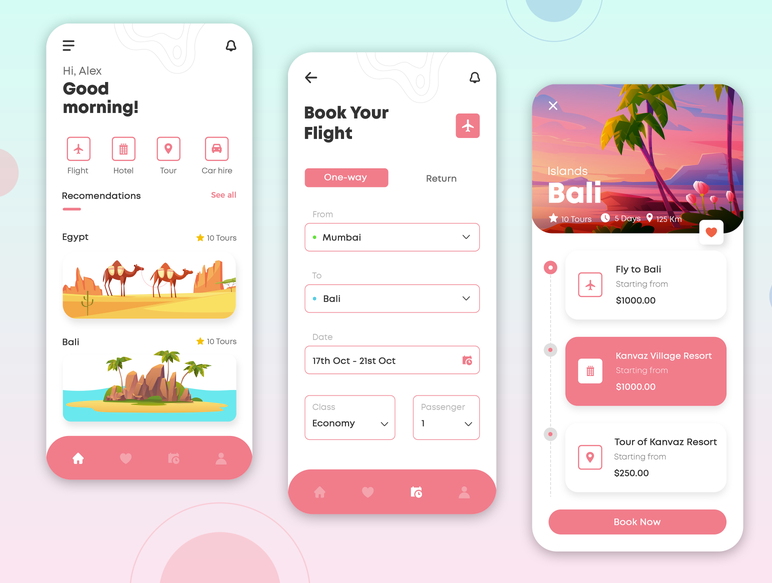
Getting overcharged by a cab in an unfamiliar city, when a metro stop was two minutes away, is one of the most common travel complaints. A geolocation-based tourism app that surfaces car-sharing, bike rentals, intercity buses, train routes, and passes, and tracks which stops a traveler has already visited — turns “I don’t know this city” into a solvable problem rather than a source of anxiety.
8) A Deal Finder / Travel Marketplace App
Shopping is part of most trips, and travelers are already primed to look for a deal. A deal finder built around a travel marketplace business model- local vendors and travel brands paying for placement, travelers getting real-time notifications on discounts and new arrivals- can monetize on both sides without charging the end user directly.
9) A Roadside Utility Finder (Restroom, Gas Station, Rest Stop)
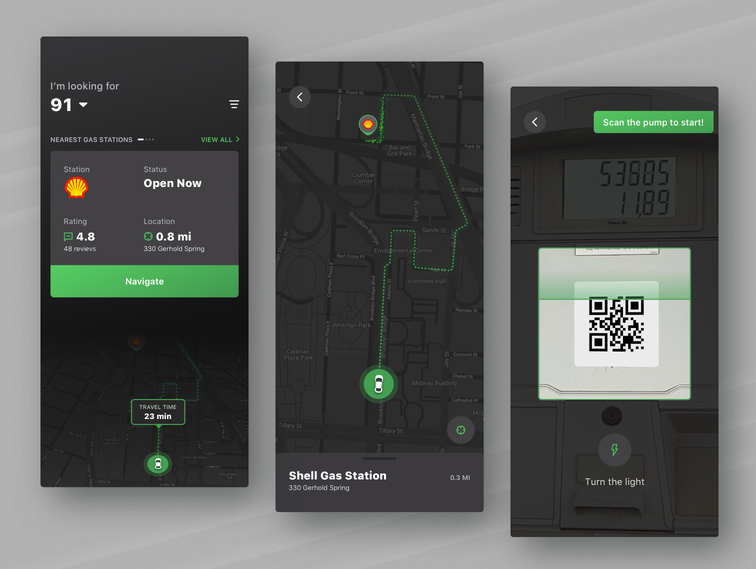
Unglamorous, but truly practical, particularly for a family road trip. An app that helps plot restrooms, fueling stations, and auto repair garages, along with the next train or flight connection and alternative routes, is a gap that larger travel apps overlook, since this isn’t where booking revenue comes from.
10. An AI Trip-Planning Assistant With Personalized Recommendations
This is the idea getting the most investment right now, and for good reason. An AI-powered travel assistant that learns from past trips and in-app behavior to deliver personalized trip recommendations, not just “top 10 things to do,” but a plan shaped around whether someone travels slowly or tries to pack in six cities in five days, is a different product from a generic guide. Read more on how CMARIX approaches this in AI in the Travel Industry, and pair it with a dedicated AI software development team if the personalization engine is the hard part of your roadmap.
11. A Sustainable and Eco-Friendly Travel App
Sustainable and eco-friendly travel solutions have moved from a niche interest to a real purchasing filter for a meaningful slice of travelers — carbon-footprint estimates per route, eco-certified accommodation filters, and low-impact activity suggestions. It’s a smaller addressable market than mainstream booking, but the users who care about this tend to be loyal and vocal, which is worth more than raw download numbers in the early stage.
12. A Contactless Hotel Booking and Check-In App
Contactless hotel booking features — digital key access, mobile check-in, in-app requests instead of a front-desk call — were a pandemic-era convenience that stuck around because they’re just faster. Building this as a layer that plugs into existing property-management systems, rather than trying to replace them, is the realistic path for a startup here.
13. An Anti-Tourist / Local-First Travel App
This one is the latest addition to our list, and therefore it warrants an independent discussion. The Anti-Tourist App is meant to lead visitors to places that are not often photographed but are frequented by residents, in contrast to popular apps that cater to the popular. This one works better for tourists sick of lining up to take the same picture others have already taken, and it usually fosters a sense of loyalty among users.
What It Actually Takes to Build An Efficient Online Travel App Platform
None of these ideas live or die on the concept alone — they live or die on execution: how fast the app feels, how well it handles being offline on a train with no signal, and how cleanly it’s built to scale once the first thousand users show up.
Understand the Build Before You Commit to an Idea
It helps to look at what a build actually involves before picking one of these and running with it. CMARIX has broken that process down in the mobile app development process — worth reading before you scope timelines or a team. If the idea you’re drawn to leans web-first rather than mobile-first (the social travel app or deal marketplace, for instance), web application Ideas is worth a look too, since the build priorities shift.
Budget for What the App Actually Does, Not Just What It Looks Like
Cost is the variable people underestimate most. A travel app with payment or booking features carries roughly the same engineering weight as a fintech or marketplace product, not a simple content app — worth comparing against the cost of developing a social media app or a mobile banking app if the payment layer is doing much of the heavy lifting. That’s usually where budgets go sideways — not the UI, the money-moving parts underneath it.

Conclusion
All the ideas listed above are merely a starting point and not a complete specification. The travel applications that will survive until 2026 are those that select just one problem to address, such as a confusing payment process, language barriers, cities without a clear transportation map, and resolve it before attempting to become a jack of all trades. If any of the above-listed are to compete in your current market and need a dedicated full-stack team to research the issue in detail, then it is definitely worth considering prior to development.
Frequently Asked Questions
What are the best innovative travel app ideas?
Right now, the ideas gaining the most traction are AI-powered trip assistants, anti-tourist/local-first guides, and travel expense-management tools — all three solve problems that show up during a trip, which is where most existing travel apps stop paying attention.
How do I validate a new travel app idea?
Talk to the specific traveler segment you’re targeting before building anything — a Reddit thread or a handful of interviews will tell you fast whether the frustration you’re solving is common or just something that annoyed you once. Build a narrow prototype around the single core feature, not the full feature list, and see if people actually use it on a real trip.
What features make a travel app successful?
Offline access, fast load times on bad connections, and a narrow, clearly defined use case matter more than a long feature list. See key features of a successful travel app for the fuller breakdown.
How can AI improve travel apps?
AI should be used to personalize recommendations, make dynamic changes to itineraries as needed, and support natural-language trip planning without filters.
How do travel apps make money?
There are four revenue streams that most travel apps leverage: commissions from bookings, advertising/sponsored placements, premium features/subscriptions, and partnerships with hotels, airlines, or local vendors.
What are the biggest challenges in travel app development?
The offline work issues, integration with third-party booking and payment APIs, and a value proposition sufficient to prevent users from uninstalling the app after the first journey are the three issues that pose problems for many newbies.
Do I need a large budget to start a travel app?
No, the budget is not a big deal if you go for a narrow, single-function app (a translation app, a roadside assistance app, or a specific social network). But the price increases when payments or AI-based personalization come into the equation.
What is an anti-tourist or local-first travel app?
It’s an app built to route travelers toward neighborhoods, food, and experiences that locals actually use, rather than the most photographed or most searched spots — a deliberate move away from algorithm-driven popularity toward something that feels like a genuine local tip.