


Key Takeaways
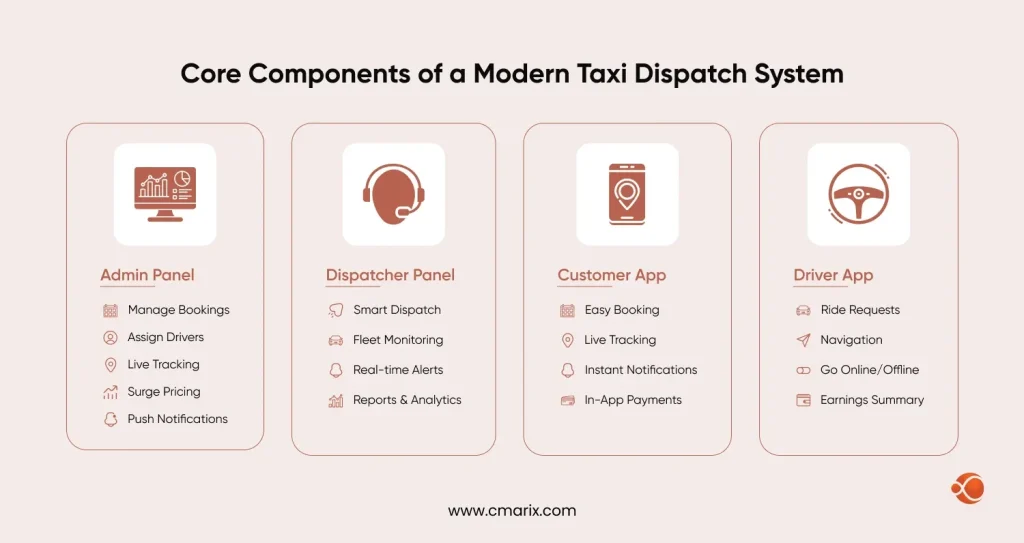
- A full dispatch software setup will have 4 main components: admin panel, dispatcher panel, customer mobile application, and driver mobile application.
- Custom builds typically take 12–20 weeks; white-label solutions launch faster but limit customization.
- The global taxi dispatch software market is forecast to grow from roughly $1.05 billion in 2026 to $6.49 billion by 2035, at a CAGR of nearly 22%.
- Cloud-based deployment now dominates the market, accounting for the large majority of new installs.
In today’s highly competitive market, the taxi industry has undergone significant changes with the advent of technology, and mobile app development services have played a crucial role in driving innovation. One such innovation is taxi dispatch software, which has revolutionized how taxi companies operate by streamlining their processes and improving the customer experience.
The taxi dispatch software has gained immense popularity thanks to the advantages it offers to taxi companies and their users. It improves the user experience by ensuring a hassle-free ride booking and ride experience, including features such as real-time tracking, instant ride booking, and communication with the driver. Mobile app development services play a significant part in creating all these features and making the software easy to use. Entering 2026, the question changes from “Do we need to digitalize?” to “How fast can we modernize?”, and that’s exactly what this guide addresses.
The State of Taxi Dispatch Software Market in 2026
The global market for taxi dispatch software is expected to grow significantly in the coming years, driven by increasing demand for on-demand transportation services, urbanization, and the rise of ride-hailing platforms such as Uber and Lyft. As a result, many entrepreneurs and businesses are looking to build a ride-sharing app like Grab or a taxi dispatch system to tap into this lucrative market.
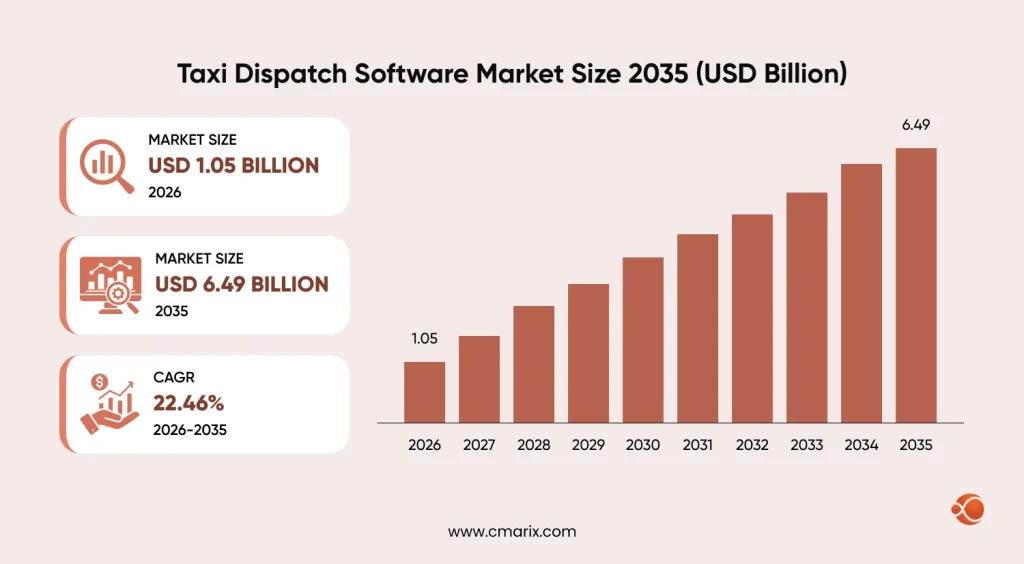
According to a recent taxi dispatch software market study, the market was valued at about $1.05 billion in 2026 and is projected to reach $6.49 billion by 2035, growing at a CAGR of around 22.46%. A separate industry forecast projects growth from roughly $634 million in 2024 to over $2.7 billion by 2033 at a 17.5% CAGR; either way, the direction is the same: rapid, sustained growth through the decade.
On the deployment front, cloud-based applications constitute more than 67% of the total deployment share, a trend corroborated by other research, where cloud-based applications top the list with a deployment share of 61%, followed by on-premises applications, which account for 39%. This is important for anyone planning to scope out a project in 2026, as a cloud-based project is no longer an option but a necessity. There is a growing demand for ridesharing services, and thus, a growing need for taxis to innovate their operations and service delivery.
What Is Taxi Dispatch Software?
Taxi dispatch software, also known as taxi cab dispatch software, is a system that enables taxi companies to manage their fleet efficiently by automating and streamlining dispatching, tracking, and monitoring. The software allows businesses to hire mobile app developers to create a customized solution and manage operations in real time, providing visibility into the location and status of vehicles, drivers, and passengers. It also facilitates seamless communication between drivers and passengers through the app.
Core Components of a Modern Taxi Dispatch System
Admin Panel
An admin panel is the backbone of any taxi dispatch system. It allows you to manage bookings, assign drivers based on their ratings and previous ride comments, and track both drivers and customers in real time. With SaaS app development, the admin panel becomes a dynamic platform that lets you handle operations seamlessly and provide your customers and drivers with a hassle-free ride. You can also push ride status notifications and manage surge pricing during peak hours.
Dispatcher Panel
The dispatcher panel helps ensure that your ride-hailing operations run smoothly. It provides a smart, unified dashboard to manage ride-related dispatches and monitor your fleet from a single screen. With SaaS app development, you can get advanced reports and analytics across multiple formats for complete operational insight.
Customer App
The customer app should be intuitive enough for first-time users. Once a rider enters their destination, the app shows the estimated price and travel time. With proper SaaS architecture, the customer app provides instant notifications, live driver tracking, and seamless in-app payments.
Driver App
The app designed for drivers will allow all drivers to work from a single platform, where they can use navigation features and provide rides efficiently. The drivers can accept or decline ride requests, go off duty, and keep track of earnings all in one place.
How Long Does It Take to Build a Custom Taxi Dispatch App?
A typical custom build moves through four phases: discovery & UI/UX design (2–4 weeks), core MVP development covering the admin, dispatcher, customer, and driver apps (8–14 weeks), QA and pilot testing (2–3 weeks), and launch with post-launch support.
Altogether, most projects fall within the 12–20-week range, depending on how many third-party integrations (maps, payment gateways, SMS) are in scope. White-label solutions can significantly shorten this timeline since the dispatch logic and core modules are prebuilt.
What Does Taxi Dispatch Software Cost in 2026?
Taxi dispatch software costs vary significantly based on your business model, platform requirements, integrations, and level of customization. A basic dispatch solution for a local fleet costs far less than an enterprise platform supporting multiple cities, dynamic pricing, AI-powered dispatching, and real-time analytics.
| Project Scope | Typical Development Cost (USD) | Suitable For |
| MVP Dispatch Platform | $25,000–$50,000 | Startups validating a business idea |
| Standard Taxi Dispatch Solution | $50,000–$120,000 | Regional taxi companies and growing fleets |
| Enterprise Taxi Dispatch Platform | $120,000–$300,000+ | Multi-city operators, ride-hailing platforms, large transportation businesses |
Teams evaluating Flutter for the driver and rider apps should also weigh framework-level cost drivers : our breakdown of Flutter app development cost factors is a useful companion read before scoping a dispatch project.
7 Benefits of Taxi Dispatch Software
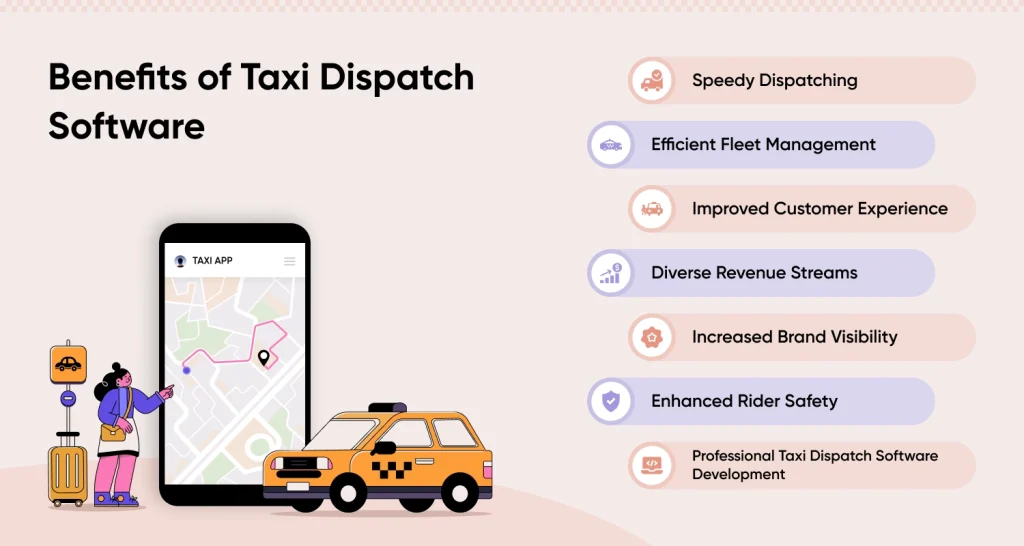
1. Speedy Dispatching: With fully automated taxi dispatch software, the dispatching process becomes much faster, with no human intervention, leading to a hassle-free ride experience and eliminating the miscommunication common in legacy systems.
2. Efficient Fleet Management: Control your fleet from one place, receive real-time analytics, discover high-demand areas, and use surge pricing for maximizing profits.
3. Improved Customer Experience: Features like multilingual customer care, live tracking, and the favorite driver feature make it easy for customers to prefer your taxi services.
4. Diverse Revenue Streams: Other than fares paid by riders, commission, advertising, and surge pricing are ways that your dispatch software can earn you money.
5. Increased Brand Visibility: A white-label taxi dispatch software solution helps you expand your taxi business’s reach and establish brand presence across new regions faster than building from zero.
6. Enhanced Rider Safety: Features like geo-fencing and real-time tracking give you full control over your cabs and keep riders safer.
7. Professional Development Matters: To fully realize these benefits, dispatch software needs to be built by a team that specializes in car & transportation app development, ensuring the end product is robust, scalable, and aligned with your actual operating model.
AI-Powered Features Every Modern Taxi Dispatch Platform Should Have
Artificial intelligence is changing how taxi dispatch systems operate. Instead of simply assigning the nearest available driver, AI analyzes traffic, demand patterns, driver availability, and historical ride data to make smarter decisions in real time. The result is faster dispatching, reduced operational costs, improved fleet utilization, and a better experience for both passengers and drivers.
| AI Feature | Business Value |
| Smart Driver Dispatch | Matches riders with the most suitable driver using location, traffic conditions, driver ratings, and availability. |
| Demand Forecasting | Predicts high-demand areas and peak hours, allowing operators to position drivers before requests increase. |
| Dynamic Fare Optimization | Automatically adjusts pricing based on real-time demand, weather, traffic, and local events to maximize revenue. |
| Intelligent Route Optimization | Recommends the fastest and most fuel-efficient routes using live traffic and road conditions. |
| AI Fraud Detection | Detects suspicious ride requests, payment fraud, fake accounts, and unusual booking behavior before they impact operations. |
| AI Customer Support | Uses conversational AI to answer common customer questions, track rides, and handle booking modifications around the clock. |
Today’s taxi firms integrate all these elements with cloud-enabled ride dispatch software to become more efficient and stay ahead of the competition. Though AI technologies are not mandatory when developing an MVP, including them in your taxi software can greatly boost the precision of ride matching, delighting both customers and drivers, and increasing profitability.
Best Example for Taxi Dispatch Software
One example of a taxi dispatch system is Uber’s driver app, used by drivers providing rides on the Uber platform. It includes real-time ride requests, navigation, earnings tracking, and in-app passenger communication , a useful reference point for what a mature dispatch ecosystem looks like at scale.
Closer to home, our own portfolio includes the Smart Shuttle mobile app, built for the transport and logistics space, and a self-drive car rental platform running on a microservices architecture — both reflect the same real-time dispatch, tracking, and fleet-coordination challenges that taxi dispatch software has to solve.
Should You Build Custom or Buy White-Label?
A custom build gives you full ownership of the codebase, unlimited customization, and no recurring licensing fees : ideal for businesses planning to scale into multiple cities or white-label the platform themselves later. A ready-made white-label taxi dispatch software gets you to market faster and costs less upfront, but comes with licensing constraints and shared infrastructure. The right call depends on your timeline, budget, and the degree of differentiation your operations need.
Common Challenges in Implementing New Dispatch Software
Cost remains the biggest barrier for smaller operators : industry research shows that over half of small taxi businesses cite budget limitations as a reason for delaying full-scale dispatch deployment. Beyond budget, the most common implementation hurdles are: migrating data and workflows off legacy radio-dispatch systems, achieving reliable real-time GPS accuracy across dense urban zones, getting drivers comfortable with a new app-based workflow, and meeting local payment and data-privacy compliance requirements. Planning for these upfront, rather than treating them as launch-week surprises, is what separates smooth rollouts from stalled ones.
How Can CMARIX Help You With Taxi Dispatch Software Development?
Taxi dispatch software is a game-changing technology revolutionizing the transportation industry. With rising demand for reliable, efficient taxi services, adopting this software has become essential for improving operations, customer experience, and profitability.
At CMARIX, we understand the nuances of taxi dispatch systems and have a team of expert developers who build custom solutions tailored to each client’s operating model. Our taxi dispatch app development services are designed to provide taxi companies with a comprehensive solution that streamlines operations and strengthens the bottom line.
Some of the salient capabilities that make our taxi dispatch software stand out:
- Increase Ride Rate: Real-time tracking and automatic dispatching mean faster response times, higher customer satisfaction, and stronger loyalty.
- Reduce Operational Costs: Streamlined dispatch and smarter vehicle management reduce time, effort, and operating expenses.
- No More Missed Pick-ups: The system automatically dispatches the nearest available cab, minimizing wait times and missed rides.
- Identify High and Low Performers: Detailed analytics help you reward top drivers and coach underperforming ones.
- Get Analytical Insights: Ongoing reporting on driver performance, customer feedback, and KPIs supports better, faster decisions.

Conclusion
The modern taxi service industry has evolved digitally to streamline the entire operational workflow. Local transportation firms have been able to increase efficiency and user value through this digital shift in dispatch systems.
The choice between using a pre-existing package and developing one will depend on the business’s growth stage, but whichever route is taken, proper implementation will lead to enhanced features, faster delivery, and increased driver and rider satisfaction.
FAQs About Taxi Dispatch Software Development
How Does a Taxi Dispatch Software Help to Grow Your Taxi Business?
A taxi dispatch software can help grow your taxi business in many ways. It provides real-time tracking of vehicles and dispatches the nearest available cab to the customer, leading to faster response times and increased customer satisfaction. The software also optimizes routes, which reduces fuel consumption and increases driver efficiency. Additionally, it provides a centralized platform to manage all aspects of the taxi business, including booking, payments, and driver management.
Is There Any Taxi Management Software for Opening a Taxi Business?
Yes, there are many taxi management software solutions available in the market that are specifically designed for opening and managing a taxi business. These software solutions offer features like real-time tracking, automatic dispatching, online booking, payment processing, and driver management. Examples of such software include TaxiCaller, CabStartup, and TaxiMobility.
How Does a Taxi Dispatch Software Benefit Taxi Owners?
A taxi dispatch software can benefit taxi owners in many ways. It helps improve the efficiency of dispatching and managing vehicles, which leads to increased revenue and reduced operating costs. It also provides real-time data and analytics, allowing owners to make informed decisions and optimize their operations. The software also enhances customer experience by providing features like real-time tracking, online booking, and payment processing, which can lead to increased customer satisfaction and loyalty.
How Would I Digitize My Cab Business?
To digitize your cab business, you would need to invest in a taxi dispatch software solution that provides features like real-time tracking, automatic dispatching, online booking, payment processing, and driver management. You would also need to equip your vehicles with GPS-enabled devices to track their location and monitor driver behavior. Additionally, you would need to develop a mobile app for your customers to book rides and pay for them digitally. Finally, you would need to integrate your software with third-party services like payment gateways and mapping services.
What Is the Growth Rate of the Taxi Dispatch Software Market?
The growth rate of the taxi dispatch software market is expected to be significant in the coming years, with a compound annual growth rate (CAGR) of around 13% from 2021 to 2028. This growth is being driven by increasing demand for ride-hailing services, rising urbanization, and advancements in technology. The market is also being influenced by factors like the growing popularity of electric vehicles, the increasing adoption of cloud-based solutions, and the rise of autonomous vehicles.