




Quick Summary: Healthcare providers now run on dozens of overlapping software systems, and picking the wrong one slows down patient care instead of improving it. This guide breaks down 17 types of healthcare software, what each one actually does, and where the market is headed in 2026. You will also find the latest adoption numbers and market data so you can make a more informed call before you build or buy.
The selection process for software for use in the healthcare industry was previously based on choosing from a few software packages. Today, it is an exercise of selecting from a large number of software that claim to address similar issues of disjointed patient information, poor record keeping, and understaffing.
That complexity has only grown. Hospitals juggle EHRs, billing platforms, scheduling tools, and now AI-driven diagnostics and remote monitoring systems, often built by different vendors that were never designed to talk to each other. Knowing the different types of healthcare software, and what each one is actually built to solve makes it a lot easier to choose the right combination instead of bolting on tools that create more work.
What Is Healthcare Software?
Healthcare software covers any computer programs used in clinics, hospitals, labs, and pharmacies to manage administrative, clinical, or financial work. That includes everything from a digital patient chart to a billing platform to an AI tool that flags an abnormal scan. Some of it is patient-facing, like a portal where someone checks their lab results. Some of it runs entirely behind the scenes, like the clinical information systems that route data between a lab and an EHR.
The common thread is that it replaces a manual, paper-based, or disconnected process with something faster, more accurate, and easier to track. Whether you’re looking at a full healthcare ERP software suite or a single-purpose scheduling tool, the goal is the same: to free up clinical staff to spend more time on patients and less time on paperwork. A healthcare software solutions partner can help you sort through the options, but it still helps to understand the landscape yourself first.
Healthcare Software Market Size and Growth in 2026
The numbers behind this shift are hard to ignore. The world digital health market is experiencing rapid expansion, with multiple healthcare IT reports forecasting it to exceed USD 500 billion and reach over USD 573.53 billion by 2030. Healthcare software solutions are no longer a back-office upgrade; they’re a core part of how care gets delivered and paid for. Cloud delivery is driving a lot of that growth.
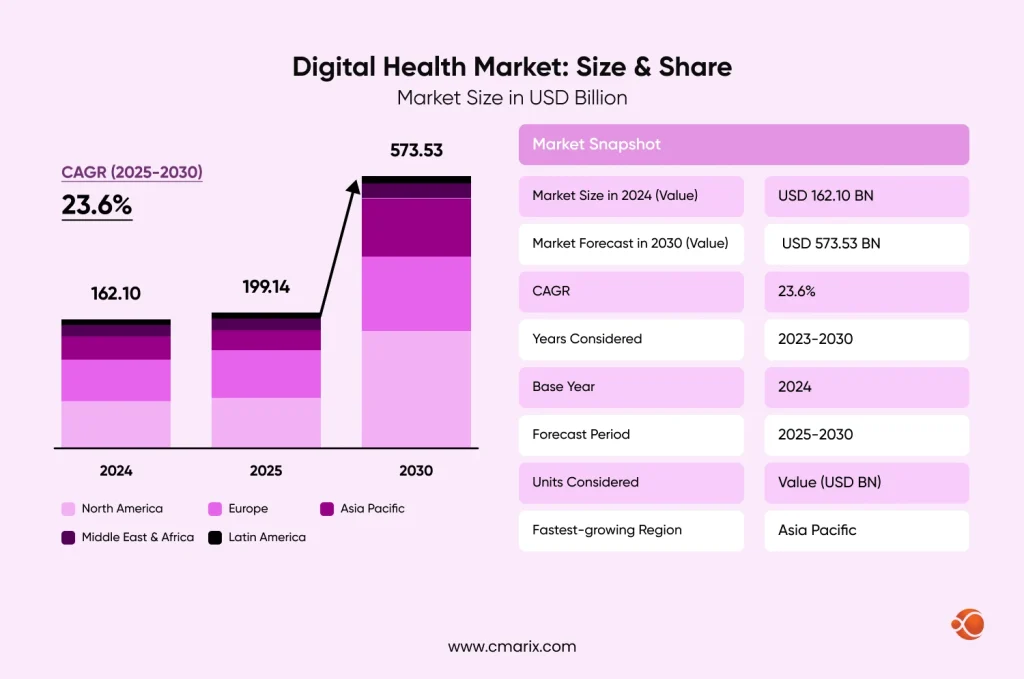
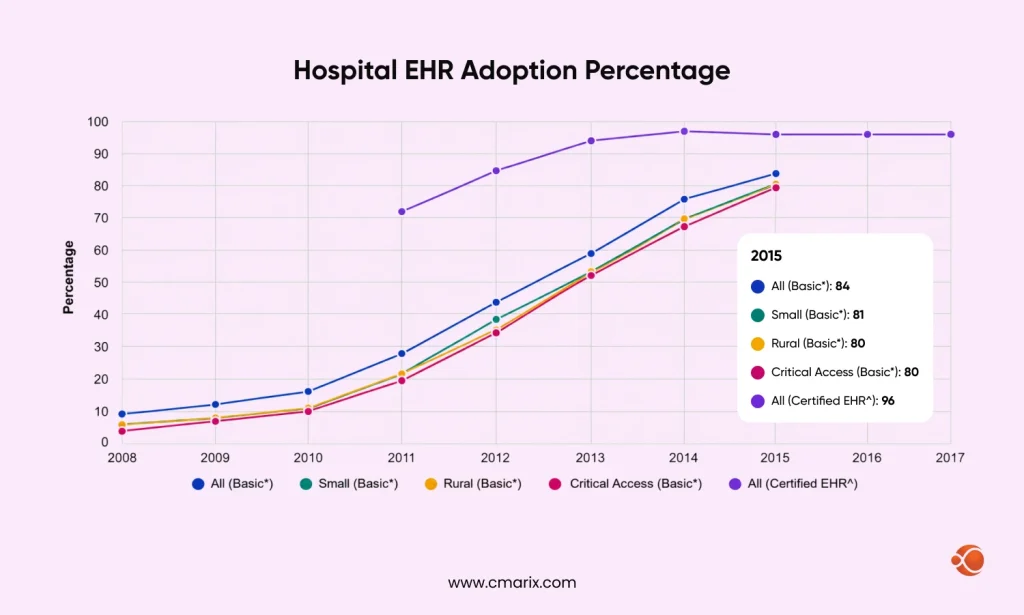
The healthcare Software-as-a-Service market alone is projected to grow at a CAGR of 16.94%, as providers move away from on-premises systems toward platforms that update faster and scale more easily. Adoption has already reached a tipping point on the clinical side, too. As of recent federal data, 96% of non-federal acute care hospitals have possession of an EHR certified by HHS, a percentage that has held steady through 2017 and since.
Telehealth tells a similar story from the patient side. Telehealth use is 38 times higher than it was before the COVID-19 pandemic, a shift that permanently changed how patients expect to connect with their doctors. Essential software products driving this expansion include:
- Telemedicine systems
- Electronic Health Records (EHR) and EMR platforms
- Healthcare administration and ERP systems
- AI-powered diagnostic tools
- Remote patient monitoring platforms
From clinics and hospitals to pharmacies and diagnostic labs, nearly every part of the healthcare system is now investing in some form of digital infrastructure to stay compliant and competitive.
A short conversation can save months of picking the wrong platform.
17 Types of Healthcare Software Used in Hospitals and Clinics
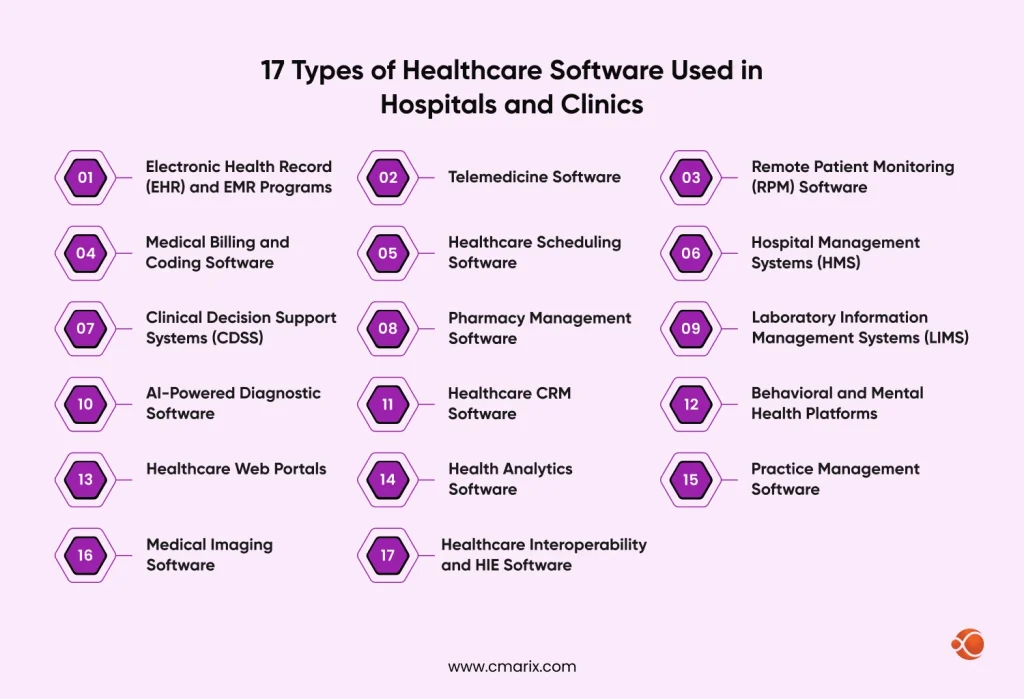
Here’s a quick reference before we go section by section. This is far from a complete list of every healthcare software systems category out there, but it covers the ones doing the most work across hospitals, clinics, and practices today.
| Software Type | Primary Use | Who Uses It Most |
| EHR/EMR | Centralized patient records | Hospitals, clinics |
| Telemedicine | Remote consultations | Providers, patients |
| Remote Patient Monitoring (RPM) | Continuous health tracking | Chronic care programs |
| Medical Billing & Coding Software | Claims and reimbursement management | Billing departments |
| Healthcare Scheduling Software | Appointment management | Front desk staff, patients |
| Hospital Management System (HMS) | Cross-department operations and administration | Hospital administrators |
| Clinical Decision Support System (CDSS) | Treatment recommendations and clinical guidance | Physicians |
| Pharmacy Management Software | Medication dispensing and inventory management | Pharmacies |
| Laboratory Information Management System (LIMS) | Sample tracking, testing, and result management | Diagnostic laboratories |
| AI-Powered Diagnostic Software | Faster, data-driven diagnosis | Radiology and pathology teams |
| Healthcare CRM Software | Patient relationship and communication management | Marketing and care teams |
| Behavioral Health Platforms | Mental health care delivery and management | Therapists, counselors, patients |
| Healthcare Web Portals | Patient engagement and self-service access | Patients |
| Health Analytics Software | Data analysis and operational insights | Hospital leadership and management |
| Practice Management Software | Day-to-day administrative and operational tasks | Independent practices and clinics |
| Medical Imaging Software | Diagnostic image storage, viewing, and management | Radiologists |
| Interoperability / Health Information Exchange (HIE) Software | Cross-system healthcare data sharing | IT teams and compliance departments |
Electronic Health Record (EHR) and EMR Programs
EHR systems are still the backbone of most healthcare software stacks. They digitize patient charts so providers can pull up history, medications, and lab results in seconds instead of digging through paper files. For multi-location practices, EHR software development for healthcare also means customizing the system to fit workflows that range from a single clinic to a full hospital network.
Key Features:
- Stores patient data like medical history, lab results, and prescriptions
- Facilitates information sharing between healthcare providers.
- Supports real-time access to critical medical information during care
Telemedicine Software
Telemedicine software enables providers to conduct consultations from a distance, making it one of the most apparent transformations in the process of providing health care services. In the age of the global pandemic, this technology is more than just a temporary solution – it has become a lasting platform for consultations.
Key Features:
- Video and audio consultations with healthcare providers
- Integration with EHR systems for seamless access to patient data
- Remote monitoring features for chronic disease management
Curious where this is headed next? AI is changing how these platforms function, not just how they connect calls. Our breakdown of AI telemedicine chatbot development covers how intake, triage, and follow-up are increasingly automated before a clinician even joins the call.
Remote Patient Monitoring (RPM) Software
RPM software collects patient health data, like blood pressure, glucose, or weight, outside of a clinical setting and sends it back to a care team in real time. It’s grown from a niche tool into a financially viable category, largely because of reimbursement changes that make it easier for providers to bill for ongoing monitoring instead of just in-person visits.
Key Features:
- Data Collection from devices continuously
- Alerts that trigger automatically if readings are not within a safe range
- Documents that comply with billing and patient-care processes
Medical Billing and Coding Software
Medical billing and coding software handles the financial side of patient care, translating diagnoses and procedures into claims that get submitted to insurers. It’s one of the more unglamorous categories on this medical software list, but it directly affects whether a practice gets paid on time.
Key Features:
- Submission of claims automatically to insurance companies
- Up-to-date status of the claims
- Integration with practice management and EHR systems to reduce manual mistakes
Healthcare Scheduling Software
Scheduling software handles the back-and-forth of booking, confirming, and rescheduling appointments, work that used to eat up hours of front-desk time. Done well, it also cuts down on no-shows by keeping patients in the loop automatically.
Key Features:
- Automated appointment reminders for patients
- Online self-booking options
- Real-time calendar sync across providers to avoid double-booking
Hospital Management Systems (HMS)
Hospital management systems tie together the financial, clinical, and administrative sides of running a hospital. Instead of separate tools for billing, labs, and pharmacy, an HMS connects departments so information moves without manual re-entry. Many HMS platforms are now built on broader healthcare ERP software foundations to support multi-facility operations.
Key Features:
- Centralized patient admission, transfer, and discharge management
- Coordination between pharmacy, laboratories, and billing at the department level
- Reporting tools that are helpful for a hospital-wide operational overview
Clinical Decision Support Systems (CDSS)
CDSS tools sit alongside an EHR and provide physicians with evidence-based recommendations at the point of care, suggesting next steps, flagging drug interactions, or surfacing relevant patient history a provider might otherwise miss. This is one of the fastest-moving categories right now, with new billing structures emerging specifically for AI-assisted clinical decision support.
Key Features:
- Alerts for potential drug interactions or allergies
- Evidence-based treatment recommendations at the point of care
- Analysis of patient data to support diagnostic decisions
Pharmacy Management Software
Pharmacy management software handles inventory, prescription filling, and billing for pharmacies of every size. It helps pharmacists keep accurate records, avoid shortages, and reduce errors in how medications get dispensed.
Key Features:
- Inventory management and drug tracking
- Prescription processing and refill tracking
- Automated alerts for low stock and medication expiration
Laboratory Information Management Systems (LIMS)
LIMS software is built specifically for diagnostic and clinical labs, managing the full lifecycle of a sample from intake to results. It’s a distinct category from pharmacy software, even though the two sometimes get lumped together, because the workflow is built around sample tracking and regulatory compliance rather than dispensing.
Key Features:
- Automation in results entry and data analysis
- Sample tracking and chain of custody management
- Regulatory compliance with laboratory standards
AI-Powered Diagnostic Software
AI-powered diagnostic software uses ML to analyze medical data, lab values, imaging, or patient history and flag patterns a human reviewer might miss or take longer to catch. It doesn’t replace a physician’s judgment, but it narrows down what needs a closer look first.
Key Features:
- Pattern recognition across large volumes of clinical and imaging data
- Faster, earlier flagging of likely conditions
- Integration with EHR and imaging systems for full-context review
Healthcare CRM Software
Healthcare CRM software helps providers manage patient relationships the same way a sales team manages leads, just with a much higher bar for privacy and compliance. It tracks communication history, automates outreach, and helps practices stay in touch with patients between visits.
Key Features:
- Appointment and follow-up reminders, as well as prevention reminders
- Patient outreach and communication tracked in one place
- Segmentation software for targeting patients based on their illness or treatment phase
Behavioral and Mental Health Platforms
Behavioral health software has grown into its own regulated category instead of living as a sub-feature of general telemedicine. These platforms support teletherapy, progress tracking, and medication management for mental health and substance use care, with compliance requirements that differ from general medical telehealth.
Key Features:
- Secure video and messaging built for therapy sessions
- Progress tracking and standardized assessment tools
- Care coordination between psychiatrists, therapists, and primary care.
Healthcare Web Portals
Healthcare web portals are patient engagement platforms that provide people direct access to their own records, test results, and provider messaging. They shift some control back to the patient, letting them book appointments or refill prescriptions without calling the front desk.
Key Features:
- Direct messaging with care teams
- Secure access to personal health records
- Online appointment booking and prescription refill requests
Health Analytics Software
Health analytics software pulls data from EHRs, billing systems, and other sources to surface patterns that help leadership make better operational and clinical decisions. It’s less about any single patient interaction and more about spotting trends across an entire population or facility.
Key Features:
- Aggregation of data across multiple clinical and administrative systems
- Predictive information for resource planning and patient outcomes
- Dashboards built for hospital leadership and quality teams
Practice Management Software
Practice management systems automate the administrative side of running a clinic, billing, scheduling, and reporting, so staff spend less time on paperwork. It’s especially common among independent practices that don’t need the full scope of a hospital-grade HMS.
Key Features:
- Automated billing and claims management
- Simplified appointment scheduling
- Workflow tools for managing provider and staff schedules
Medical Imaging Software
Medical imaging software, often referred to as PACS or RIS, manages the storage, retrieval, and review of diagnostic images like X-rays, MRIs, and CT scans. Radiologists rely on precise, fast access to these images to diagnose and plan treatment accurately.
Key Features:
- Secure storage and retrieval of diagnostic images
- 3D imaging and reconstruction capabilities
- Integration with EHR systems for a full clinical context
Healthcare Interoperability and HIE Software
Interoperability platforms, often built around Health Information Exchange (HIE) standards, let different systems, EHRs, labs, pharmacies, and payers share data without manual exports or phone calls. As more healthcare IT infrastructure shifts toward FHIR-based standards, this category has moved from a nice-to-have to a baseline requirement for any new clinical software.
Key Features:
- Data exchange among disparate systems
- Elimination of redundant testing with a common patient database
- Coordination of referrals and care delivery among physicians
Getting the architecture right from day one saves you from a costly rebuild later.
Future Trends Impacting Healthcare Software in 2026
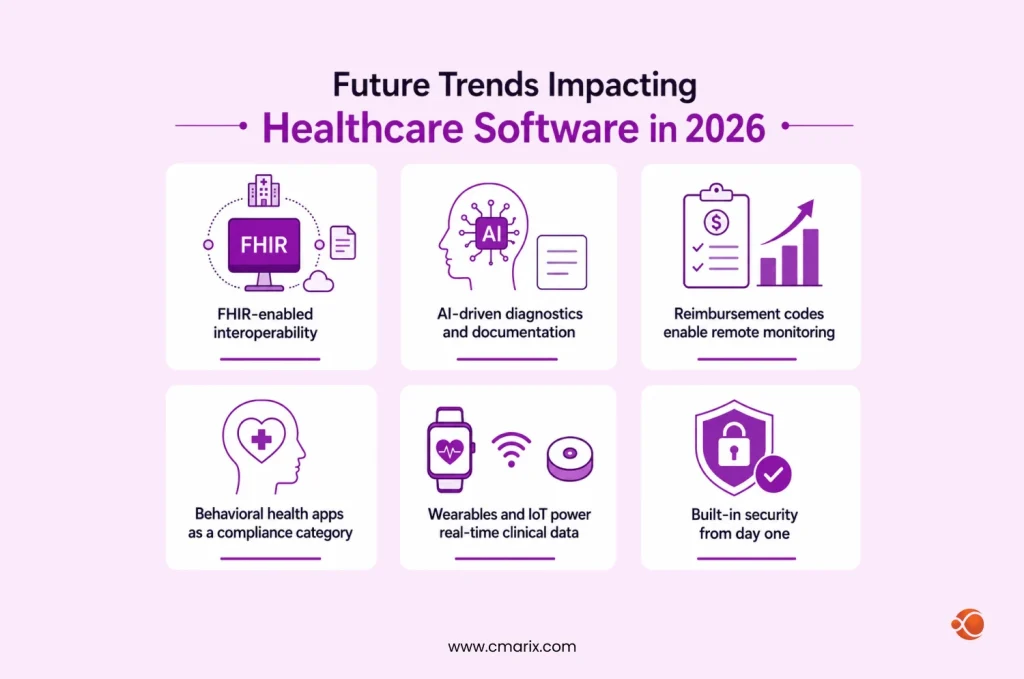
The categories above aren’t static; they’re shifting fast as new technology and reimbursement models reshape what’s possible. Our deeper look at healthcare technology trends covers these in more depth, but here’s what’s actively reshaping software decisions in 2026:
- FHIR-enabled interoperability as the normative baseline for all new build efforts
- AI-driven diagnostics and documentation tools transition from pilots to production environments
- Reimbursement codes expansion, ensuring the feasibility of remote patient monitoring
- Behavioral health applications are evolving to become their own compliance category
- Use of wearables and IoT is generating increased data for clinical applications in real time
- Built-in security at the time of development, not after the product launches

Why Choose CMARIX for Healthcare Software Development
Selecting the right combination from this list depends on your patient volume, compliance requirements, and how your existing systems need to talk to each other; that is exactly where a development partner with healthcare-specific experience makes a difference.
CMARIX has worked across telemedicine builds, EHR customization, and AI-driven diagnostic tools, and understands the regulatory weight that comes with handling patient data.
Whether you’re starting from a brief or modernizing legacy software used in hospitals today, the right technical partner shortens the path from idea to a compliant, working system.
Conclusion
The healthcare software market isn’t slowing down, and the providers getting the most value out of it aren’t necessarily using the most tools; they’re using the right ones for their specific operations. From EHR and billing systems that have been around for years to newer categories like remote patient monitoring and clinical decision support, each type of healthcare software solves a specific operational gap. Understanding what each one actually does, rather than just recognizing the acronym, is the first real step toward building or choosing software that fits how your organization actually works.
FAQs on Types of Healthcare Software
What are the primary types of healthcare software?
The main categories involve EHR/EMR systems, remote patient monitoring, telemedicine platforms, hospital management systems, clinical decision support systems, medical billing and coding software, pharmacy management, lab information management systems, AI-powered diagnostics, healthcare CRM, behavioral health platforms, patient portals, health analytics, practice management, medical imaging, and interoperability software.
What are the primary drivers of healthcare software adoption?
The key factors include an increased number of patients, a shortage of workforce, value-based care transition, and reimbursement changes that have made provision of telehealth and AI-powered services feasible. The need to be compliant and improve patient experience is encouraging the use of AI more.
How are Artificial Intelligence (AI) and Machine Learning used in healthcare software?
AI and ML are used to flag abnormal diagnostic results faster, automate documentation, support clinical decision-making with treatment recommendations, and power chatbots that handle scheduling and intake before a human staff member gets involved.
What is the current market size and projected growth of the healthcare industry?
The global digital health market is predicted to exceed USD 500 billion to over USD 750 billion by 2030, with the healthcare SaaS segment specifically growing at a CAGR of 16.94% as more providers shift to cloud-based platforms.
What are the biggest challenges when developing healthcare software?
The biggest challenges are regulatory compliance (HIPAA and similar frameworks), interoperability with existing legacy systems, data security, and building workflows that clinical staff will actually adopt rather than work around.
Why is there a push toward cloud-based healthcare SaaS?
SaaS cloud platforms upgrade quickly, scale more easily in different geographical locations, and lower the infrastructure investment cost relative to on-premise solutions; hence, the reason the healthcare SaaS sector is growing at a significantly faster pace than traditional licensed software solutions.