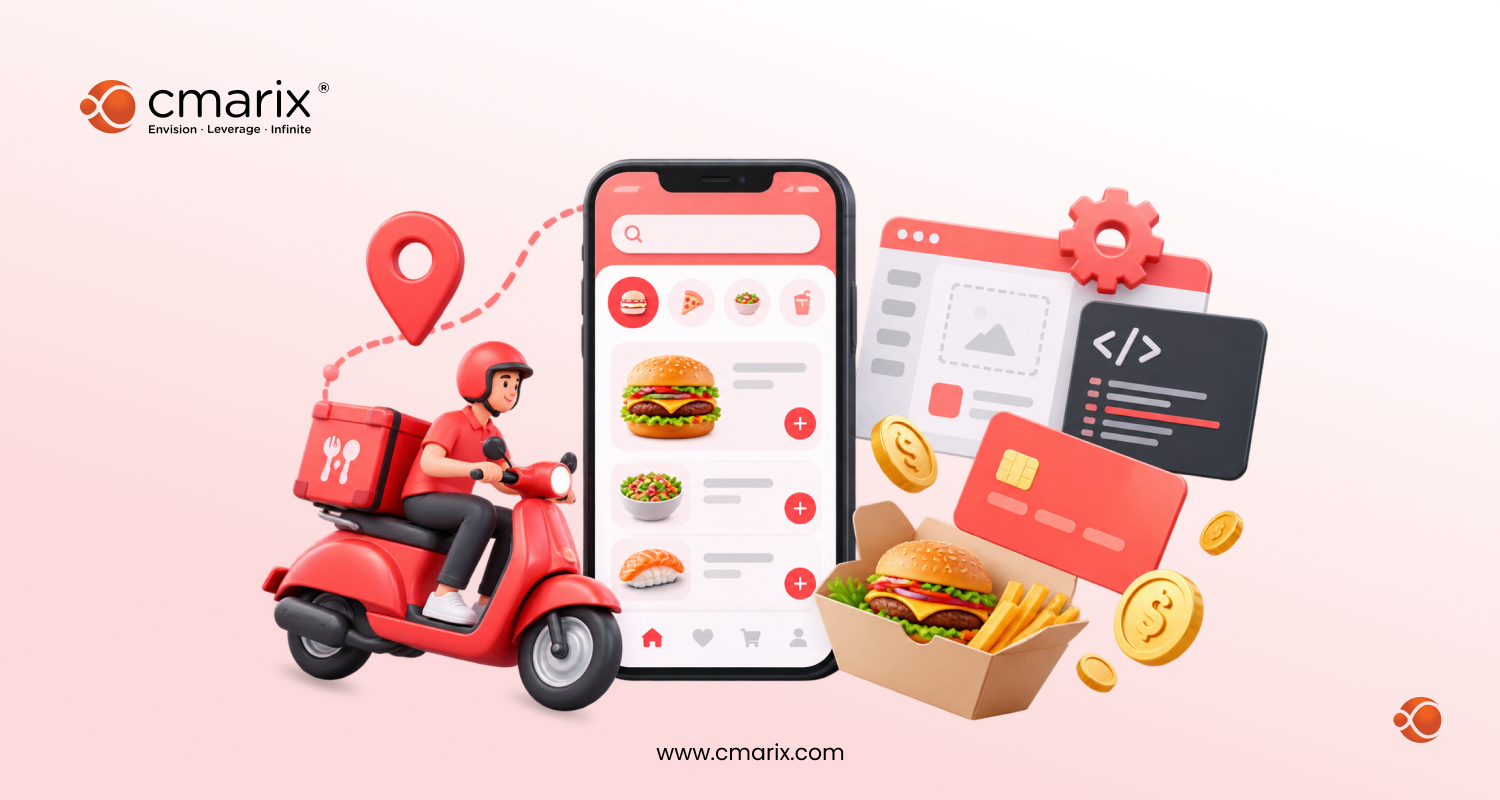





Quick Summary:
The development of a wholesale retail platform requires implementing a secure membership process, real-time inventory management, and payment system integration. When evaluating the cost to build an app like Costco, the minimum price is about $80,000 for an entry-level product and may exceed $500,000 for the complete solution. Working with professional developers will help keep the schedule and maintainability under control.
When you plan to develop an e-commerce platform membership application, you definitely need some figures for budgeting purposes. The average cost to develop a middle-tier application, such as Costco’s, with its membership levels, product search, and checkout functionality, ranges from $80,000 to $150,000, and the development period is 5 to 8 months. With AI inventory and geofencing, prices start above $300,000.
Enterprise Architecture and Strategic Investment Framework for Wholesale Retail Applications
Enterprise retail technology decisions carry weight far beyond a single release cycle. Industry leaders like Gartner and Forrester say successful retail app projects start with solid architecture planning, not just a focus on features.
This is important due to the framing. The cost of developing an application like Costco’s is not a one-time expense. It is rather a long-term investment towards warehousing integrations, membership security, and an omnichannel commerce system. W3C guidance on secure contexts underscores why membership and payment systems need to be engineered rather than templated.
A Wholesale Retail App handles sensitive payment tokens, level-based membership information, and real-time stock information, all of which are managed across hundreds of brick-and-mortar locations. This makes up the perfect reason for enterprise buyers to conduct cost research before vendor research.
Trust signals matter more in this category than in a typical consumer app build. A membership-gated commerce platform asks users to store a payment method, a home address, and often a family member’s secondary membership card in the same application. Any architectural decision that treats data casually, uses weak session handling, relies on unencrypted local storage, and or uses unaudited third-party SDKs becomes a liability the moment the app scales beyond a pilot region. That is why enterprise procurement teams increasingly ask vendors for a security architecture review before a single wireframe is approved.
This aspect of trust also affects how procurement teams interpret the proposals. Any vendor that starts by listing features and displaying screens without first addressing data flows, session management, and security posture signals that architecture is an afterthought rather than the backbone of their work. Buyers evaluating products in this build category should view a vendor’s ability to define threat models for unauthorized access, credential stuffing, and API abuse as a leading indicator of whether the final build will withstand real traffic load.
Market realities also mean that budget owners should be prepared for the fact that this type of build will attract more attention from internal stakeholders than a regular consumer application would. The finance team will need unit economics linked to membership retention. The legal and compliance teams will need clarity on data residency and PCI scope prior to signing any contract. It is essential to treat these discussions as a parallel workstream rather than an additional step after the project launch.
The Enterprise App Failure Band & Problem Space
The Standish Group’s CHAOS research has tracked the well-documented problem of enterprise software failure for three decades. Its most recent widely cited figures found only 31% of IT projects were fully successful, while 50% were “challenged” and 19% failed outright. Combined, that means roughly 69% of enterprise software initiatives run over budget, miss scope, or fail completely.
Large enterprise projects fare even worse in Standish’s historical data, with success rates falling into the single digits at the biggest organizations. For a wholesale retail platform, the stakes are concrete. A failed inventory sync module causes empty shelves to be reported as full.
A failed membership authentication layer means fraud exposure across a paid subscriber base. This is precisely why this investment should be evaluated against a vendor’s delivery track record, not just its hourly rate card.
Underestimating this category of build is the single most common driver of the budget overruns described above. Three problem patterns recur in failed wholesale retail builds:
- Undersized MVP scoping that ignores warehouse-side inventory APIs until late in development.
- Inappropriate payment system design for membership levels, created as an afterthought.
- No dedicated QA cycle for high-concurrency checkout, which only surfaces under real Black Friday-level load.
Each of these problems inflates both the timeline and the final build cost well beyond the original estimate.
There is a fourth pattern worth naming separately, because it is organizational rather than purely technical: unclear ownership between the retail business unit and the IT department during requirements gathering. When the warehouse operations team, the marketing team, and the engineering team each maintain a separate version of “what the app needs to do,” the resulting build ends up absorbing contradictory requirements late in the cycle. Standish Group data consistently identifies clear requirements and user involvement as the top predictors of project success, and a wholesale retail build with three competing stakeholder groups is structurally set up to violate both.
In other words, the pragmatic solution is to designate a single requirements owner with the authority to resolve interdepartmental disputes before development begins. Enterprises that fail to do so end up learning about their mistake much later, when both the geofencing team and the inventory team have formed different assumptions about the format of warehouse location data, and the costs of making the required adjustments at that stage are much higher than the costs of making the necessary discoveries.
Core Features of a Wholesale Retail App Like Costco
A production-grade wholesale app is not a shopping cart with a login screen. It is a coordinated set of enterprise subsystems.
Digital Membership Card & Tiered Authentication
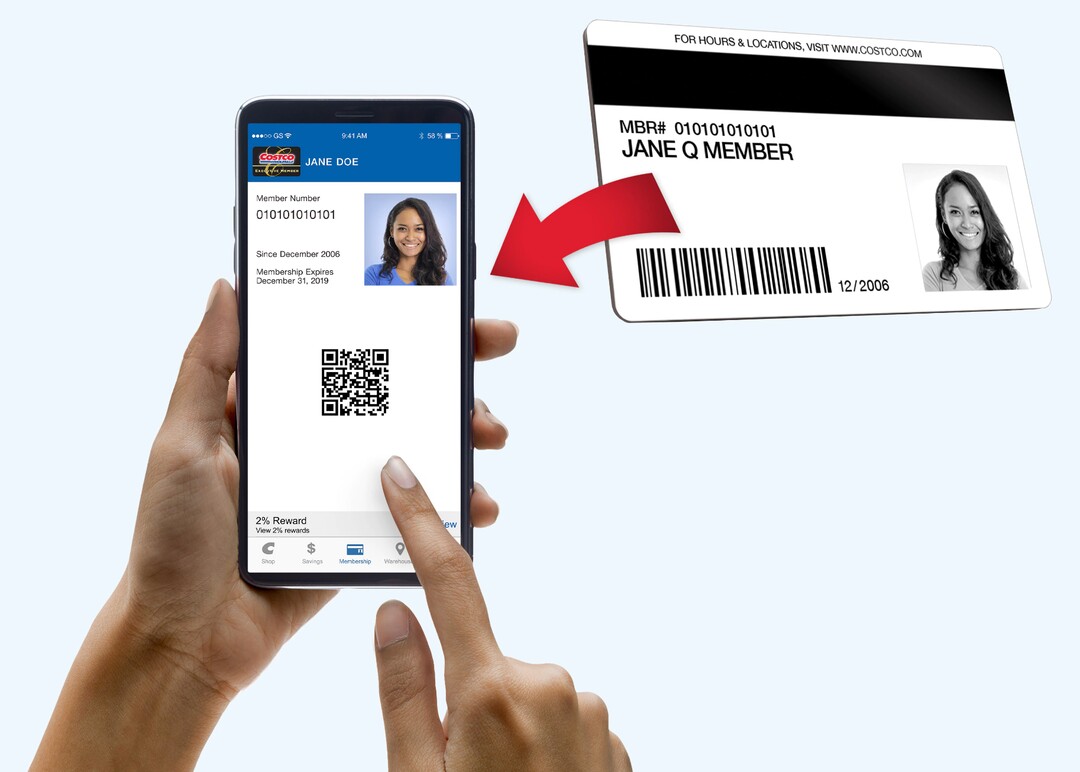
Costco-type applications employ different membership tiers to gate purchases. That translates into a need for a digital membership card with barcode or QR code display functionality, together with tokenization-based security for both identity verification and the storage of payment credentials.
Tokenization converts card and membership numbers into one-time-use tokens. Thus, no data breach on the application side will ever obtain the actual card information. Role-based access determines the difference between regular and executive membership by applying discount calculations and multiplier rules.
Family membership sharing represents an additional feature whose significance is underestimated by many engineers. Typically, one can link up to two additional family members’ accounts to their membership account. The requirement implies a parent-child account structure in the authentication layer rather than a one-to-one user table structure.
AI-Driven Inventory Management & Real-Time Warehouse Sync
Wholesale retail depends on inventory accuracy to live or die. The AI-powered inventory layer predicts demand for each SKU at each warehouse location, detects shrinkage irregularities, and auto-reorders based on set thresholds.
The synchronization process for the real-time warehouse ensures that the information displayed by the app is almost instantaneous with what is in the warehouse, unlike delayed updates made towards the end of the day.
Forecasting models for a wholesale format also need to account for bulk-purchase seasonality that differs from typical retail. A single member buying a pallet-sized quantity of a seasonal item can distort a naive demand model tuned to standard retail basket sizes. Teams that reuse an off-the-shelf retail forecasting model without retraining it on wholesale-scale purchase patterns tend to see inventory alerts that either fire too often or miss real shortages, which erodes trust in the system faster than having no forecasting at all.
Multi-Channel E-commerce Engine & Secure Payment Gateways
It is anticipated that members will shop on the website, purchase products via in-app purchases, and then collect them from the physical store.
Payment gateways must support tokenized cards, digital wallets, and, where applicable, EBT/SNAP compliance, all routed through PCI DSS-compliant processors. This layer is usually the largest single driver of the cost to build an app like Costco’s, given the compliance auditing it requires.
Cart consistency among different channels is more challenging than it appears. A customer who adds 10 products to their cart on their mobile device and then makes a purchase at a kiosk in the same warehouse will assume their cart will be up to date with the latest prices and quantities. In this case, it is necessary to have a single cart management system accessed by the mobile app, web app, and kiosk simultaneously, rather than using three distinct carts.
Geofencing & In-Store Navigation Systems
Geofencing triggers location-aware notifications the moment a member’s phone enters a warehouse parking lot, surfacing personalized deals or reminding them of a saved shopping list. When paired with in-store navigation, members can search for an SKU and get an aisle-level route through the warehouse.
This feature set depends on a combination of GPS, Bluetooth beacons, and indoor mapping data, and it is one of the more technically demanding additions to the scope.
Loyalty, Rewards & Personalized Offers Engine
Retaining membership hinges on continued value perceived by the members after their first discounted registration. A reward engine that monitors cash back earned, bonuses for executive status, and personalized coupons offered based on the member’s purchasing patterns provides significant engineering scope, typically implemented as a rules engine that assesses member purchases against current promotions.
Getting this engine wrong in either direction carries a cost. Under-personalizing offers lowers reward redemption rates, and members feel the membership fee isn’t delivering its value. Over-aggressive personalization, particularly anything that infers sensitive categories from purchase history, raises the same privacy and trust concerns discussed in the market reality section above.
Analytics Dashboard & Executive Reporting
The wholesale-retail app is not limited to the member-facing app alone. Warehouse managers and category buyers require a reporting layer that displays sell-through information, shrinkage data, and membership renewal projections by geographic regions. The reporting layer is a distinct internal-facing app on the same underlying database as the customer-facing app, and it is often underscoped during the estimation process because there is nothing to demo from a user perspective.
Omitting this layer is a common approach businesses take to increase their build budget over time; the need for reporting does not go away, but will instead be addressed in crisis mode later, when managers have to make decisions based on spreadsheet reports.
Breakdown of the Cost to Build an App Like Costco
Vague estimates don’t help a budget owner. Below is a phase-by-phase breakdown anchored to real hour ranges and regional rate benchmarks.
| Development Phase | Est. Hours | North America Cost | Eastern Europe Cost | South Asia Cost |
| Discovery & UX/UI Design | 150–250 | $22,500–$50,000 | $6,000–$15,000 | $3,000–$8,000 |
| Membership & Auth System | 300–450 | $45,000–$90,000 | $12,000–$27,000 | $6,000–$13,500 |
| Inventory & Warehouse Sync | 400–600 | $60,000–$120,000 | $16,000–$36,000 | $8,000–$18,000 |
| E-commerce & Payment Gateway | 350–500 | $52,500–$100,000 | $14,000–$30,000 | $7,000–$15,000 |
| Geofencing & In-Store Nav | 200–350 | $30,000–$70,000 | $8,000–$21,000 | $4,000–$10,500 |
| QA, Security Audit & Launch | 150–250 | $22,500–$50,000 | $6,000–$15,000 | $3,000–$7,500 |
| Total (mid-to-high complexity) | 1,550–2,400 | $232,500–$480,000 | $62,000–$144,000 | $31,000–$72,500 |
The rate ranges above reflect blended hourly benchmarks: North America at roughly $100–$200/hour, Eastern Europe at $40–$90/hour, and South Asia at $20–$60/hour across mixed-seniority teams. These numbers are just industry averages and can change based on team experience and vendor costs.
Cost Variance by App Complexity Tier
The table above is based on a moderate-to-high-complexity build. Those responsible for budgeting for a first-time release need to be aware of how this budget changes based on the following three complexity levels:
| Complexity Tier | Core Scope | North America | Eastern Europe | South Asia |
| MVP | Membership card, catalog browsing, basic checkout | $80,000 –$150,000 | $25,000–$45,000 | $12,000–$25,000 |
| Mid-Complexity | + Multi-channel sync, standard payment gateway, push notifications | $150,000 –$300,000 | $45,000–$90,000 | $25,000–$45,000 |
| Full Enterprise | + AI inventory, geofencing, loyalty engine, admin reporting | $300,000 –$500,000+ | $90,000–$150,000 | $45,000–$75,000 |
An MVP scoped at the lower end of this range is a reasonable way to validate membership retention and checkout conversion before committing to the full feature set described in the Core Features section above. If you build an MVP without considering features like inventory sync or geofencing, you might have to rework the core data and authentication later. That’s why it’s important to ask for architecture diagrams, even for a basic first version.
Choosing the Right App Development Company: Architectural & Vendor Criteria
When selecting a B2B enterprise business partner, there must be a shift in perspective toward engineering and delivery rather than user interface design. Not every vendor can build a simple shopping cart that delivers a powerful wholesale retail application.
Agile Governance and Security
Verify that the vendor is using Agile Scrum with clear sprints, demo reviews, and an auditable backlog at all times. Request the vendor’s ISO/IEC 27001 status; this is the globally accepted information security management standard that directly addresses how a vendor handles member data and payments. This level of compliance is standard for vetted teams like CMARIX, whose Enterprise App Development Services rely heavily on security certifications and transparent, agile backlogs to protect client data.
System Architecture and Scale
Demand architecture diagrams prior to contract signing, not after kick-off. A company that cannot show you how data from your warehouse inventory system is delivered to the mobile client during the discovery phase will have a difficult time doing so six months down the line.
Finally, ask for a reference client with a comparable transaction volume. A team that has shipped a 50,000-user app is not automatically equipped for a platform processing millions of SKU-level transactions daily.
Risk Mitigation and Contract Structure
Contract structure is another signal worth checking before commitment. Vendors billing strictly on a time-and-materials basis, with no fixed-scope milestones, tend to exhibit the same budget overruns documented in the CHAOS data above, since there is no built-in incentive to control scope creep. A fixed-price phase structure, tied to the development phases in the cost table above, gives a budget owner clear checkpoints to evaluate progress against the original estimate, rather than discovering scope drift only at final invoice.
Specialized Team Composition
Just like certification, team structure needs to be reviewed carefully, too. Having a vendor suggest a single generalist developer to handle building the entire project, including member authentication, an AI-based inventory management system, and geofencing, is an example of an under-resourced project team, regardless of the developer’s expertise. It is imperative to know how many specialist developers the vendor has suggested for handling security, backend event architecture, and mobile platforms, and whether they have built such a project in the past.
Long-Term Support Economics
Post-launch support terms are worth negotiating before signing, not after go-live. Given that annual maintenance for this category of build typically runs 15–20% of the original cost, as detailed in the FAQ section below, a vendor’s standard support-tier pricing should be part of the initial proposal comparison, not a separate conversation six months after launch when the team has already dispersed to other projects.
Conclusion
The wholesale retail platform represents a massive investment into your company’s infrastructure, not just into a checklist of features. Proper architectural design, a secure user registration system, real-time product inventory, and proper payment handling ensure you will never have to rebuild your app a year from now.
The cost to build an app like Costco reflects that complexity honestly: budget realistically, choose an experienced eCommerce Development Company possessing demonstrable expertise in enterprise delivery, and consider the range of estimates provided above as a starting point rather than a limit. The ROI equation is simple enough for most retailers when one considers the benefits that will accrue from lower shrinkage and higher membership retention.
Begin by scoping out a discovery phase, not a full build commitment. A four- to six-week-long discovery process involving architectural diagrams, security reviews, and costs broken down by phase will provide the budget holder with a validated cost prior to writing one line of production code, and this is the best way of ensuring that your cost of building the app is within the guidelines provided by this guide.
Those businesses that realize the greatest benefit from this type of build view it in the same light as an expansion of their warehouse facilities, with proper capitalization planning, clearly designated owners from both business and technology perspectives, and adequate maintenance budget planning even after the system goes live. It is this approach, rather than any specific choice of features, that will ensure cost control of this build.
FAQs about the Cost to Build an App Like Costco
What is the average cost to build an app like Costco for both iOS and Android?
For a cross-platform build covering both iOS and Android, expect $90,000 to $250,000 for a mid-complexity release, and $300,000 to $500,000+ for a full enterprise build with AI inventory and geofencing. Native builds for both platforms separately typically add 30–40% overhead compared to a single cross-platform codebase, since payment gateway integration, push notification handling, and geofencing permissions each require platform-specific implementation work, even when the bulk of the business logic is shared.
How long does it take to develop a wholesale enterprise application?
The mid-complexity build is expected to take between 5 and 8 months. Enterprise-level platform solutions with warehouse synchronization, geofencing, and multi-region compliance typically take 10 to 14 months, especially when accounting for payment gateway certification and required security audits. By itself, payment processor certification may delay launch by 4 to 8 weeks due to the need for a valid PCI compliance attestation before access to the production API is granted.
What are the hidden post-launch maintenance costs of an app like Costco?
Annual maintenance is typically 15-20% of the original development cost and includes infrastructure maintenance for servers, third-party API renewals, OS compatibility upgrades, and security patches. The inventory sync systems also need continuous integration support for the warehouse hardware, which is often underestimated when planning costs at the outset. The annual PCI DSS recertification process is often overlooked in cost calculations, since a new audit is required rather than just initial approval, and enterprises that treat it as a one-time expense find themselves in a difficult position later on.
How do you integrate real-time inventory systems into a custom retail app?
Integrations generally use an event-based architecture, whereby the warehouse management system emits inventory change events to a message queue such as Kafka or RabbitMQ, which are then received by the application’s backend and sent to clients via webhooks and WebSocket. This eliminates the delay associated with traditional polling used in inventory checks. Selecting a particular message queue is important given the operation’s scaling: the log-based architecture of Kafka would work well in situations where many warehouses are reporting inventory changes.
Why is a dedicated app development company required instead of a generic template?
Generic templates lack the capability to manage hierarchical membership systems, payment token security, and large-scale warehouse concurrency without any further customization. An experienced mobile app development company possesses the knowledge necessary to design an architecture that will prevent rework costs and ensure the cost of building the app is not significantly exceeded. In addition, using templates makes a business dependent on the data model of the template vendor, which is the case from the moment it requires a specific feature not supported by the template.nd to lock a business into the template vendor’s data model, which becomes a real constraint the moment a wholesale retailer needs a feature, such as family membership sharing or warehouse-specific pricing, that the template wasn’t designed to support.
What features drive up the cost to build an app like Costco the most?
Payment gateway compliance work, AI-driven inventory forecasting, and geofencing/indoor navigation are the three most expensive feature categories. Together, they typically account for 55–65% of total development hours on a full-featured build. The loyalty and rewards engine and the internal analytics dashboard, while individually smaller line items, are the two features most often left out of an initial estimate entirely, which is why they are worth confirming explicitly are in scope before a proposal is finalized.