


Quick Summary: Node.js development companies are changing how enterprises develop high-performance, scalable platforms across every major tech hub in 2026. From fintech infrastructure in Singapore to legacy modernization in Australia. This global review breaks down the best firms by region, what they specialize in, and how to choose the right one for your project.
Node.js has moved past its earlier reputation as a tool for startups. By 2026, it sits at the foundation of production systems running billions of daily transactions, from real-time fintech platforms in Africa to digital identity infrastructure in Australia.
What changed?
Three things merged: the maturity of event-driven microservices architecture, the industry’s shift toward NestJS enterprise architecture for building modular, testable Node.js backends at scale, and the explosive growth of API-first product design. Node.js was already fast. Now it’s also structurally sound enough for the largest engineering teams in the world.
Node.js Market Overview in 2026
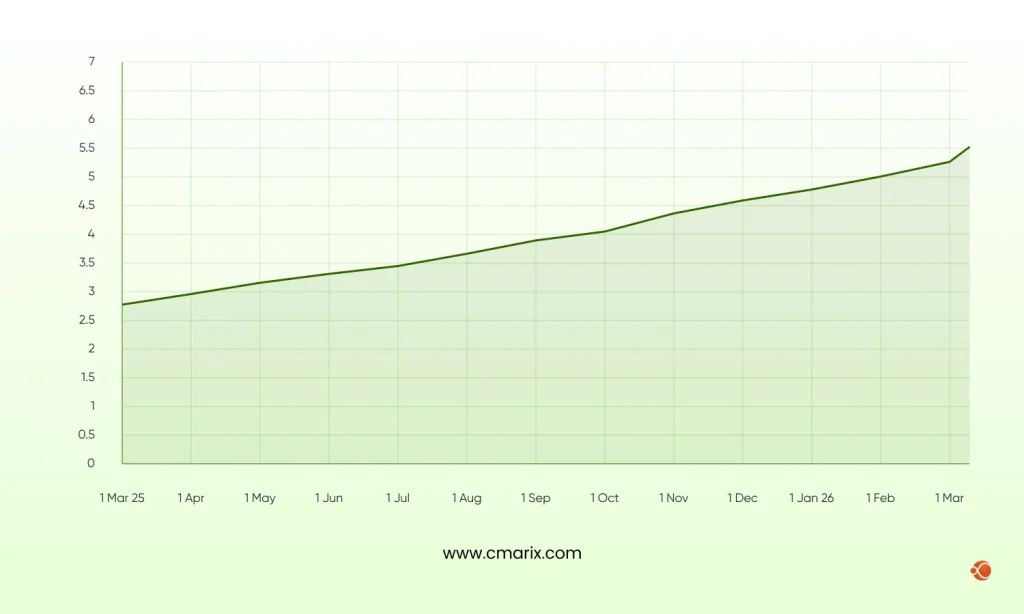
According to the current Node.js market share data 2026, Node.js powers a significant share (5.8%) of production web servers globally, with adoption accelerating in financial services, logistics, and government-adjacent platforms.
The Node.js Long Term Support (LTS) schedule has given enterprises the version stability they need to commit long-term. LTS versions now align with the multi-year infrastructure planning cycles, which was one of the impediments for enterprises to adopt the runtime in their systems of record.
Developer demand reflects this. Node.js has been ranked among the top five backend technologies in Stack Overflow’s annual surveys, and LinkedIn job posting data shows a 34% year-over-year increase in senior Node.js roles through 2025.
Why Enterprises Prefer Node.js for Scalable Platforms
- Non-blocking I/O handles thousands of simultaneous connections without thread overhead.
- Full-stack TypeScript allows teams to share types and validation logic across backend and frontend.
- Event-driven architecture fits naturally with microservices and API-first product design.
- NestJS brings the modular, dependency-injection structure that huge engineering teams need.
- Real-time gRPC (Remote Procedure Calls) Pipeline support makes it strong for low-latency service-to-service communication.
- Packages cleanly into Kubernetes/Docker environments with less configuration overhead.
- The npm ecosystem depth means most integration problems already have a maintained solution, which is why choose Node.js for product development remains the default answer for most CTOs in 2026.
- LTS release cycle provides enterprises with the version stability needed for multi-year infrastructure planning.
Global Demand for Node.js Development Companies
Demand isn’t uniform. It clusters around specific economic and regulatory contexts. Fintech hubs in Asia need low-latency and compliance-ready architectures. European enterprises prioritize GDPR-compliant backend workflows and auditability. Gulf state governments are building sovereign cloud infrastructure. African markets need cost-efficient, API-first platforms that scale without heavy on-premise dependencies.
This regional variation matters when choosing a development partner. A firm that excels at high-frequency trading backends may not have the domain expertise to navigate Australia’s Trusted Digital Identity Framework or the MAS Fintech Regulatory Sandbox.
Quick Comparison Table of Top Node.js Companies by Region
| Region | Company | Founded | Core Services |
| Australia | CMARIX | 2009 | Application modernization, API development, fintech platforms |
| Appello Software | 2013 | Custom enterprise software, healthcare tech, workforce platforms | |
| Techne | 2016 | Product engineering, TypeScript backends, API gateway design | |
| Singapore / Hong Kong | Vention | 2002 | Payment infrastructure, digital banking, API integration |
| Netguru | 2008 | Fintech backends, microservices, MAS sandbox-compliant systems | |
| Orion Code | 2015 | Smart city platforms, IoT backends, and real-time data aggregation | |
| Middle East | TechMagic | 2015 | NestJS backends, e-government platforms, and cloud infrastructure |
| Lumitech | 2010 | DevSecOps, smart infrastructure, digital product development | |
| Branex | 2014 | Mobile backends, API integration, digital payments | |
| Africa | SovTech | 2012 | Fintech platforms, mobile APIs, multi-market data systems |
| DVT Software | 1999 | Enterprise integration, legacy modernization, API layers | |
| Bluegrass Digital | 2006 | Product development, media tech, financial services backends | |
| North America | BairesDev | 2009 | Nearshore engineering, enterprise SaaS, cloud-native backends |
| Altoros | 2001 | Cloud architecture, microservices, open-source contributions | |
| Itransition | 1998 | Enterprise software, SaaS platforms, system integration |
Building a Node.js platform and not sure which engagement model fits your project scope?
Disclaimer: This list is independently researched and based solely on publicly verifiable project history, technical depth, and regional presence. No paid placement or commercial arrangement influenced these selections.
Australia’s Node.js Development Companies for Enterprise & Industrial Tech
Australia’s enterprise technology market has a defining characteristic: large organizations with aging core systems and genuine urgency to modernize. Logistics, mining, agriculture, and financial services all run on infrastructure developed in the 1990s and 2000s. The priority isn’t greenfield development; it’s modernizing legacy enterprise systems with Node.js without breaking what’s already working.
Compliance adds an additional layer. Australia’s Trusted Digital Identity Framework (TDIF) sets strict requirements for finding verification and data handling, which means Node.js development partners need to understand both the technology stack and the regulatory environment they’re building into.
CMARIX
CMARIX brings cross-industry experience across health tech, fintech, and industrial platforms, with demonstrated work in API-powered modernization projects. Their approach to application modernization treats legacy migration as a phased process rather than a cutover event, which significantly reduces risk for large Australian enterprises.
Why Choose CMARIX
- Strong post-migration support capability for developer teams managing hybrid legacy-modern environments
- Transparent project governance with milestone-based delivery accountability
- Competitive engagement models for middle as well as large enterprise budgets
Appello Software
Melbourne-based Appello focuses on custom software for enterprise clients and mid-market, with a notable track record in workforce and healthcare management platforms. Their Node.js work tends toward high-availability services with complex role-based access control requirements.
Why Choose Appello Software
- Agile delivery cadence with regular client-facing sprint reviews built into the process
- Strong documentation standards that reduce handover friction for internal teams
- Proven ability to scale team size up or down based on project phase
Techne
Techne operates as a product engineering company with a strong emphasis on TypeScript-based backend architecture. Their Node.js team has depth in real-time collaboration features and API gateway design, capabilities relevant as Australian enterprises push toward platform-based operating models.
Why Choose Techne
- Good code review culture with measurable impact on long-term maintainability
- Lean team structure means direct access to senior engineers throughout the engagement
- Well-suited for startups scaling to enterprise without accumulating technical debt

Fintech & Smart City Platforms Powered by Node.js Companies in Singapore and Hong Kong
Singapore and Hong Kong occupy a unique position: they’re simultaneously the financial gateways to Southeast and East Asia, and the proving grounds for regulatory-forward fintech innovation. The MAS Fintech Regulatory Sandbox guidelines define how new financial products are tested before production rollout, and Node.js companies operating in this market need to architect for compliance from day one, not retrofit it later.
The technical demands here are specific. Low-latency Node.js architectures for fintech need careful attention to event loop optimization, connection pooling, and the design of real-time gRPC pipelines that can handle order-of-magnitude traffic spikes without degrading response times.
Vention
Vention’s Singapore presence provides it with proximity to the regional fintech ecosystem. Their engineering teams have worked on digital banking features, payment infrastructure, and API integration across Southeast Asian markets where regulatory fragmentation makes standardization difficult.
Why Choose Vention
- Rapid onboarding process that gets development teams productive within days, not weeks
- Strong product discovery practice before any line of code gets written
- Proven retention of long-term clients across several product iterations
Netguru
While Netguru’s HQ is in Poland, its Asia-Pacific delivery capabilities are well-documented. They’ve built backend systems for many fintech clients operating in the MAS regulatory sandbox environment, with particular strength in Node.js microservices and event-driven architecture.
Why Choose Netguru
- Documented security practices with an ISO 27001 certificate across all client engagements
- Dedicated QA engineers are present in every delivery team by default
- Strong technical blog and open knowledge sharing that reflects genuine engineering depth
Orion Code
Orion Code focuses more on IoT-adjacent platforms and smart cities, which is a growing demand in Singapore’s urban infrastructure roadmap. Their Node.js work experience in real-time data aggregation and edge computing integration makes them well-suited for public sector digital infrastructure projects.
Why Choose Orion Code
- Established relationships with Singapore public sector procurement channels
- Strong prototyping capability for validating IoT concepts before full-scale build
- Clear IP ownership terms favorable to government and enterprise clients
Node.js Development Firms Supporting Digital Transformation in the Middle East
The Middle East technology investment narrative in 2026 is significantly dictated by the national vision programs. The Saudi Vision 2030 digital transformation mandates for the digital age drive the need for AI-infused government services, cloud-first infrastructure, and data platforms that store data within the country’s borders.
For Node.js development companies, this translates into a specific technical requirement: sovereign AI integration via Node.js APIs. That means Node.js AI integration best practices, which include building API layers that connect to locally hosted AI models, not just calling external cloud services, but also making sure the data flow complies with national data residency requirements.
TechMagic
TechMagic has established a strong presence in the Gulf region, with experience building backend systems for e-government and e-commerce platforms. Their Node.js teams work heavily in NestJS enterprise architecture, which provides the modular structure that large government technology programs require.
Why Choose TechMagic
- Bilingual delivery teams with Arabic-English communication capability
- Experienced in navigating long government procurement cycles without losing delivery momentum
- Strong CI/CD pipeline setup that speeds up time-to-production for regulated platforms
Lumitech
Lumitech serves the broader Dubai and GCC (Gulf Cooperation Council) markets with a focus on digital product development in the areas of logistics, retail, and smart infrastructure. Their technical profile includes strong DevSecOps supply chain security practices, which have become a selection criterion for public sector contracts in the region.
Why Choose Lumitech
- On-ground Dubai presence allows face-to-face stakeholder engagement when it matters
- Regular third-party security audits with results shared transparently with clients
- Flexible commercial models, including time-and-materials structures and fixed-price
Branex
Branex is a Dubai-based firm with delivery teams across the region. They bring depth in API integration work and mobile platform backends, with many projects in the digital payments and HR technology sectors.
Why Choose Branex
- Fast turnaround on MVP builds as per early-stage product validation
- Better UI/UX capability that complements their backend development practice
- Arabic-language support across client communication and product interfaces
Node.js Companies Powering Fintech and Mobile Platforms in Africa
Mobile penetration has run ahead of desktop adoption, and fintech has filled gaps that traditional banking left open. The AfCFTA digital trade protocols are speeding up cross-border digital commerce, which creates fresh demand for API platforms that can handle multiple currency, multi-jurisdiction financial flows in real time.
SovTech
Sovtech is one of the continent’s most recognized custom software firms. Their Node.js capability spans fintech backends, data platform work, and mobile API layers. They’ve built products that operate across multiple African markets simultaneously; no small feat given the regulatory variation across markets.
Why Choose SovTech
- Strong commercial models have been established based on outcome-based delivery milestones
- Talent retention programs that help to minimize disruption to the team mid-project
- Involvement in the local tech community that matches the culture of the engineers
DVT Software
DVT comes with 25 years of software delivery experience in the South African market, with specific depth in enterprise system integration. Their Node.js work tends toward connecting existing enterprise systems via modern API layers instead of full rewrites.
Why Choose DVT Software
- Structured knowledge transfer process that builds internal client capability over time
- Deep bench of senior engineers with hands-on experience across multiple technology generations
- Good vendor partnership network, including AWS, Microsoft, and Oracle
Bluegrass Digital
Bluegrass Digital operates across Johannesburg and Cape Town, with a client base that includes media, retail, and financial services. Their strength is in product-oriented Node.js development; teams are structured to ship features continuously rather than deliver projects and disengage.
Why Choose Bluegrass Digital
- For low-bandwidth African network conditions, performance optimization practice
- Data-driven product decisions backed by analytics integration from day one
- A collaborative workshop-based discovery process that aligns stakeholders before the build starts
Scalable SaaS Platforms Built by Node.js Development Companies in North America
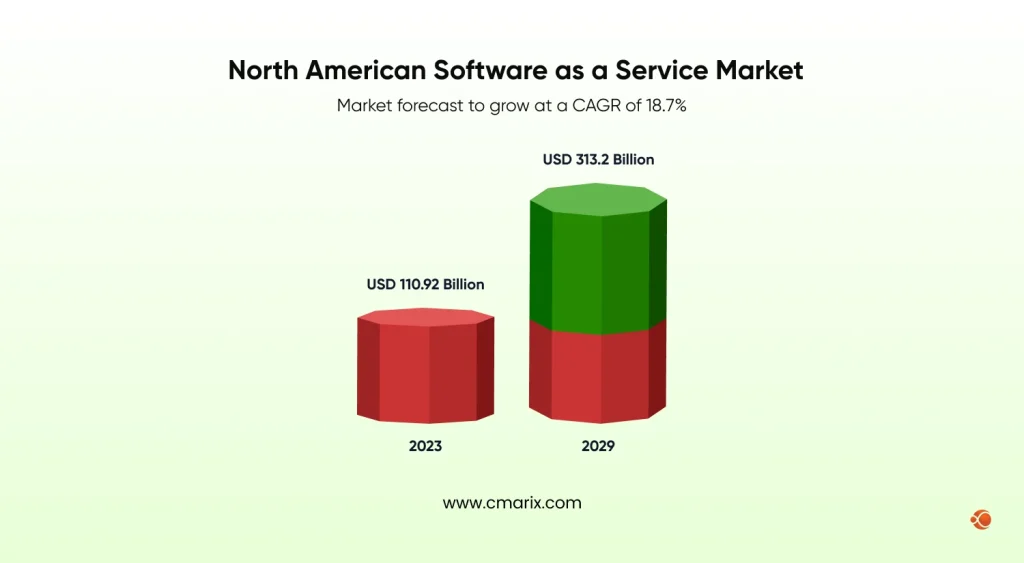
North America remains the highest-density market for enterprise SaaS architecture standards, and the technical bar reflects it. Even the North American software-as-a-service market is forecast to reach USD 313.2 billion in 2029, with a CAGR of 18.71% from 2023 to 2029
The firms that operate at the top of this market are developing platforms that serve millions of users, handle terabytes of daily data, and run on cloud infrastructure designed for zero-downtime deployments.
In this environment, enterprise Node.js development for high-scale SaaS in this context means more than just writing server code effectively. It means designing queue systems that absorb traffic spikes, developing observability infrastructure that surfaces problems before users notice them, and structuring services so that individual components can be scaled or replaced without any failures.
BairesDev
BairesDev operates as a nearshore engineering partner for North American technology companies, with a large pool of senior Node.js developers across Latin America. They’ve built backend systems for clients ranging from seed-stage startups to Fortune 500 enterprises, and their team vetting process is well-documented.
Why Choose BairesDev
- Account management layer that sits between the engineering team and the client
- Top 1% talent claims are backed by a documented multiple-stage technical screening process
- IP protection and NDA frameworks that meet US enterprise requirements
Altoros
Altoros has deep expertise in cloud-native architecture and has contributed to open-source projects in the Kubernetes and microservices space. Their Node.js capability is strong in event-driven system design, particularly for platforms that need to coordinate workflows across distributed services.
Why Choose Altoros
- Research-backed engineering approach informed by active participation in cloud-native communities
- Strong observability practice: monitoring, logging, and alerting built in from the architecture phase
- Proven cost optimization capability for teams running high AWS or GCP monthly spend
Itransition
Itransition has a 25-year delivery track record and a large North American client base in manufacturing, retail, and financial services. Their Node.js teams are structured for long-term engagement; a fit for enterprises that need ongoing product development rather than a defined-scope project.
Why Choose Itransition
- Dedicated centre of excellence for Node.js with internal upskilling programs, keeping teams current
- Strong compliance documentation capability for regulated North American industries
- Structured enterprise Node.js development for high-scale SaaS delivery methodology with verifiable client references
How to Choose the Right Node.js Development Company
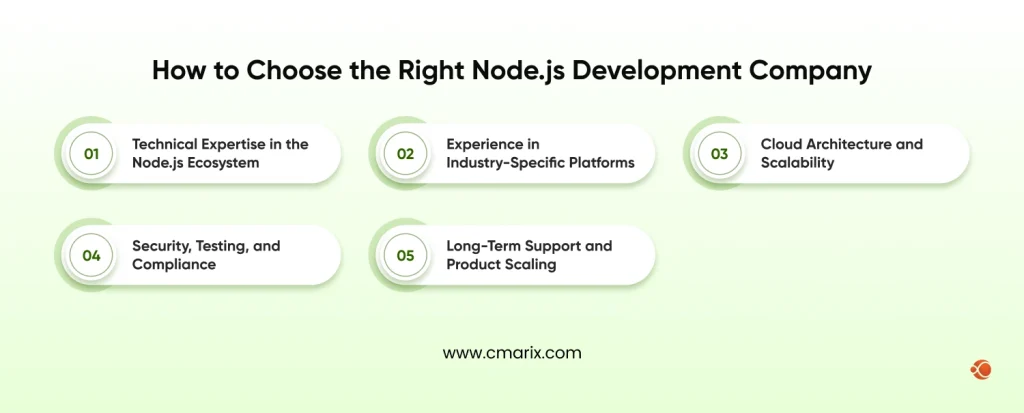
Most procurement processes go wrong here. Selection criteria cluster around surface signals, such as years in business, headcount, and logo slides, rather than the technical factors that actually predict whether a project succeeds.
Technical Expertise in the Node.js Ecosystem
Ask about the specific tools your project needs: NestJS, gRPC, TypeScript coverage, and testing infrastructure. A development team that’s only built REST APIs in Express may not be ready for event-driven microservices at scale.
Experience in Industry-Specific Platforms
Domain-specific knowledge matters. Developers who have built fintech backends understand audit logs, idempotency, and rate limiting in ways a generalist team simply doesn’t. Ask them for projects in your vertical.
Cloud Architecture and Scalability
Ask how they handle auto-scaling, capacity planning, and database connections under load. Kubernetes experience, CDN strategy, and caching design are exactly what knowing how to hire Node.js developers helps you screen for, separating teams that have built for millions of users from those that haven’t.
Security, Testing, and Compliance
For EU clients, GDPR-compliant backend testing workflows are a basic requirement. Check whether DevSecOps supply chain security is baked into their CI/CD pipeline by default, not added on request.
Long-Term Support and Product Scaling
After the launch project doesn’t end, ask about security patches, dependency management, and continuous development capacity. Switching vendors after six months of accumulated context is expensive; evaluate for fit beyond the initial delivery.
Ready to move from evaluation to execution?
CMARIX gives you access to pre-vetted senior Node.js developers, available on dedicated, time-and-materials, or fixed-price models.
Conclusion
The global market for Node.js development companies in 2026 is regional, specialized, and differentiated. The right development partner is not necessarily the one with the longest client list, but rather the one whose strengths and approach best match what your platform needs.
Whether you’re modernizing legacy infrastructure in Sydney, making a high-frequency trading backend in Singapore, or launching a compliant API platform in Dubai, the strategic question is the same: Does this company understand the specific technical and regulatory context of what you’re building?
If you’re evaluating Node.js partners for an enterprise or SaaS project, the above framework gives you a structured starting point. Use it as a discovery tool in early vendor conversations. Applying Node.js hiring best practices at this stage tells you as much as their portfolio.
FAQs on Node.js Development Companies
What is the hourly rate for senior Node.js developers in 2026?
Rates vary by region. North America runs $120–$200/hr, Eastern European and Latin American nearshore firms average $50–$90/hr, and South/Southeast Asian teams range from $30–$70/hr. Specializations like NestJS and DevSecOps command premiums across all markets.
Which Node.js framework is best for enterprise SaaS?
The most popular option is NestJS, as it enforces a modular structure, is strongly typed with TypeScript, and has good support for microservices and event-driven architectures. Express is still usable for small services and prototyping.
How does time zone overlap affect development velocity?
Teams with four or more hours of overlap per day outperform those without overlap on complex feature work. When the iteration cycles are fast, as in the case of real-time systems, overlap is more important than asynchronous availability.
Why is Node.js preferred for fintech applications?
Its non-blocking I/O handles the concurrent connection patterns fintech demands; real-time balance updates, pricing endpoints, payment webhooks without thread overhead. Node.js backends, properly architected, consistently hit the sub-100ms response times financial UX requires.
What certifications should a Node.js development company have?
For the majority of our enterprise clients, the SOC 2 Type II and ISO 27001 certifications will cover the baseline. If the fintech client is regulated, then look for experience with PCI DSS or other frameworks such as MAS TRM in Singapore or TDIF in Australia.