

At-a-glance View: AI has transformed from an experimental new technology to a business necessity in just few years, foundational changing how companies operate and compete. This report examines AI statistics that reveal widespread adoption patterns, investment trends and the workforce changes driving this global technological revolution.
AI is now rooted in the fabric of global commerce and daily life. For businesses, analysts, and technologists, understanding the precise metrics of this shift is paramount. This report compiles over 90+ essential artificial intelligence statistics and global trends, offering a robust look at market size, industry penetration, investment flows, and the technological innovations driving this global movement.
What is “AI Statistics & Trends”?
When we examine AI statistics and trends, we are looking at quantifiable metrics that reveal AI’s true effect. The scope includes the percentage of businesses using AI systems, the speed of consumer AI use statistics, economic value generated, and geographical distributions of research and funding. These figures are important for strategic planning, revealing where capital is flowing and which sectors are achieving the greatest gains in productivity and innovation. They provide a clear, factual basis for comprehending the scale of this technological shift.
Why Tracking Global AI Statistics Is Critical for Success
Tracking global AI stats is important for remaining competitive and making evidence-based decisions in a rapidly evolving technological landscape.
For Investors (Identifying Opportunity)
Statistics on funding and market growth highlight where capital is flowing and signal future high-return opportunities. Data on AI startup valuations and M&A (Mergers and Acquisitions) activity inform investment strategies and risk assessment, particularly given the market’s high volatility and rapid acceleration.
For Corporate Strategists (Competitive Advantage)
Industry-specific statistics on artificial intelligence reveal competitor adoption rates and identify use cases that give the highest return on investment (ROI), such as automation in service operations or risk management. Understanding current AI trends allows data-backed decision-making for assessing expansion and refining product development to maintain a competitive edge.
For Policymakers and Governments (Governance and Readiness)
Figures on the impact and spread of AI inform the urgent need for new regulations, ethical frameworks and goverance standards to protect consumers and maintain public trust. Data on the skills gap and job displacement help plan effective workforce retraining programs and adjust educational priorities to ensure the national workforce is prepared for an AI-reliant future.
General Necessity (Avoiding Stagnation)
Without current and accurate data, organizations and nations risk being left behind by the rapid pace of change. Depending on outdated evidence or anecdotal evidence can lead to misallocated resources, or missed market opportunities and the failure to capture the multi-trillion-dollar economic value created by AI.
Global AI Adoption Overview (2020–2025)
AI adoption has been sharp, moving from niche application to central business strategy in only a few years.
Key Adoption Milestones (Growth in Organizations Using AI)
An important milestone was reached when AI moved past a minority technology. Surveys indicate that a huge percentage of businesses with digital infrastructure have progressed from curiosity to concrete integration. The tangible benefits are clear:
- By 2025, approximately 88% of organizations globally report using AI in at least one business function. This high figure signals that AI is no longer a concept but a standard operational component.
- Nearly two-thirds of respondents say their organizations have not yet begun scaling AI across the enterprise, but are still in the experimentation or piloting phase.
AI Adoption in Business
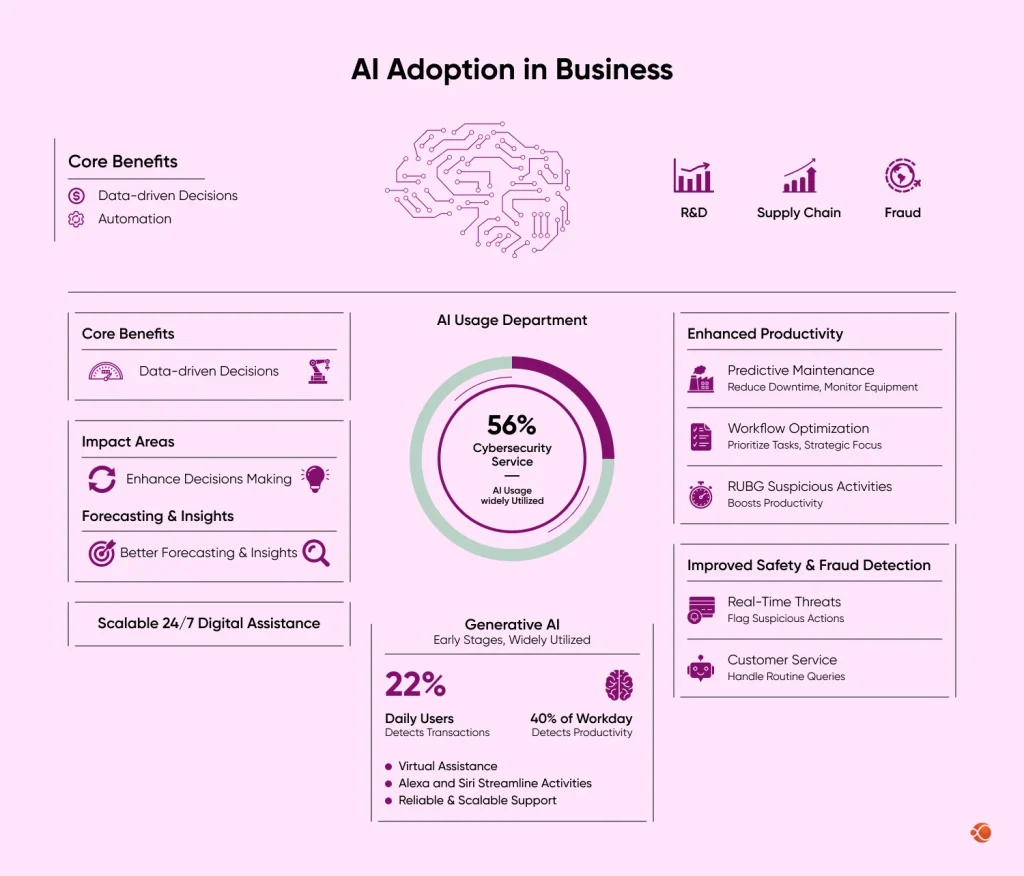
AI is a valuable asset for businesses, enabling efficiency improvements, data-driven decisions, and automation of routine tasks to save time and costs.
AI can drastically improve the existing system. These improvements stem from AI’s ability to optimize processes, enhance decision-making, and provide better forecasting and customer insights. Functions like R&D and supply chain management also benefit, though with slightly lower gains.
- A survey reveals that 56% of companies use AI for customer service, while 51% apply it to cybersecurity and fraud detection.
- Generative AI, though in its early stages, is widely utilized, according to McKinsey. Respondents have some exposure to these tools, with 22% using them daily.
Enhanced Productivity and Efficiency
- Predictive maintenance systems in factories reduce downtime, monitor equipment, identify potential failures, and improve productivity.
- Tools like workflow optimization prioritize tasks on the basis of urgency, allowing employees to focus on strategic initiatives.
- Research by Valoir shows that AI automates 40% of the average workday, boosting productivity. Business leaders are increasingly dependent on AI for repetitive task automation and strategic decisions.
Improved Safety and Fraud Detection
- Artificial intelligence detects fraudulent transactions in banking by analyzing customer spending patterns.
- AI-powered surveillance systems monitor public spaces, and flag any suspicious activities for immediate action.
- Artificial intelligence improves security and, through fraud detection, identifies and mitigates potential threats in real-time.
Scalable 24/7 Digital Assistance
- Virtual assistants like Alexa and Siri streamline everyday activities, from setting reminders to controlling smart home devices.
- In customer service, Artificial intelligence reduces dependency on human agents by handling routine queries, allowing teams to focus on complex tasks.
- AI virtual assistants and chatbots streamline interactions, providing reliable and scalable support for users at any time.

AI Adoption Worldwide
- Artificial intelligence would contribute $15.7 trillion by 2030 to the global economy.
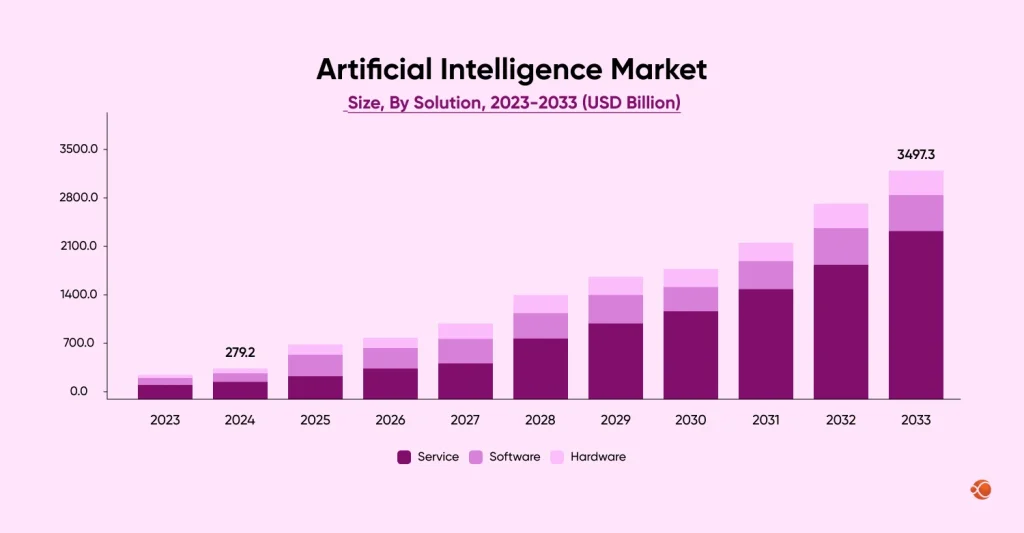
- The global AI market, valued at USD 279.2 billion in 2024, is predicted to reach USD 3,497.26 billion by 2033, demonstrating rapid growth and widespread adoption.
Regional and Global Adoption Rates
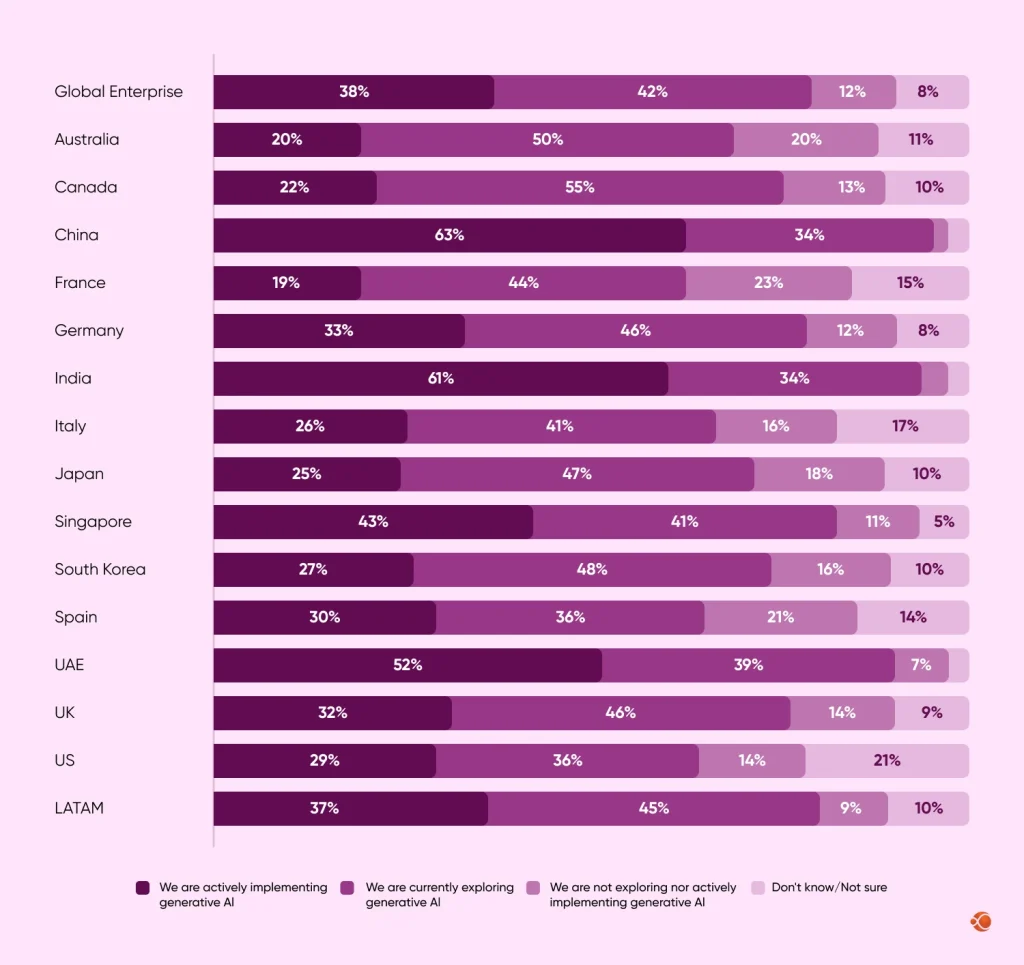
- Since April 2023, the reported implementation of AI has gone up in Japan (+13%), Singapore (+14%), South Korea (+16%), and the UK (+21%).
IBM’s data on regional trends, with 59% of companies in India and 50% in China actively using AI, surpasses adoption rates in countries like Australia, Spain and France.
Investment and Technology Focus
- Baidu, a leading Chinese firm, is in the top 10 in the number of AI and Machine Learning patents, with 19,308 patent applications by the end of the year.
- McKinsey research indicates that companies will need to invest $5.2 trillion into data centers by 2030 to meet the worldwide demand for AI alone.
Talent and Employment Impact
- AI’s impact on employment is twofold. And the World Economic Forum estimates that 75 million jobs may be displaced. Artificial intelligence is expected to make 133 million new roles by 2030, particularly in fields like Natural Language Processing and Data Science. The demand for skilled AI developer positions continues to outpace supply across all major markets.
- A report by UST Global states that 93% of the companies surveyed think that AI is essential for their success, but 75% are facing talent shortages.
CMARIX connects you with pre-vetted developers ready to accelerate your AI initiatives.
Contact UsGeographic / Regional Trends (Global North vs. Developing Economies)
The distribution of AI maturity is not even, contrasting with high-capital regions with developing economies.
- Global North (North America): Accounted for the largest market share in 2024, at approximately 36.92% of the global AI market. Investment here focuses on complex, high-value applications.
- Europe: This region is seeing strong growth, with AI adoption reaching 65% among surveyed businesses, slightly trailing North American figures but showing a strong commitment to ethical governance frameworks.
- Developing Economies (India, Brazil): India is emerging as a leader in total AI deployment in business, with 59% of companies having implemented AI systems. As compared to India, Brazil shows a lower adoption rate of 40%, reflecting issues in infrastructure and specialized talent access. These regions drive global artificial intelligence and statistics surrounding social impact applications.
Worldwide AI Market Size and Future Growth Projections
The financial scale of artificial intelligence is huge, representing one of the largest economic transformations.
Global AI Market Size (2025) and Future Projections for 2030 and Beyond
The global market size for statistics for AI services, software, and hardware is expanding at a remarkable compound annual growth rate (CAGR). The Generative AI segment alone is projected to reach $59.01 billion in 2025.
- In year 2025, the global market size of AI was estimated at $371.71 billion.
- By year 2032, the projected AI market size to reach $1.77 Trillion to $2.4 Trillion by 2032.
Experts say the AI market is set to explode. Valued at $189 billion in 2023, it’s projected to increase 25-fold in just a decade, hitting $4.8 trillion by 2033.
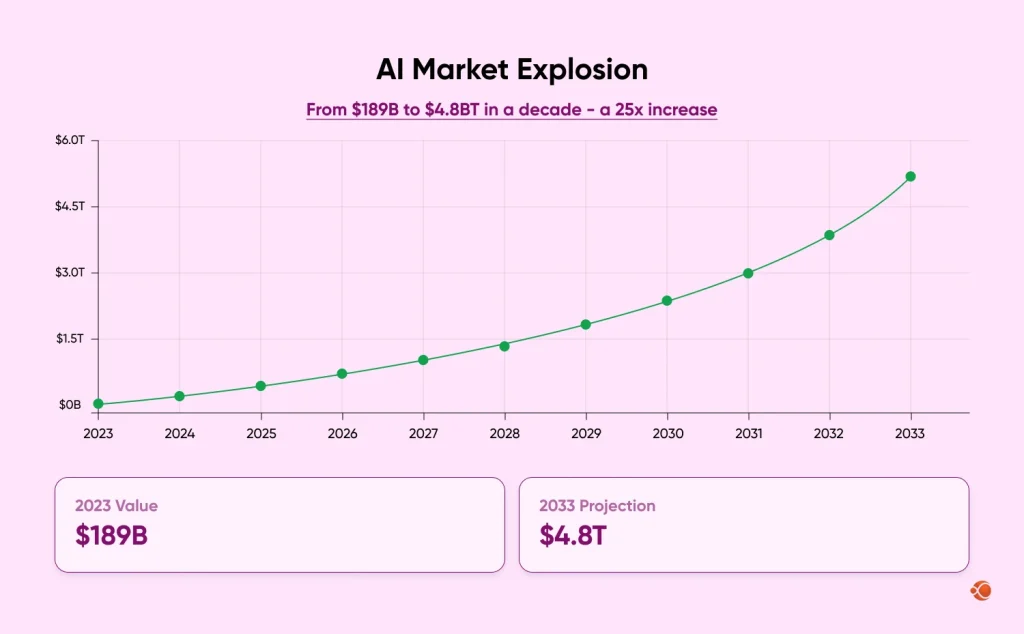
Expected Contribution to Global GDP / Economic Value from AI Over the Coming Years
The contribution of AI to global gross domestic product (GDP) is forecasted to be enormous. This economic value is generated through productivity and new markets.
- AI could add a cumulative total of $15.7 trillion to the global economy by 2030.
- This represents a 14-16% increase in global GDP compared to non-AI scenarios.
- The expected productivity benefits in North America and China are highest, with estimated increases of 14.5% and 10.7% respectively, by 2030.
- New research from IDC entitled “Predicting the Cumulative Global Economic Impact of Business Spending on AI” predicts that business spending to adopt AI, to use artificial intelligence in existing business operations, and to deliver better products/services to consumer customers will have a cumulative global economic impact of $19.9 trillion by 2030 and drive 3.5% of global GDP in 2030.
Sector-wise Distribution (Which Industries Are Investing Most Heavily)
Investment is concentrated in sectors that rely on complex data handling and high-stakes decision-making.
Finance & Banking
- Accounted for a major market share of 19.60% in 2024.
- 25% of banks use AI for fraud prevention.
Technology & Telecom
- Highest intrinsic investment in R&D, focused on foundational models and chip development.
- 48% of tech companies use AI for IT automation, and 45% for cybersecurity.
Healthcare & Life Sciences
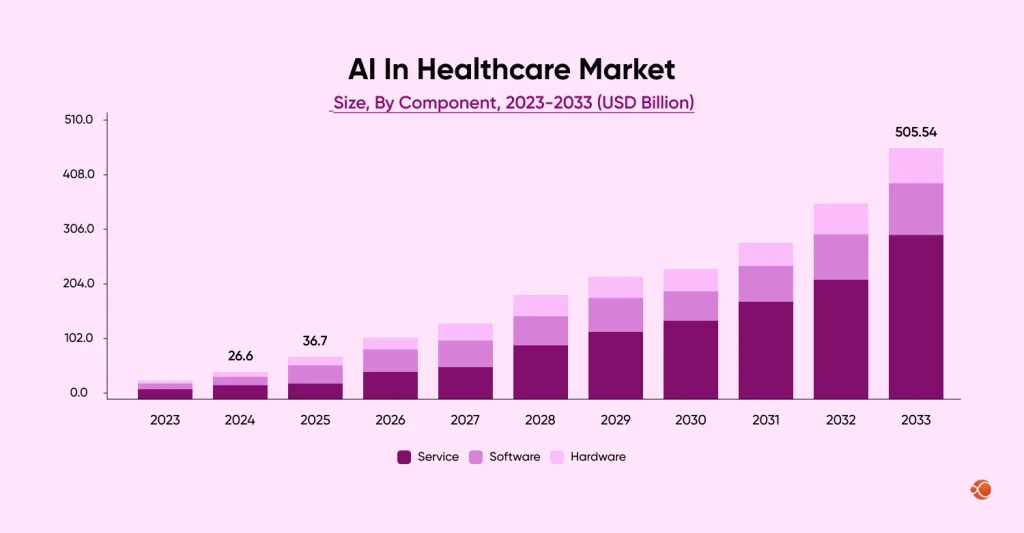
- The AI healthcare market, valued at $26.57 billion in 2024, is projected to $505.59 billion by 2033.
- Based on application, the robot-assisted surgery segment dominated the market in 2024 with a revenue share of over 13%.
CMARIX connects you with pre-vetted developers ready to accelerate your AI initiatives.
Contact UsIndustry-wise AI Adoption & Use Cases
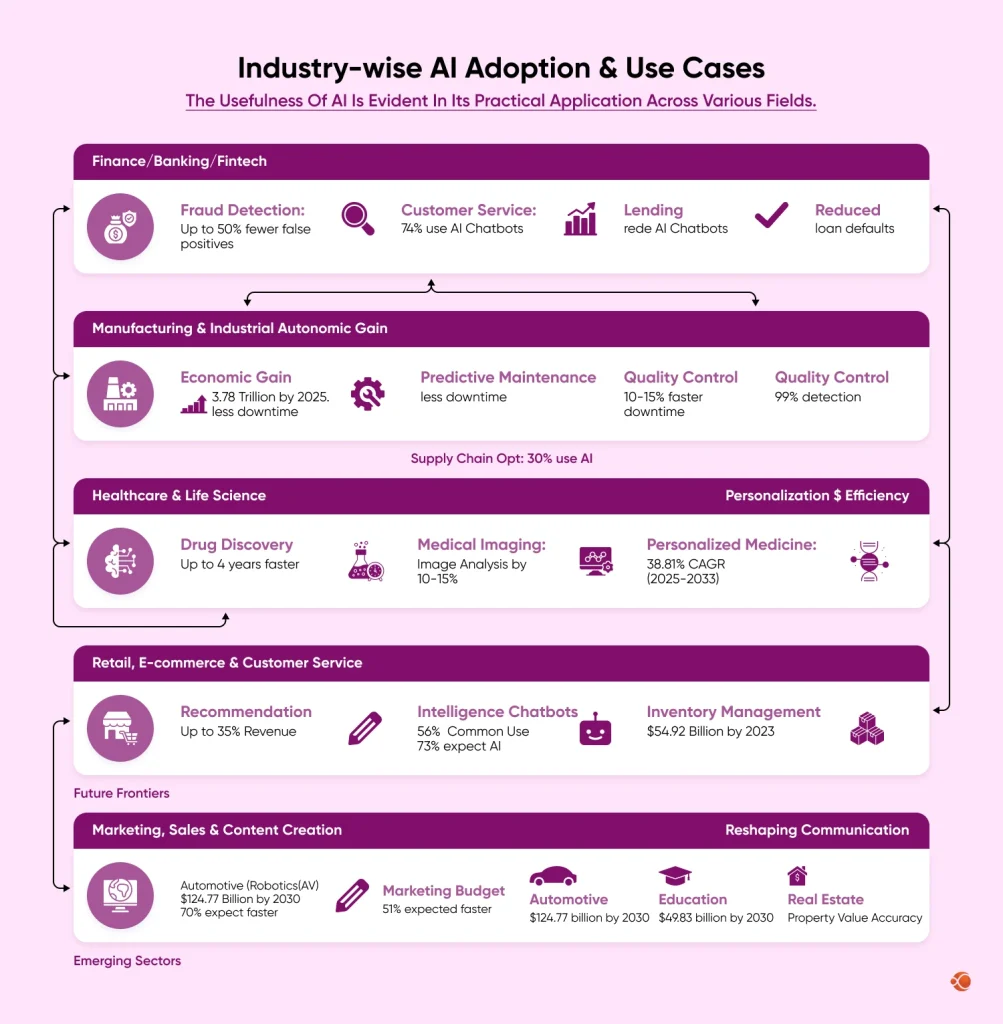
The usefulness of AI is evident in its practical application across various fields.
Finance / Banking / Fintech Adoption and Trends
The financial sector benefits from AI’s speed and accurancy in risk management. AI-driven analytics allow insititutions to process huge amount of data in real-time, identifying potential risks and opportunities that would not be possible to detect manually.
- Fraud Detection: AI algorithms reduce false positives in fraud detection by up to 50% as compared to traditional methods.
- Customer Service: 74% of financial institutions use AI-powered chatbots for customer service interactions.
- Lending: AI-driven credit scoring can reduce loan default rates by up to 15%.
Manufacturing & Industrial Automation
AI is crucial in the move towards “smart factories.” These intelligent facilities leverage machine learning and IoT sensors to create autonomous, self-optimizing production environments.
- Economic Gain: The manufacturing industry stands to gain $3.78 trillion from AI by 2035.
- Predictive Maintenance (PdM): Implementing PdM using AI can reduce equipment downtime by 15-20%.
- Quality Control (QC): Computer vision systems improve defect detection accuracy to over 99% in high-speed assembly lines.
- Supply Chain Optimization: 30% of companies has reported using AI in inventory management, supply chain operations and optimizing logistics.
Healthcare & Life Sciences
The potential for AI in healthcare is revolutionary. From diagnostics to treatment planning, AI is enabling healthcare providers to deliver more accurate, personalized, and efficient care to patients worldwide.
- Drug Discovery: AI can reduce the time required to identify drug candidates by up to 4 years.
- Medical Imaging: AI systems assist radiologists, increasing the speed of image analysis by 10-15%.
- Personalized Medicine: The AI market for personalized medicine is expected to grow at a CAGR of over 38.81% from 2025 to 2033.
Retail, E-commerce & Customer Service / Support
AI is the engine of personalization and efficiency in the consumer world. By analyzing customer preferences and behavior, AI creates smooth shopping experiences that drive engagement and loyalty.
- Recommendation Engines: Account for up to 35% of revenue for some major e-commerce platforms.
- Intelligent Chatbots & Virtual Agents: Customer service is the most common use of AI in business (56%). 73% of business owners expect AI to generate responses to customers, such as chatbots.
- Inventory Management: The global AI market in retail is predicted to grow to $54.92 billion by 2033.
Marketing, Sales & Content Creation (Including AI-Powered Marketing Tools)
AI is reshaping how businesses communicate and generate leads. Marketing teams now leverage AI to automate campaign optimization, predict customer behavior, and create personalized content at scale.
- Content Generation: 70% of business owners anticipate AI to speed up content generation processes.
- Marketing Budget: 51% of marketing professionals report that AI is already integrated into their campaign personalization efforts.
Emerging Sectors (e.g., Travel, Wearables, etc.)
Automotive: The AI robotics market, critical for manufacturing and autonomous vehicles, is expected to surpass $124.77 billion with a CAGR of 38.5% 2024 to 2030.

- Education: The AI in education market is projected to reach $49.83 billion by 2030.
- Real Estate: AI can predict property values with an accuracy of up to 90% in mature markets.
Key Statistics on the Explosive Growth of Generative AI
The introduction of generative image tools and of large language models (LLMs) has transformed public perception of AI.
Usage Stats of Generative AI Platforms/Tools (Adoption, User Base, Growth)
Generative AI adoption has been one of the fastest technological rollouts in history. The key statistics on artificial intelligence in this area focus on velocity:
The key statistics on artificial intelligence in this area focus on velocity:
- Rapid User Base Growth: As of October 2025, OpenAI.com receives 865.8 million monthly visits.
- Business Adoption: Generative AI usage specifically has leaped from 33% in 2023 to an outstanding 71% in 2024/2025.
- Consumer Reach: AI tools now reach an estimated 378 million people worldwide in 2025.
Role of Generative AI in Business Operations
The business case for Generative AI is centered on process automation and productivity gains. Businesses are integrating these tools across departments for smooth workflows, reduced costs, and improved decision-making capabilities.
- Productivity Gains: Studies suggest AI assistants can increase employee productivity in certain tasks by up to 66%.
- Content Generation: Companies plan to invest in Generative AI over the next few years, with a high focus on accelerating AI software development.
- Customer Interaction: Advanced generative AI chatbots have achieved human-level writing ability in 88% of measured scenarios.
Impact on Everyday Users (Consumer Adoption, AI Assistants/Devices)
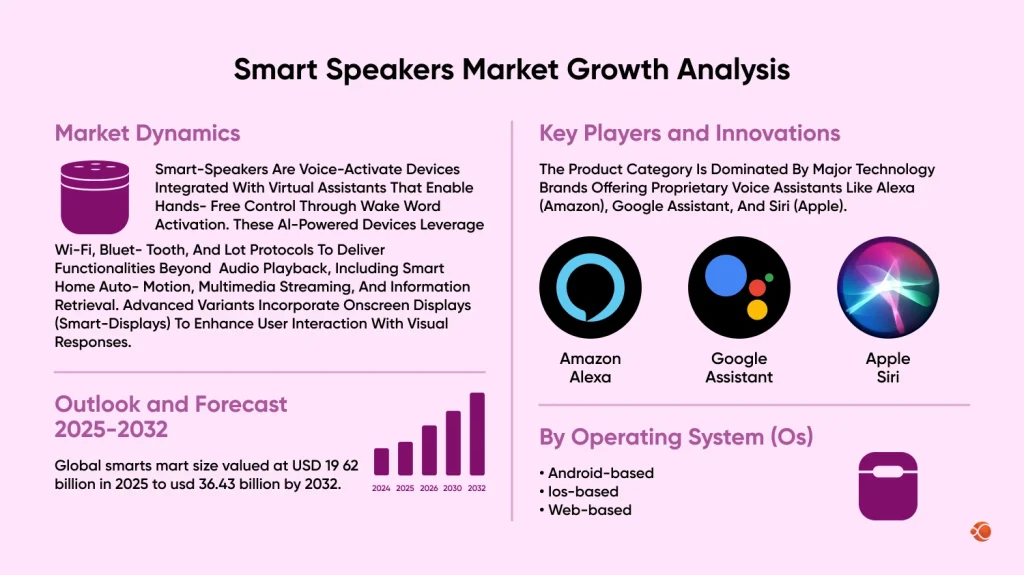
- AI Assistants: Virtual assistants remain the most popular monthly AI tool usage for consumers. The market for smart speakers and voice-enabled devices is projected to exceed USD 19.62 billion in 2025 and reach USD 36.48 billion by 2032.
- Personalized Experience: 65% of consumers are comfortable using generative AI to improve their experiences.

Current Trends in AI Funding and Corporate Investment
AI funding has shown strong upward trend that focuses on fundamental models and AI infrastructure.
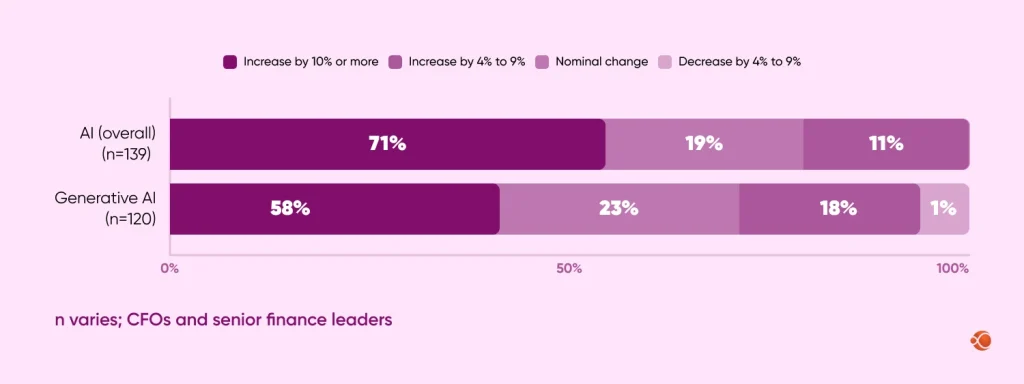
- Corporate Investment: 72% of organizations plan to boost their AI investment in 2024.
- M&A Activity: The average valuation of an AI startup being acquired has increased by 53% in the last three years.
Investment Intent: Most Chief Financial Officers (CFOs) project higher AI budgets in 2024. In December 2023, Gartner polled 302 CFOs and senior finance leaders to understand how budgets and spending are changing in 2024.
Number and Growth of AI Startups Worldwide / Growth in AI-Related Jobs
The artificial intelligence growth statistics are reflected in both money and people. The Artiificial intelligence talent sector is rapidly evolving as organizations compete for skilled professionals while educational institutions race to develop relevant training programs.
- AI-Related Jobs: The demand for professionals with AI skills significantly outpaces supply. AI will affect 40% of jobs, creating new roles and augmenting existing ones.
- Talent Concentration: The USA in terms of talent concentration, accounts for nearly one in three AI experts globally.
Regional Funding Distribution and Emerging Hubs
- China Investment: China’s AI market is expected to increase at 37.3% annually from 2023 to 2030, driven by national investment programs.
- European Market: UK-based startups alone have attracted approximately $4.6 billion in AI funding in 2023. Anticipated to be worth $66.4 billion in 2024, with strength in ethical AI and industrial applications.
- US Private Funding: Reached $109.1 billion in 2024, far surpassing other nations. And 78% of organizations reported using AI.

Major Artificial Intelligence Technological Trends & Innovation Areas
Advances in Core AI Technologies: Market Growth Forecast (2024-2030)
| AI Technology Segment | Projected Growth by 2030 | Use Case Penetration (2024) |
| Generative Models | $320 billion (an 887% increase) | 71% of companies have tried Generative AI. |
| Machine Learning (ML) | $424.1 billion (a 535% increase) | Core component in 88% of current enterprise solutions. |
| Natural Language Processing (NLP) | $120.3 billion (a 330% increase) | Used by 74% of financial institutions for customer interaction. |
Emerging Applications and Verticals (Healthcare AI, AI in Education/Real-Estate/Automotive/Other Sectors)
- Automotive: The AI robotics market, important for manufacturing and autonomous vehicles, is expected to surpass $35 billion by 2030.
- Healthcare: Robot-assisted surgery dominated the global AI healthcare market in 2023.
- AI Hardware: The dedicated AI chip market (used for training/inference) is projected to grow to $311.58 billion by 2029.
Predictions: What to Expect in the Next 5–10 Years in AI Deployment and Innovation
- “AI Inside”: Artificial intelligence will become invisible, deeply integrated into existing software.
- Multimodality: Enterprise software is poised for a seismic transformation over the next five years, with 80% of applications projected to be multimodal by 2030.
- Governance & Standardization: Regulation and open standards for AI safety, transparency, and data artificial intelligence and statistics will become crucial global issues.
Challenges in AI Adoption: Skills, Regulation, and Scaling Barriers
Gaps in Adoption
While enterprise-level organizations are often quick to invest, smaller and medium-sized enterprises (SMEs) face problems. Technical expertise and Limited budgets create significant implementation barriers for small organizations.
- Scaling Difficulty: Approx 74% of companies struggle to move AI initiatives beyond initial pilots and generate tangible value.
- Organizational Size: Nearly half of respondents from companies with more than $5 billion in revenue have reached the scaling phase, compared with 29% of those with less than $100 million in revenue.
Skills Shortage, Data Privacy, Regulatory Concerns
These non-technical challenges pose the most significant risk to the speed of AI deployment.
- Skills Shortage: The lack of qualified individuals creates a critical bottleneck. Nearly half of AI pilots are scrapped before production due to skills, infrastructure, and culture issues.
- Training Gap: 50.11% of people using AI at work get little or no training from their employers.
- Regulatory Concerns: 70% of AI adoption obstacles stem from people and process issues, not the technology itself, highlighting the maturity gap between technology and compliance.
Speed of Change vs. Readiness
The speed at which AI technology is advancing often outpaces an organization’s internal ability to adapt. Organizations struggle to balance innovation with workflow development and compliance needs.
- Ethical Concerns: 68% of executives cite ethical risk as a primary concern when deploying AI.
- Workforce Anxiety: Only a minority of employees (3%) expect their jobs to get automated by AI, while 48% expect some parts of their work to be automated.

Future Outlook: AI’s Global Economic Contribution and Market Growth
Forecast for AI Market Size, Adoption, and Global Economic Impact by 2030
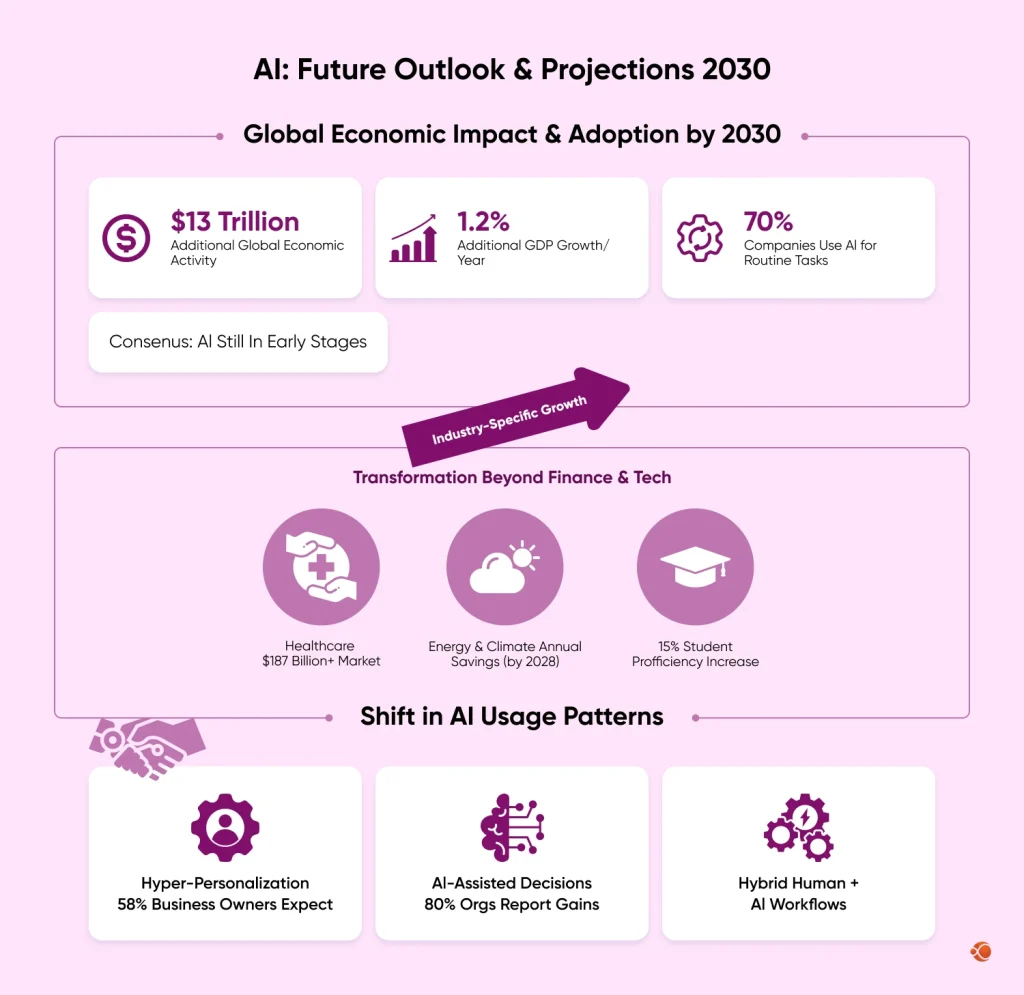
- At the global average level of absorption and adoption implied by our simulation, artificial intelligence has the potential to deliver an additional global economic activity of around $13 trillion by 2030.
- AI will add an equivalent of 1.2% additional GDP growth per year.
- By 2030, it is projected that 70% of companies will use AI to handle routine tasks, freeing human capacity.
Predictions About Which Industries Will Lead Next-Gen AI Growth
- Healthcare: The market for AI in healthcare is expected to be valued at over $187 billion in the next decade.
- Energy & Climate: AI models for grid optimization are projected to save utilities up to $20 billion annually by 2028.
- Education: Personalized learning could increase student proficiency by 15% over the next decade.
Possible Shifts in AI Usage Patterns: More Personalization, AI-Assisted Decision Making, Hybrid Human + AI Workflows
- Hyper-Personalization: 58% of business owners expect AI to create a personalized experience for customers.
- AI-Assisted Decisions: 80% of organizations with scaled AI systems report significant competitive gains from using AI in executive decision-making.
Country-Specific AI Trends: US, China, Europe, India, and Beyond
Examining key markets reveals varied strategies and unique artificial intelligence facts and statistics. Each region brings different priorities, strengths, and approaches to AI development and deployment.
AI Adoption Trends in Major Markets (e.g., US, China, Europe, India, Emerging Economies)
| Region | Key Adoption/Investment Metric | Strategic Focus |
| US | The AI market is valued at $146.09 billion in 2024. It is expected to grow $851.46 by 2034. | Private Capital, Generative AI, R&D. |
| China | The AI market is expected to have a projected revenue of $327,000.1 million by 2033. | Manufacturing, Surveillance, State-backed development. |
| Europe | The market is expected to grow at a CAGR of 33.2% from 2020 to 2025. | Ethical governance, Industrial AI, Healthcare. |
| India | The highest AI deployment rate globally is at 59%. | Fintech, Mobile-first applications, Public service delivery. |
Comparative Analysis: Developed vs. Developing Economies, Strengths and Barriers
| Economy Type | Key Strength | Primary Barrier |
| Developed | Strong R&D, deep capital, established data sets. | Regulatory complexity, legacy IT systems. |
| Developing | Mobile-first mentality, ability to skip legacy tech. | Infrastructure stability, high-skilled talent scarcity. |
Implications of AI Trends for Businesses & Individuals
The ultimate relevance of all these AI use statistics and trends is their impact on how people work and live. Understanding these shifts is important for navigating the evolving landscape of competition and work.
What Increasing AI Adoption Means for Startups, SME
- SMEs: AI allows small firms to automate up to 40% of their administrative tasks.
- Digital Transformation: AI in digital transformation is accelerating across all organizational sizes, with companies integrating AI into core operations to remain competitive.
Skills & Workforce: What Kinds of Talents Will Be in Demand
- Technical Roles: Demand for AI Engineers grew by 71% between 2021 and 2023.
- Core Human Skills: Critical thinking and creativity will be highly valued, as only 3% of employees expect that their jobs will be fully automated by AI.
For Everyday Users: How AI Might Reshape Consumer Experience, Privacy, Jobs, Lifestyle
- Consumer Experience: Experiences will become more seamless and personalized.
- Privacy:68% of consumers are concerned about how AI uses their personal data.
- Lifestyle: AI-managed health systems are projected to save the US healthcare sector from $200 to $360 billion.
Concluding Lines
The data confirms that the AI revolution is not a future prospect; it is a current reality. The compiled artificial intelligence statistics underscore a technology that is redefining global markets, demanding new skills, and presenting complex ethical and regulatory challenges.
The next chapter in the AI story is one of governance, maturity, and ubiquity. Focus shifts from technology to human ingenuity and societal structure that will benefit from it. And, artificial intelligence will evolve from a disruptive force to a fundamental utility.
FAQ: Essential AI Statistics and Insights
What is the global market size of artificial intelligence?
The AI global market size is currently $257.68 billion in 2024 and is predicted to grow to $2407.02 billion by 2032.
Which industries are using AI the most?
Technology/Telecom, Finance/Banking, and Healthcare/Life Sciences are leading. 83% of organizations list AI as a top priority.
How many people use artificial intelligence?
AI tools now reach an estimated 378 million people worldwide in 2025. 65% of consumers are comfortable using generative AI.
What are some statistics about AI?
Key artificial intelligence facts and statistics include its high growth rate (CAGR of approximately 30%), its multi-trillion dollar projected impact on global GDP, and the fact that 70% of adoption obstacles are related to people and process.
How can businesses use AI to scale faster?
Businesses use AI to scale faster by accelerating R&D (e.g., reducing drug discovery time by up to 4 years) and automating customer service. Every $1 spent is projected to yield $4.60 in economic value.
What are the challenges companies face when adopting AI?
Major challenges include the skills shortage (50% of employees get little training), regulatory compliance (68% of executives cite ethical risk), and the fact that 74% of companies struggle to scale pilots.