

Quick Summary: AI telemedicine chatbot development helps medical professionals to deliver faster patient care, reduce staff workload and improve access. These chatbots check symptoms, handle scheduling while maintaining security, compliance and care guidance. This blog explains how to plan, build and scale reliable AI chatbots for modern telemedicine platforms and show how telemedicine and AI in healthcare are reshaping customer experience
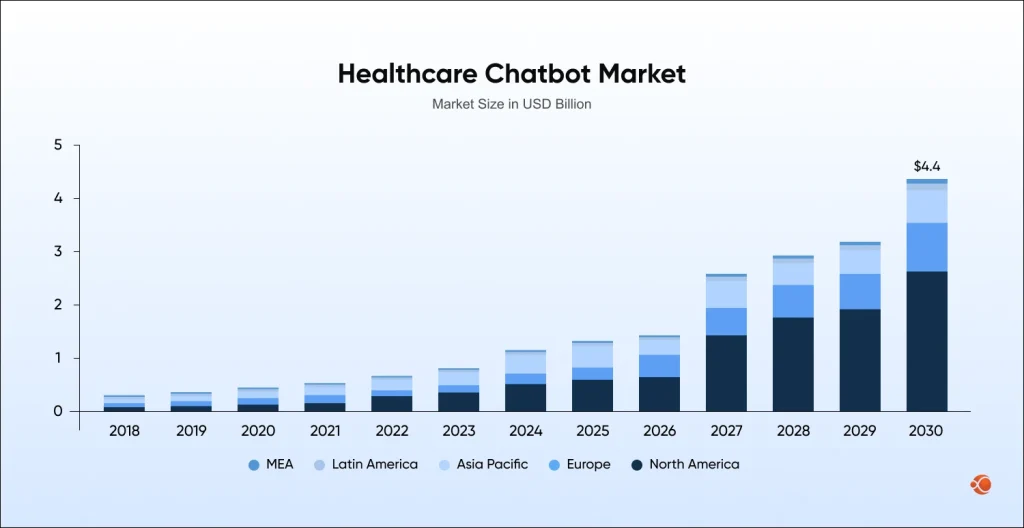
Healthcare keeps changing, and one of the most driving reasons is how people digitally connect in order to achieve healthcare. Patients increasingly expect faster responses, easy scheduling, and assistance during hours when the clinic might be closed. This is where AI telemedicine chatbots come in. They are bridging the gap between medical staff and patients, often before a human clinician ever steps in and playing an important role in AI in telemedicine. According to Grand View Research, the global healthcare chatbot market is projected to reach USD 4,355.6 million by 2030, growing at a CAGR of 24% from 2025 to 2030.
In this guide, you’ll get a clear, real-world look at how to plan, build and launch an AI telemedicine chatbot. You’ll also see the benefits, what they cost and what the future holds for it.
Let’s start with the basic definition of AI telemedicine chatbot-
What is an AI Telemedicine Chatbot?
An AI telemedicine chatbot is a conversational system. Which is designed for patients to interact through voice or text, helping them to get medical information, assess symptoms, book appointments and sometimes even manage ongoing care. Not like rule-based chatbots, these systems use Natural Language Processing and Machine learning to understand what users mean, not just what they type.
It doesn’t replace doctors, but it helps patients reach the right care faster; this is often part of broader telemedicine software development initiatives.
Why Healthcare is Adopting AI Chatbots
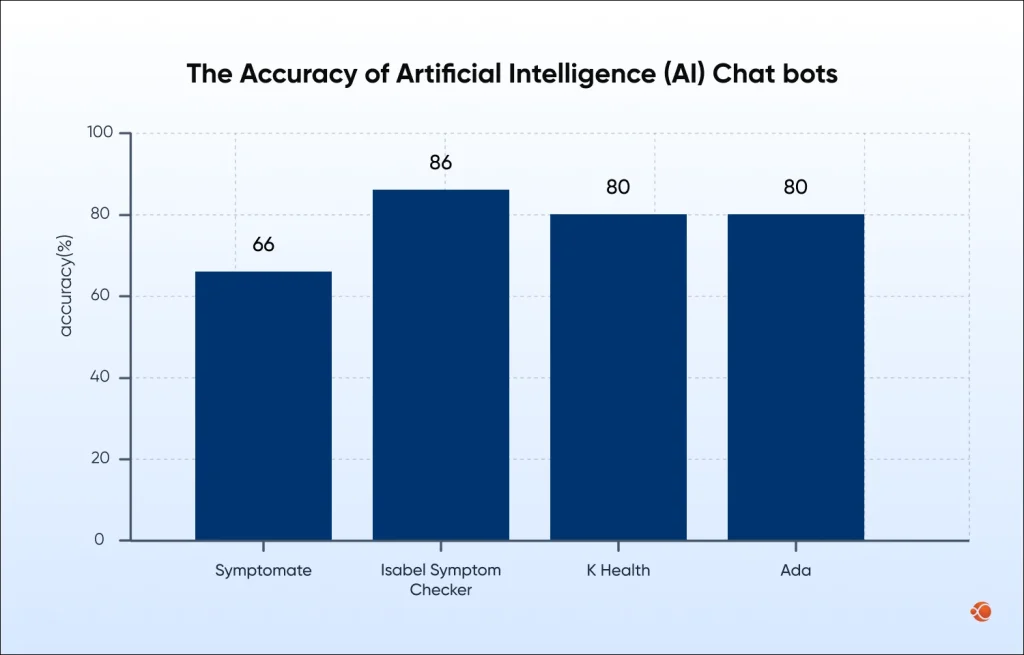
The healthcare sector is under pressure. Patient volumes are rising. Staff shortages are real. Costs keep climbing. Meanwhile, patients want fast, simple, mobile-friendly experiences. In evaluations of AI chatbots used for telemedicine symptoms assessment, different symptom-checker tools averaged between about 66% and 86% accuracy in producing a correct diagnosis.
Chabots help by:
- Handling common questions instantly
- Reducing call center load
- Supporting patients between visits
- Improving access for people in underserved or remote areas.
You might notice that many hospitals now give chat options right on their websites or apps. It’s one of the most practical ways to improve access without overworking employees, especially when paired with reliable custom software development services.
Telemedicine Today vs. Traditional Healthcare Systems
Limitations of Traditional Healthcare Delivery
Traditional healthcare depends on in-person visits, phone calls, and manual workflows. While this chatbot model has worked for decades, it comes with real limits:
- Long wait times for appointments
- Overloaded call centers and front desks
- Missed follow-ups and medication errors
- Poor access in rural or low-resource areas
In many cases, patients don’t need a full appointment. They just need reassurance, guidance and help with simple tasks. But without digital tools, they still end up waiting for days or weeks.
How Telemedicine Improves Access and Efficiency
Telemedicine removes many of the barriers. Video calls, digital forms and secure messaging allow patients to get care without leaving home. Medical professionals can classify cases faster and focus on those who need attention most. This transformation has led to growing demand for better platforms built with AI software development services, especially those that are easy to use, secure and scalable.
Role of AI in Modern Telemedicine Platforms
AI adds intelligence to telemedicine. Instead of static forms or basic chat windows, AI-powered systems can:
- Interpret symptoms
- Flag urgent cases
- Personalize responses
- Learn from past interactions
That’s where AI telemedicine chatbot development becomes a necessity. It turns a simple communication channel into an active participant in care delivery.
Types of AI Chatbots in Telemedicine
Different healthcare needs call for different types of chatbots. Below are the most common ones you’ll see in telemedicine today.
| Chatbot Type | Primary Use | Key Benefits | Typical Users |
| Symptom Checker | Early assessment | Faster triage, reduced ER visits | General patients |
| Scheduling Bot | Appointment management | Fewer no-shows, lower admin load | Clinics, hospitals |
| Virtual Nurse | Care navigation | Better care routing, staff relief | Health systems |
| Mental Health Bot | Emotional support | 24/7 access, reduced stigma | Individuals, employers |
| Chronic Care Bot | Ongoing condition support | Better outcomes, fewer readmissions | Chronic patients |
| Admin/Billing Bot | Operational support | Faster service, cost savings | Providers, payers |
Many organizations choose to hire AI developers to tailor these chatbot types to their workflows, compliance needs, and patient population.
Key Benefits of AI Chatbots in Telemedicine
Improved Patient Engagement and Satisfaction
Patients want simple interactions and quick answers that chatbots give. Whether it’s checking symptoms at midnight or rescheduling an appointment during lunch, patients get help when it suits them. Over time, this builds trust and encourages people to stay engaged with their care.
Reduced Workload for Healthcare Staff
Front-desk teams and call centers handle a huge volume of repetitive tasks. Chatbots take over many of these, at the same time allowing healthcare professionals to focus on more complex cases and direct patient care. In many organizations, this shift alone justifies the investment.
Faster Diagnosis Support, and Triage
Through the collection of data regarding patient symptoms prior to a physical visit, chatbot
help in preparation and prioritisatiön for physicians. For urgent situations, patients can be seen earlier, and for non-urgent ones, things happen more efficiently. It does not substitute but only assists.
Cost savings and Operational efficiency
When administrative work decreases and costs go down. When staff time is used more effectively, productivity goes up. When healthcare providers take help from organizations that build healthcare scheduling software systems, they often see faster returns when integrating chatbots into their workflows.
24/7 Availability and Scalability
Unlike human customer or service representatives, bots do not have to sleep, take a break, or change their shifts. They are available for use 24/7. They also do not have any extra cost for managing thousands of people at once. Such capacity cannot really be matched.
Partner with CMARIX for scalable, secure healthcare chatbot development.
Contact UsStep-by-Step Guide to AI Telemedicine Chatbot Development
Building a healthcare chatbot isn’t just about writing code. It is about understanding care workflows, safety and user behavior.
Step 1: Identify User Needs
Begin with real problems, not technology.
Ask questions like:
- Where are patients getting stuck?
- Which tasks consume the most staff time?
- What errors or delays happen most often?
Common starting points involve symptom checking, scheduling an appointment and basic support. But your best use case depends on your organization’s constraints and goals.
Step 2: Choose Chatbot Type and AI Technology
Decide whether you need:
- A rule-based bot
- An AI-driven NLP bot
- A hybrid model
Most healthcare firms today opt for AI-powered chatbots because they handle natural language better and adapt over time. This often includes AI voice bot development if you plan to support hands-free, voice-first interactions.
You’ll also need to choose between multimodal bots, text-based or voice-based. If you’re exploring speech synthesis, speech recognition and real-time interaction.
Step 3: Design Conversational Flows and UX
Conversation design matters more than people think. Interactions must feel natural, clear and supportive, especially in healthcare settings. Avoid using jargon, use simple language, give users options and confirm understanding. Sometimes, users won’t answer questions clearly. Your chatbot should handle ambiguity, ask follow-up questions and gracefully hand off to a human when needed.
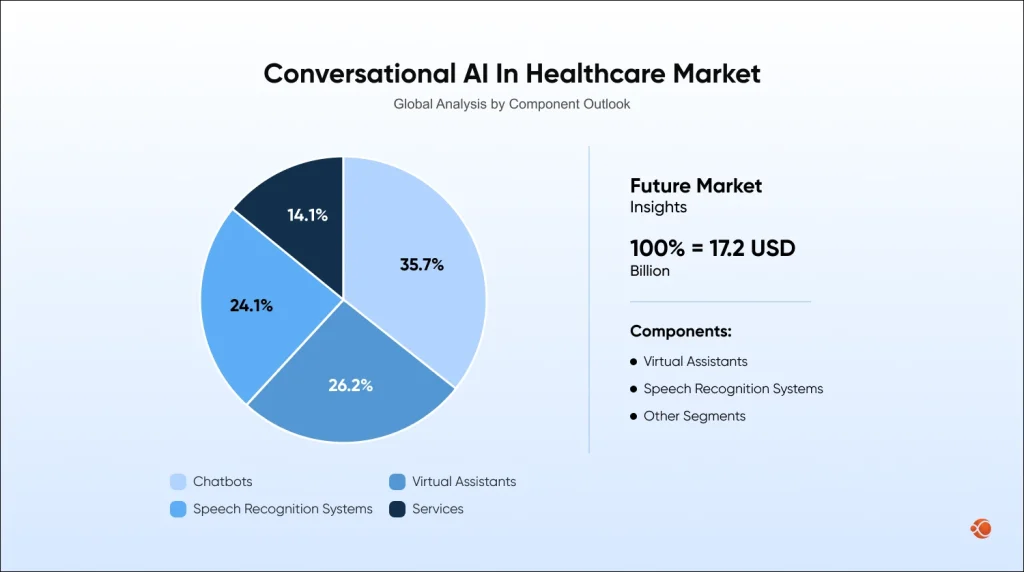
The chatbots component was projected to account for 35.7% of the conversational AI market in healthcare the previous year.
Step 4: Select Tech Stack and Healthcare Integrations
Your chatbot needs to connect with existing systems, such as:
- Appointment scheduling platforms
- Electronic Health Records(EHR)
- Billing and insurance systems
- Patient portals
Choosing the right architecture early saves time later. For instance, when building a telemedicine app in Saudi Arabia, the choice of the right architecture is important to adhere to local compliance and infrastructure standards.
Step 5: Train and fine-tune the AI model
Training data is the most important thing of your chatbot.
You’ll need:
- Sample conversations
- Clinical guidelines
- Approved medical content
- Real user queries(when available)
Training the model will not stop after launch, as continuous improvement is key. Monitor conversations, review failures and update models regularly. This stage often overlaps with AI PoC development services, where teams test feasibility and performance before final launch.
Step 6: Test for Safety, Accuracy, and Compliance
Healthcare chatbots are supposed to meet certain high security standards.
Testing should include:
- Language clarity
- Clinical accuracy
- Error handling
- Security vulnerabilities
- Compliance with healthcare regulations
This isn’t just technical QA; many times it includes clinicians, compliance officers and patient experience teams.
Step 7: Deploy, Monitor and Improve continuously
Once deployed, your chatbot becomes part of your care delivery system.
Track metrics such as:
- Escalation rates
- Conversation success rates
- Patient satisfaction
- Staff workload changes
Use this data to refine flows, retrain models and expand use cases over time. This ongoing cycle is what makes AI telemedicine chatbot successful in the long run.
Security, Compliance, and Risk Management for AI Telemedicine Chatbots
Since AI telemedicine chatbots handle sensitive health data, security and compliance can not be an afterthought. They must be built from day one, quietly, reliably and without disrupting the patient experience.
Healthcare data is sensitive and confidential. A single breach can damage patients’ trust, trigger legal penalties and disturb operations. That’s why telemedicine chatbots must follow standards than regular customer service bots and be designed with safety as a core requirement, not an add-on
Regulatory and Legal Compliance
Chatbots that handle patient data in the U.S. must follow HIPAA, and those in the EU follow GDPR, which requires clear consent, limited data collection, and user rights such as access, correction, and deletion. Telemedicine chatbots must be designed as per these rights by default and make compliance part of the user experience.
Data Protection and Privacy
- Patients’ data should be encrypted while being transmitted and while stored. This makes sure that even if data is intercepted or accessed improperly, it can not be read or misused.
- Healthcare chatbot data must be stored in safe, secure and compliant environments with strict access controls. Storage systems should meet healthcare-grade security standards and prevent unauthorized access.
- Only approved staff and systems should be able to access chatbot data. Role-based access, along with strong authentication help prevent internal misuse, accidental exposure and security breaches.
Consent, Transparency, and User Trust
Users and patients must know they are interacting with an AI system. This proper disclosure helps build trust and avoid confusion, especially in healthcare environments. Patients’ consent should be taken for the collection, storage, and use of their data. Also consent should be simple to understand, easy to manage and withdraw at any time.
Clinical Safety and Risk Management
- Avoiding Diagnosis: AI telemedicine chatbots should give support and should not replace medical professionals. They must avoid giving diagnoses or making any treatment decisions, instead guiding users toward appropriate next steps or human care.
- Escalation to Humans: The system must recognize urgent situations or high-risk situations and immediately escalate them to human staff. This makes sure patients receive timely care when it is necessary.
- Clinical Review: Health information used in chatbots should be periodically checked for accuracy and assurance that it meets current best clinical practice guidelines.
Ethical AI and Fair Use
To avoid biased responses that could affect care quality across different populations, chatbots should be tested regularly. Fairness must be built into both training data and system behavior. The functionality of a chatbot should facilitate language levels and accessibility to support the provision of care instructions to all users, instead of limited ones.
Estimated Development Cost and Timeline for AI Telemedicine Chatbots
Depending on the complexity, taking into account regulatory issues and scope, the timeline may vary in terms of creating an AI telemedicine chatbot, as well as the cost. No normal budget estimate exists to create an AI telemedicine chatbot, but there are important factors influential in the development of the costs one should take into account to develop realistic estimates. Many healthcare organizations depend on specialized AI chatbot app development services to manage clinical complexity, ongoing optimization, and compliance requirements while keeping projects on track.
Cost Breakdown by Features and Complexity
| Feature Area | Cost Impact |
| Basic NLP chatbot (FAQ, scheduling) | Low |
| Symptom checking and triage logic | Medium |
| EHR, scheduling, and billing integrations | Medium to High |
| Voice support and multilingual capability | High |
| Clinical decision support and chronic care workflows | High |
| HIPAA/GDPR compliance and security layers | Essential, adds cost |
| Analytics dashboards and reporting | Medium |
MVP vs. Enterprise-Level Chatbot Development
| Scope | MVP Chatbot | Enterprise Chatbot |
| Use cases | 1–2 core workflows | Multiple clinical and admin workflows |
| AI capability | Basic NLP and rule-based logic | Advanced NLP, ML models, learning loops |
| Integrations | Limited (e.g., scheduling only) | EHR, CRM, billing, patient portals |
| Compliance | HIPAA baseline | HIPAA + GDPR + internal governance |
| Cost Range | $20,000 – $60,000 | $100,000 – $300,000+ |
| Best for | Pilots, startups, clinics | Health systems, enterprises |
Typical Development Timelines
| Phase | Time Estimate |
| Planning and use case definition | 2–4 weeks |
| UX design and conversation flows | 3–5 weeks |
| AI model training and backend development | 6–10 weeks |
| Integrations and security implementation | 4–8 weeks |
| Testing, compliance review, and deployment | 3–6 weeks |
Factors Affecting Cost and Delivery
Many variables influence both the delivery speed and cost:
- Clinical complexity
- Compliance requirements
- AI maturity
- Integration scope
- Voice and multilingual support
- Ongoing training and optimization
Future Trends in AI-Powered Telemedicine Chatbots
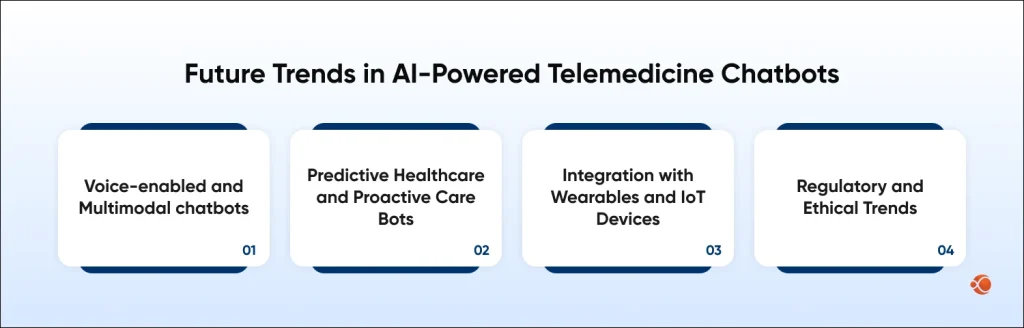
AI telemedicine chatbots are evolving beyond basic support tools into intelligent care companions. The next generation of systems will play a larger role in personalization, prevention and continuous care delivery.
Voice-enabled and Multimodal chatbots
Voice interaction is becoming a key part of telemedicine, driven by advances in telehealth artificial intelligence, especially for elderly patients, people with disabilities, and users in low-literacy settings.
Future chatbots will combine:
- Text+voice+visual interfaces
- Real-time speech recognition and synthesis
- Emotion detection and tone adaptation
This will make healthcare access more inclusive, natural and hands-free.
Predictive Healthcare and Proactive Care Bots
Rather than waiting for patients to ask for help, future chatbots will:
- Predict potential health risks
- Monitor patterns in symptoms and behavior
- Proactively recommend tests, checkups or lifestyle changes.
This moment of chatbots from reactive tools to active participants in preventive care.
Integration with Wearables and IoT Devices
Chatbots will increasingly connect with:
- Glucose monitors and blood pressure devices
- Smartwatches and fitness trackers
- Remote patient monitoring systems
This allows chatbots to give real-time feedback, medication reminders and alerts based on live health data rather than self-reported symptoms alone.
Regulatory and Ethical Trends
As AI becomes more embedded in healthcare, regulations will continue to evolve. Key trends include:
- More detailed documentation of model behavior and training data
- Stronger transparency requirements for AI systems
- Increased emphasis on explainability in clinical decision support
- Ongoing audits for safety, bias and fairness
Healthcare organizations will need to design chatbot systems that are not only compliant today but also adaptable to future regulatory changes. As AI becomes more embedded in healthcare, regulations continue to evolve. This shifts the growing influence of artificial intelligence in telehealth.
Why Choose CMARIX for AI Telemedicine Chatbot Development
CMARIX brings deep healthcare domain knowledge, proven AI expertise and strong compliance practices to every project. Our development team designs secure, scalable telemedicine chatbots tailored to real clinical workflows. From strategy and UX to deployment and support, we help healthcare organizations launch intelligent solutions faster, reduce operational burden and deliver better patient experiences with confidence.
- Healthcare-focused AI and telemedicine expertise
- End-to-end support from strategy to post-launch optimization
- HIPAA and GDPR compliant development approach
Conclusion
AI telemedicine chatbots are reshaping how healthcare is delivered by reducing workload, improving access, and supporting better patient outcomes. With the right technology, strategy, and compliance framework, and with the support of experienced AI consultancy services, organizations can build reliable, scalable solutions that strengthen care delivery and patient experience across every digital touchpoint.
FAQs on AI Telemedicine Chatbot Development
How long does it take to develop an AI chatbot for telemedicine?
The estimated development typically takes 3 to 4 months for an MVP and 6 to 9 months for an enterprise-grade chatbot, integrations, depending on testing complexity, features and compliance requirements.
How do AI chatbots integrate with existing healthcare systems?
In existing healthcare systems, AI chatbots can be integrated through secure APIs with EHRs, billing platforms, scheduling systems and patient portals, allowing real-time data exchange while maintaining privacy, compliance and security.
How can healthcare providers prevent AI-generated fraud in telemedicine?
Providers can prevent fraud by implementing strong identity verification, audit logs, role-based access, AI monitoring systems and regular security testing, along with staff training and strict compliance controls.
What role does AI play in telehealth solutions?
AI improves telehealth by allowing symptom assessment, personalization, automation and predictive care, helping providers deliver faster, safer and more efficient healthcare services.
What EHR systems can telemedicine chatbots integrate with?
Telemedicine chatbots can integrate with major EHR platforms such as Cerner, Epic, Allscripts, Meditech, Athenahealth, and other FHIR-compliant systems.
How accurate are AI chatbots for medical symptom assessment?
AI chatbots are highly effective for medical symptom assessment, but are not diagnostic tools. Their accuracy depends on training data, clinical validation, and continuous improvement and they should always support, not replace, clinical judgement.