


Quick Summary: Fintech apps now touch nearly every aspect of how companies and people move, save, and borrow money, and the market continues to expand rapidly. This guide covers 20 fintech app ideas for 2026, from P2P payments and neobanks to fraud detection, with the market context and core features behind each. Whether you are a startup founder or an established business exploring a digital shift, you will find a concept here worth building.
A loan required a visit to the bank branch, a lot of paperwork, and sometimes even weeks of waiting for the money. Money management was something like writing checks, using spreadsheets if one was an organized person, and trying to keep in mind what payments need to be made in one month.
The financial transactions sector alone creates $2.5 trillion of revenue on $2.0 quadrillion in value movement through 3.6 trillion transactions worldwide, and this does not even factor in lending, investments, insurance, and regulatory technology that rides on the same digital network. When it comes to fintech opportunities for either new or existing businesses, the question is not if but what to develop.
What Is a Fintech App? A Quick Definition
A fintech app is any mobile or web application that uses technology to deliver, automate, or improve a financial service, things like payments, lending, investing, insurance, or budgeting, without requiring a trip to a bank branch or an insurance office. The term “fintech” is shorthand for financial technology and encompasses everything from a simple bill-splitting app to a full digital bank operating without a single physical location.
A key aspect of fintech apps versus apps that simply incorporate finances into their operations is the extent of their financial capability. A retailer’s app with payment options involving a credit card does not qualify as a fintech app. However, an app with capabilities like storing several credit cards, monitoring expenditure, and issuing its own virtual credit card qualifies as a fintech app. In most cases, the other characteristic that separates fintech apps from consumer apps is the regulatory implications attached to them.
20 Best Fintech App Ideas for 2026
Here’s a quick look at all 20 ideas and their top features before we go through each one in detail.
| Fintech App Ideas | Top Features |
| 1. Peer-to-Peer Money Transfer | Instant transfers, bill-splitting, in-app chat |
| 2. Digital Wallet and Neobank | Virtual card issuance, multi-currency support, KYC verification |
| 3. Personal Finance and Budgeting | Account aggregation, auto-categorization, credit monitoring |
| 4. Investment and Robo-Advisory | Real-time market data, algorithmic rebalancing, tax-loss harvesting |
| 5. P2P Lending | Reverse-auction rates, escrow holding, credit scoring |
| 6. Buy Now, Pay Later (BNPL) | Instant credit decisioning, installment scheduling, merchant dashboard |
| 7. Insurtech | AI risk assessment, instant quotes, photo-based claims |
| 8. Expense Management for Businesses | Corporate card controls, receipt scanning, approval workflows |
| 9. Crypto and Blockchain Wallet | Cold storage, biometric authentication, built-in exchange |
| 10. Regtech and Compliance | Regulatory monitoring, audit trails, risk scoring |
| 11. Micro-Investing and Round-Up Savings | Round-up calculation, fractional shares, goal tracking |
| 12. Credit Scoring and Monitoring | Free score tracking, bureau reporting, identity monitoring |
| 13. Payment Gateway and Merchant Payment | Multi-payment support, fraud detection, settlement reporting |
| 14. Bill Payment and Utility | Due-date reminders, one-click payment, multi-biller aggregation |
| 15. Remittance and Cross-Border Payment | Real-time exchange rates, low-fee transfers, delivery tracking |
| 16. Open Banking | Bank API integration, account aggregation, consent management |
| 17. Tax Filing and Management | Guided filing, auto-deduction detection, e-filing integration |
| 18. Fraud Detection and Risk Management | Real-time monitoring, anomaly detection, case management |
| 19. Crowdfunding | Campaign management, backer updates, investor verification |
| 20. Digital Mortgage | E-signature, automated underwriting, status tracking |
Our team can help you scope a compliant, build-ready MVP.
1. Peer-to-Peer Money Transfer App
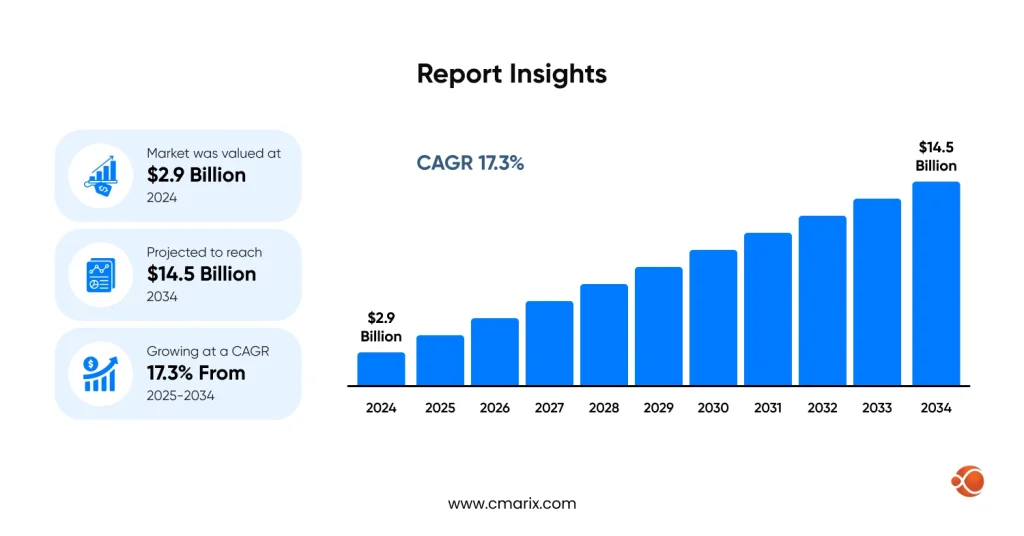
P2P transfer apps let users send and receive money directly from a linked card or bank account, no cash or checks involved. They’re one of the most familiar fintech categories because apps like Venmo and Zelle have already made the behavior mainstream, but there’s still room for niche plays, such as transfer apps built for specific diaspora communities, freelancer marketplaces, or shared-expense groups. The category keeps growing too: the global P2P payment market is projected to grow from $2.85 billion in 2024 to $14.5 billion by 2034, a 17.3% CAGR, according to Allied Market Research.
Core features
- Instant transfer using OTP or unique ID authentication
- Split billing
- Transaction history
- Instant notifications
- In-app chat facility to discuss payment with friends/family
2. Digital Wallet and Neobank App
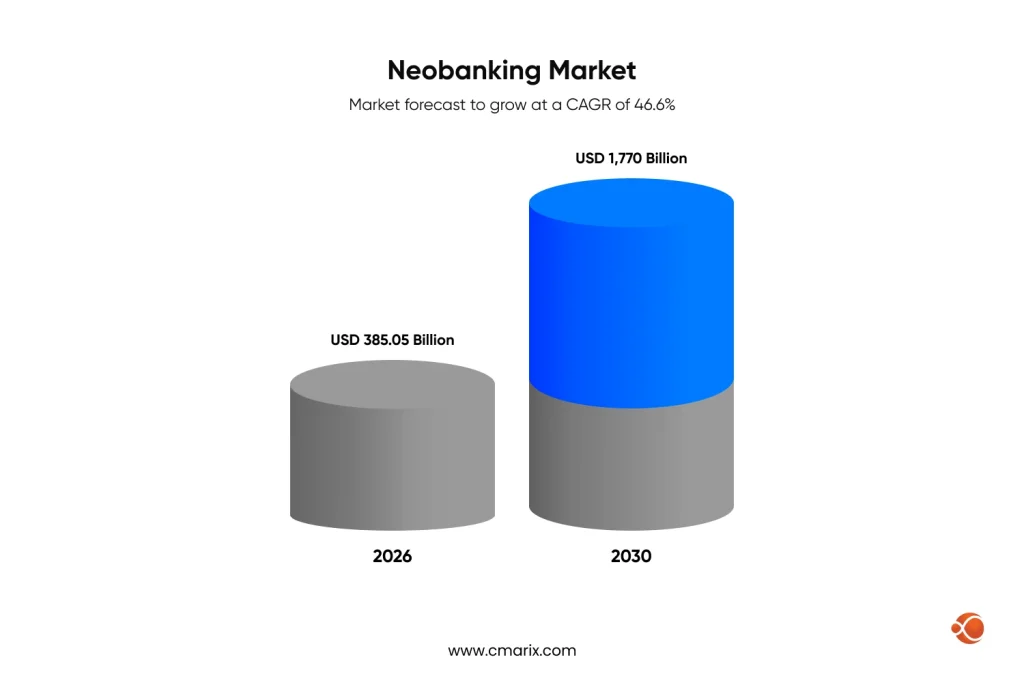
A digital wallet or neobank enables the user to store all the information related to their card or bank and manages everything regarding finances through their phone. The segment is growing very quickly, as the global neobanking market was worth $211.2 billion in 2025 and is expected to grow up to $1.77 trillion by 2030, a 46.6% CAGR.
Core features
- Account opening and KYC verification
- Virtual and physical card issuance
- Real-time spend tracking
- Multi-currency support
- Integrated savings tools
3. Personal Finance and Budgeting App
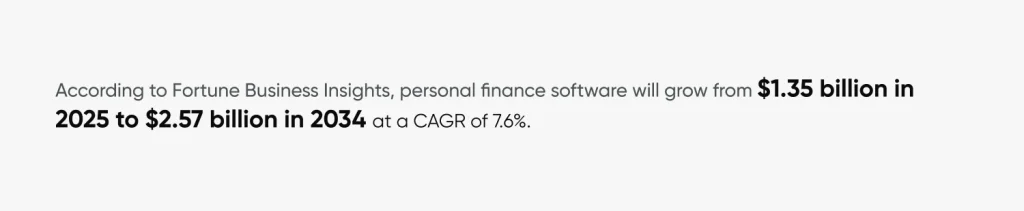
Such applications provide all accounts, credit cards, and bills of a person in one dashboard so that he/she can easily understand where his/her money goes. The most effective applications not only monitor but also analyze spending, warn of any anomalies, and suggest saving money rather than just providing statistics.
If you’re mapping out the full build, our guide on personal finance app development breaks down the process and feature set in more depth.
Core features
- Bank account aggregation
- Automatic expense categorization
- Budget creation
- Free credit score monitoring
- Customizable spending alerts
Our team has shipped licensed banking platforms from the ground up.
4. Investment and Robo-Advisory App
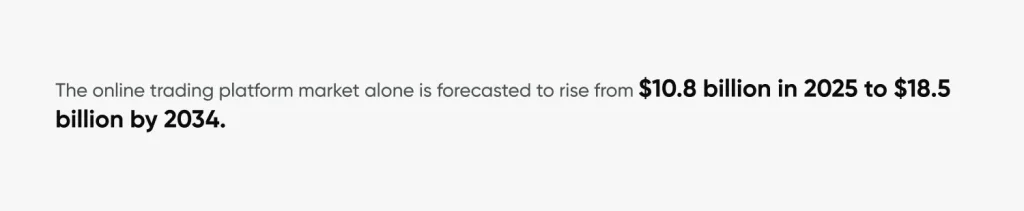
Investment apps have pulled trading and portfolio management out of the broker’s office and onto the phone screen, letting users buy and sell stocks, ETFs, and crypto, or hand decisions entirely to an algorithm. Robo-advisors in particular have made portfolio management accessible to people who would never have hired a financial advisor.
If you want to study a category leader closely, our breakdown of how to build an app like Robinhood covers the feature set and development approach in detail.
Core features
- Commission-free trading
- Real-time market data
- Algorithm-based portfolio rebalancing
- Tax-loss harvesting
- Retirement account support
5. P2P Lending App
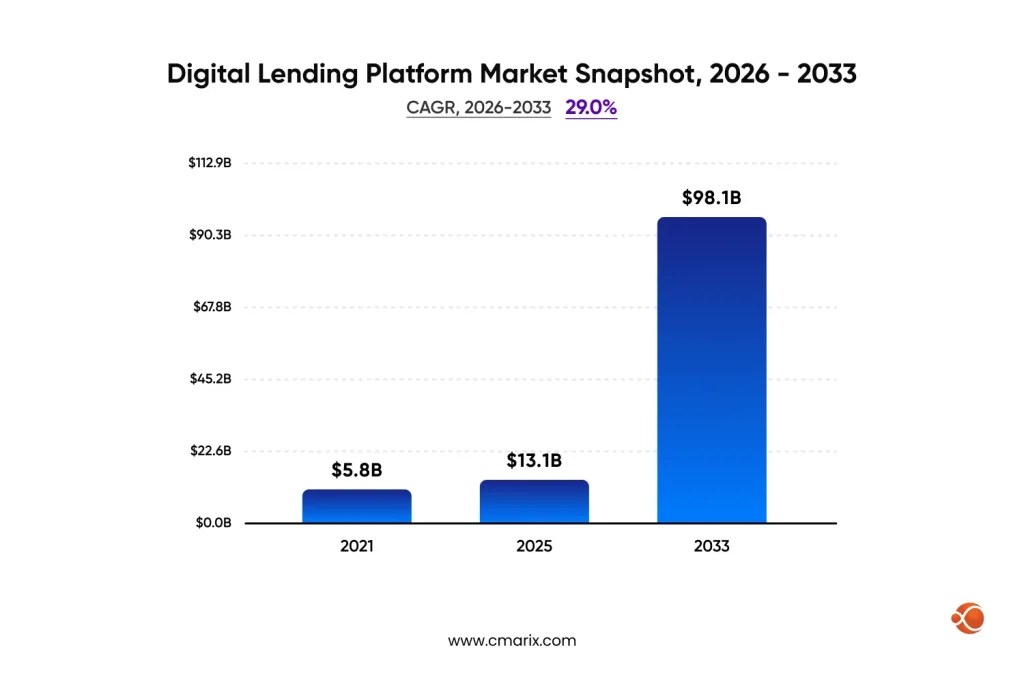
The P2P lending platforms link up individual lenders with individual borrowers without the intervention of the bank as an intermediary. Borrowers usually benefit from more favorable rates compared to those offered by a payday lender, while lenders benefit from interest rates that are higher than savings accounts. The interest rates are usually fixed or based on a reverse auction system whereby borrowers specify the minimum interest rates acceptable to them. The total digital lending platform industry is expected to increase from $10.6 billion in 2024 to $44.5 billion in 2030 at a CAGR of 27.7%.
For teams building in the adjacent money-management space, our guide on how to build a money management app like Fi Money is a useful companion resource for the underlying architecture and compliance groundwork.
Core features
- Borrower credit assessment
- Reverse-auction interest rate setting
- Escrow-based fund holding
- Automated repayment scheduling
- Default risk scoring.
6. Buy Now, Pay Later (BNPL) App
BNPL apps enable customers to make an installment purchase at the time of checkout, usually without any interest charges when the payment is made on time. This system is now a standard part of the checkout process for most e-commerce systems and functions as well as an app that connects with various merchants.
Core features
- instant credit decisioning at checkout
- installment scheduling
- merchant partnership dashboard
- late payment handling
- spending limit management
7. Insurtech App
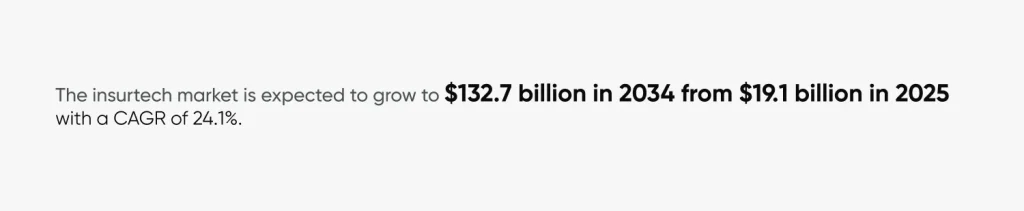
Insurtech mobile applications utilize data and automation for insurance and make the entire process faster – from obtaining quotes to filing a claim. Rather than undergoing a lengthy underwriting process that could take weeks, an algorithm can evaluate risks and provide you with a quote within minutes. Claims that previously could be filed only after a call and sending a paper form through the mail can be filed right from your smartphone using some photographs.
Core features
- AI-based risk assessment
- Instant quotes
- Dashboard for policy management
- Claim filing with photos
- Compatibility with various insurance firms
8. Expense Management App for Businesses
Expense management software has moved from the spreadsheet method to automation with approval processes and company card integration. For finance teams, the benefit is in having visibility on spend and not having to reconcile at month-end.
Core features
- Company credit cards
- Automatic receipt scanning
- Process workflow approval
- Spend dashboard monitoring
- Integrate accounting software
9. Crypto and Blockchain Wallet App
Crypto wallet applications permit users to securely save, transfer, and even trade their digital assets without logging out of the application. Security is all there is to this product since an insecure wallet will lose its users forever because cold storage and multi-level authentication are necessities and not optional additions.
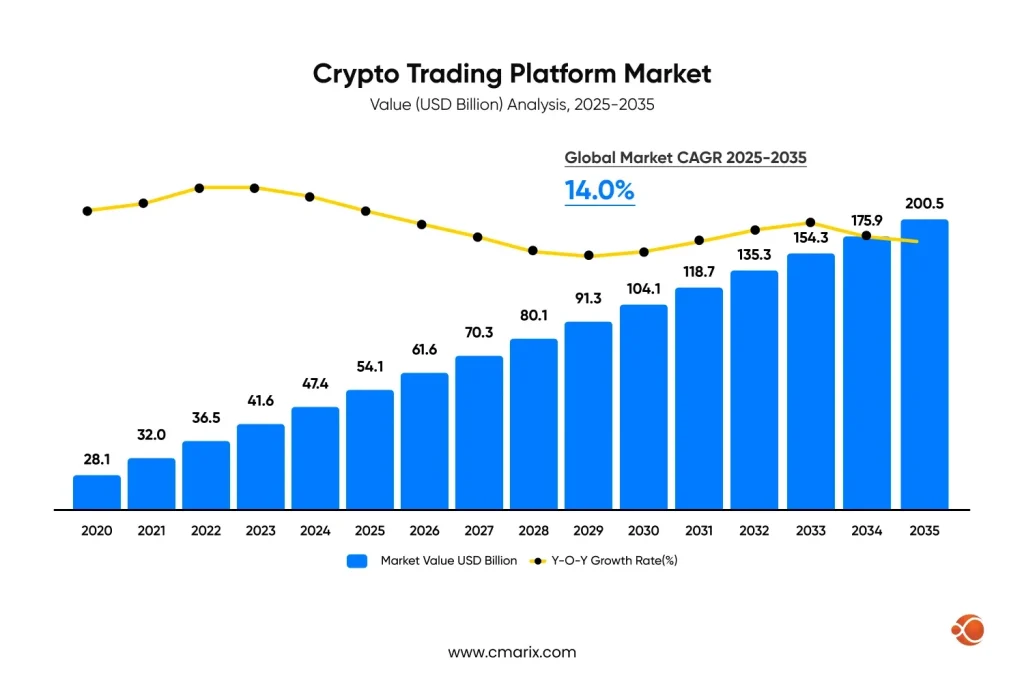
The crypto-trading platforms industry is expected to expand from $61.6 billion in 2026 to $200.5 billion in 2035 at a CAGR of 14.0%. Much of the fraud detection and encryption logic behind these wallets runs on Python, and our breakdown of Python for Fintech walks through why it’s become the language of choice for this kind of infrastructure.
Core features
- Multi-currency wallet support
- Cold storage integration
- Biometric and two-factor authentication
- Real-time price tracking
- Built-in exchange functionality
10. Regtech and Compliance App
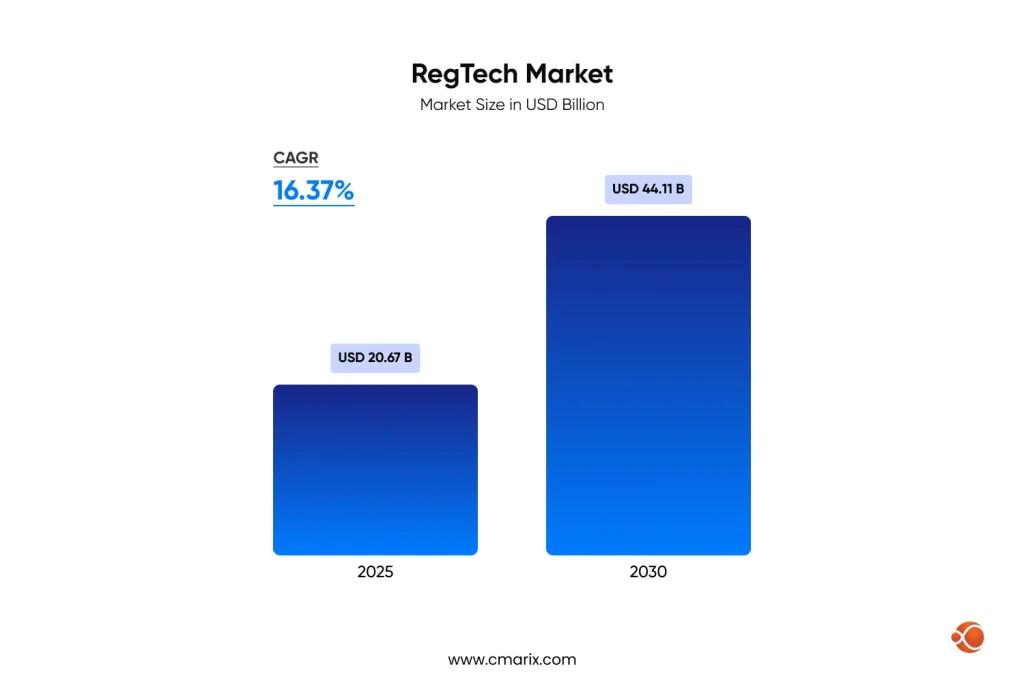
Regtech applications assist the finance industry in staying compliant with the changing regulations without requiring armies of compliance experts. These applications analyze the constantly changing regulations, highlight risks, conduct compliance analysis, and convert all these requirements into actionable tasks that need to be performed by the businesses. The worldwide regtech market is expected to reach $44.1 billion by 2030 with an estimated growth rate of 16.4%.
Core features
- Automated regulatory monitoring
- Risk scoring
- Audit trail documentation
- Automated reporting
- Integration with existing compliance workflows
11. Micro-Investing and Round-Up Savings App
The principle behind micro-investing apps is that they allow one to invest the pennies from daily transactions by rounding the amount up to the nearest dollar. It is a convenient way to get started with investing for the kind of people who would not even have an investment account otherwise.
Core features
- Automatic round-up calculation
- Fractional share investing
- Recurring micro-deposits
- Portfolio diversification options
- Goal-based savings tracking
12. Credit Scoring and Monitoring App
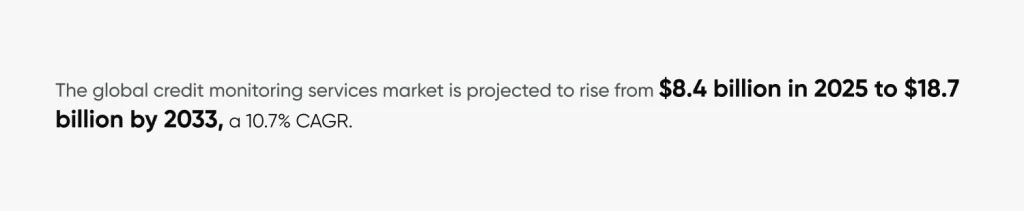
Credit apps give users visibility into their credit score and the factors moving it, often for free, and increasingly help people build credit from scratch by reporting rent, utility, or subscription payments to the bureaus.
For a look at how this space plays out with cash-advance-adjacent products, our piece on Apps Like MoneyLion covers the competitive landscape well.
Core features
- Free Credit Score Monitoring
- Reporting of Credit Bureau to Tenants
- Personalized Tips for Improvement
- Credit Alerts
- Identity Theft Alerts
13. Payment Gateway and Merchant Payment App
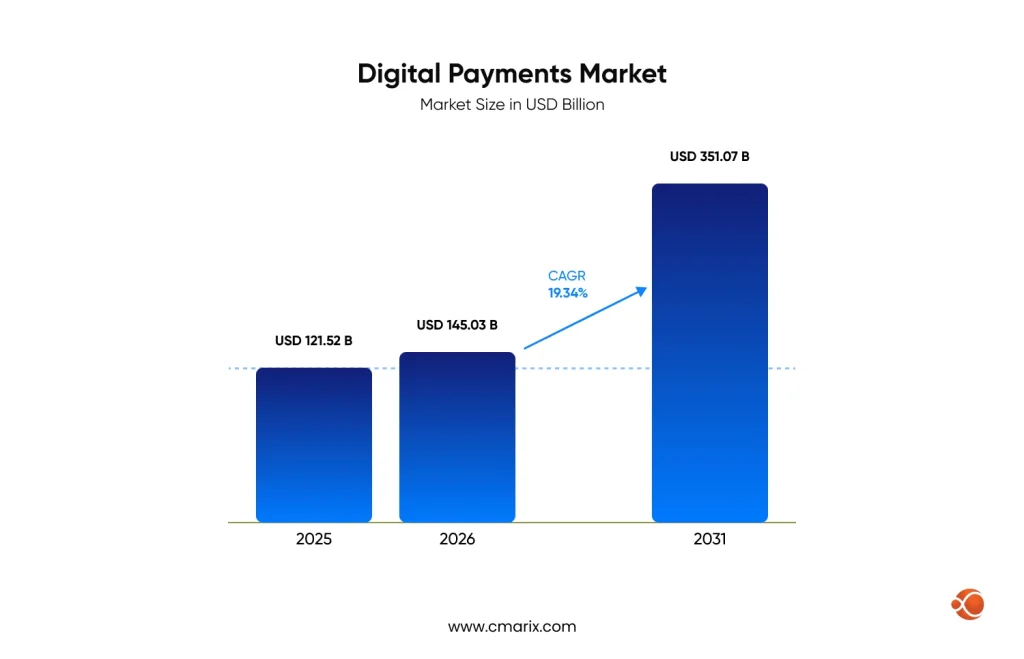
Payment gateway apps sit between a merchant and the customer’s bank, processing card and digital wallet transactions securely at checkout. For a startup, this is a technically demanding but high-value category since every e-commerce and point-of-sale business needs one, and the digital payments market is projected to grow from $145.03 billion in 2026 to $351.07 billion by 2031, a 19.34% CAGR.
Core features
- Multiple payment methods
- Compliance with PCI DSS
- Fraud detection during checkout
- Reporting on settlements
- Merchant API
14. Bill Payment and Utility App
Bill payment apps consolidate a user’s recurring payments like rent, electricity, phone, and subscriptions into one place with reminders and one-click payment. It’s a simple concept, but it solves a real pain point for anyone juggling more than a handful of monthly bills.
Core features
- Bill calendar with due date reminders
- One-time payment processing
- Recurring payment processing
- Spending categorization
- Multi-biller billing
15. Remittance and Cross-Border Payment App
Remittance apps let users send money internationally at a fraction of the cost and time of traditional wire transfers or money transfer operators. For migrant workers sending money home, the difference between a 1% and an 8% fee is significant, which is exactly why this category continues to attract new entrants.
Core features
- Real-time exchange rate display
- Multi-currency support
- Low-fee transfer processing
- Delivery tracking
- Compliance with international AML regulations
16. Open Banking App
Open banking apps are applications that take advantage of API access provided by banks to aggregate information about accounts held with various banks on one platform or allow third-party companies to make payments from the bank accounts of users. This type of application has been created due to the fact that regulations require banks to share such information with authorized third parties.
Core features
- Secure bank API integration
- Account aggregation across institutions
- Consent management dashboard
- Transaction categorization
- Payment initiation services.
17. Tax Filing and Management App
A tax app helps one to file their tax, but in a business-oriented application, they assist one to keep track of deductions and estimated payments all year long rather than during the busy filing period. The best tax applications make an annual headache into a regular accounting task.
Core features
- Guided filing workflows
- Automatic deduction identification
- Document upload and OCR scanning
- Estimated tax calculation
- E-filing integration.
18. Fraud Detection and Risk Management App
Fraud detection applications leverage AI and behavioral analytics to detect potential fraudulent activity before any money is transferred. Financial institutions and fintech companies purchase such services rather than developing them on their own, which makes it an excellent opportunity for a B2B fintech business model.
Core features
- Real-time transaction monitoring
- Behavioral anomaly detection
- Risk scoring engines
- Automated alert generation
- Case management dashboards for fraud teams.
19. Crowdfunding App
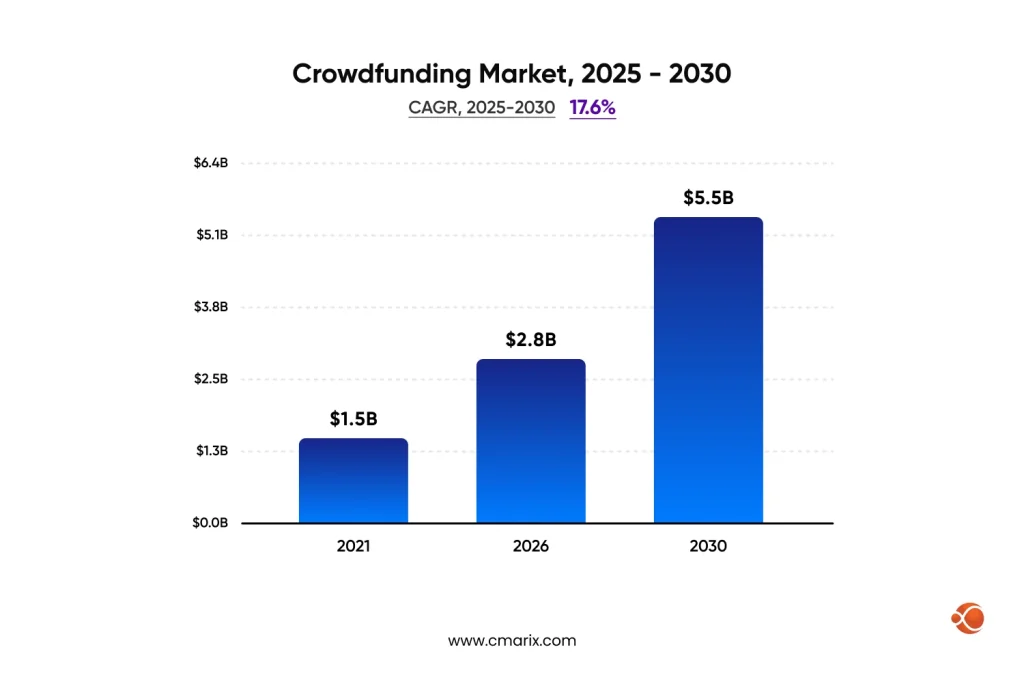
Crowdfunding applications allow entrepreneurs to generate funding by tapping into a group of people rather than traditional sources of investment. While there are some general platforms like Kickstarter, others focus on specific niches such as creativity, non-profit ventures, or early-stage startups through equity-based crowdfunding. The global crowdfunding industry is expected to increase from $2.14 billion in 2024 to $5.53 billion in 2030, growing at a CAGR of 17.6%.
Core features
- Systems for creating and managing campaigns
- Systems for secure transactions
- Communication with investors
- Progress tracking towards fundraising targets
- Validation of investors in equity crowdfunding
20. Digital Mortgage App
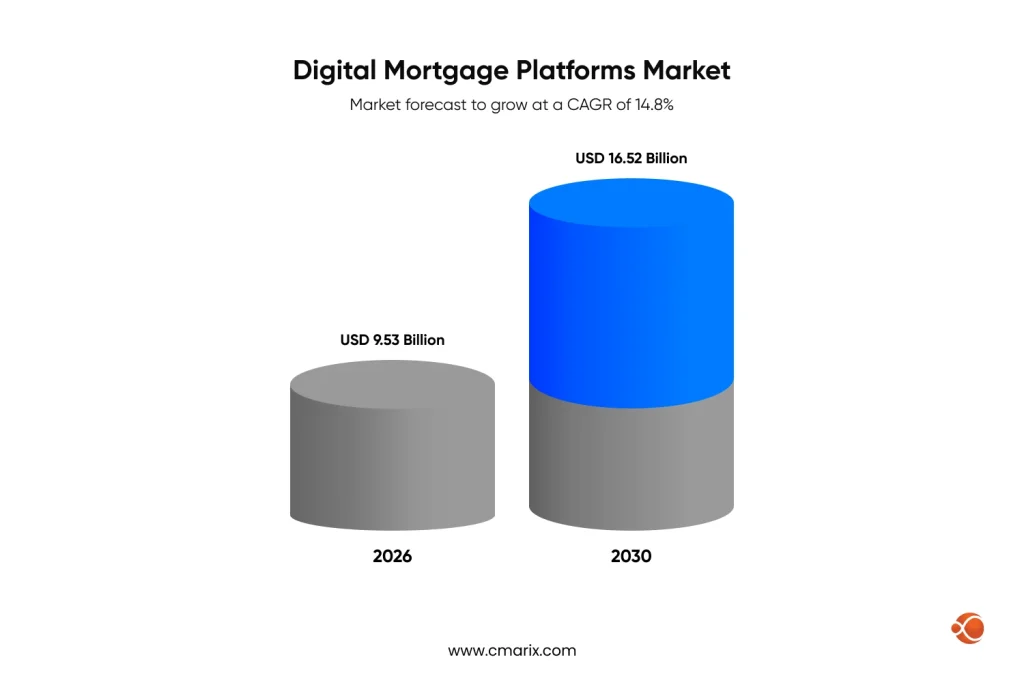
Digital mortgage applications automate the conventional paperwork-filled mortgage application process through an easier digital application process, automated underwriting, and faster funding. Borrowers can better understand where they stand during each stage of the mortgage process, while lenders can process more mortgage applications without necessarily growing the number of people at their disposal at the same speed. The digital mortgage platform market size is expected to increase from $9.53 billion in 2025 to $16.52 billion in 2030.
If cost planning is part of your evaluation, our guide on mobile banking app development cost gives a useful reference point for budgeting a similarly complex fintech build.
Core features
- Secure document upload and e-signature
- Automated underwriting engine
- Credit bureau integration
- Real-time application status tracking
- RESPA and TILA compliance support.
Key Features of Top Fintech Apps to Include in Your Build
Whatever category you build in, a handful of features show up across nearly every successful fintech app.
- Login authentication and security: Biometric login, two-factor authentication, and OTP verification have become essential features of mobile finance apps that are required for users to place trust in an application and entrust it with handling their finances.
- Real-time alerts: Users need real-time alerts about any transaction confirmation, bills, and suspicious activity in the account. The more time elapses between the event and the alert, the lower the level of trust becomes.
- Integration with banks and cards: The presence of integration with banks and cards through Plaid, Yodlee, or API directly from banks makes the application useful for users.
- Personalized experience with the use of AI: The use of artificial intelligence is important for analyzing user behavior and transactions, providing suggestions based on this analysis, generating spending insights, and more.
- Regulatory compliance: KYC, AML, PCI DSS, and region-specific data protection rules must be taken into account from the very beginning of development; otherwise, the cost of implementation will increase sharply.
- Customer support access – Whether it’s an AI chatbot for quick questions or a direct line to a human for account issues, users managing their money want to know help is there if something goes wrong.
Why Choose CMARIX for Fintech App Development
Building a fintech app isn’t just about a clean UI and a solid feature list. It demands airtight security, market-specific regulatory compliance, and integrations with banking and payment infrastructure that can’t afford downtime. CMARIX has spent years building exactly this kind of software.
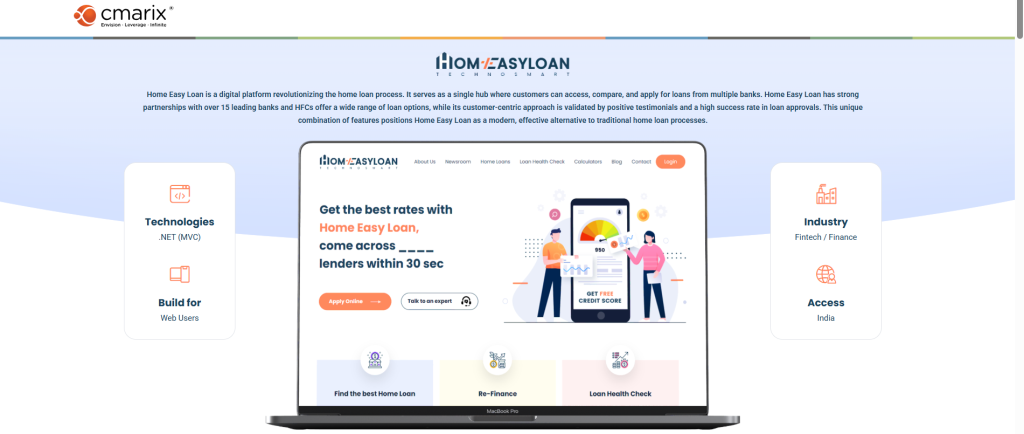
Our work on Home Easy Loan, a digital home loan aggregator that connects customers with over 15 partner banks and HFCs on a single platform, involved building the loan comparison tools, EMI calculators, and bank API integrations that have since helped more than a million users find and compare home loans, the same rigor we bring to every fintech engagement, whether it’s a P2P payment app or a full digital banking platform.
Whether you’re exploring custom financial software development for a specific niche or need a broader software product development company to take an idea from concept to launch, our team brings the compliance-first mindset fintech products require.
FAQs About Fintech App Ideas and Fintech Startups
What are the top fintech apps currently leading the market?
Leaders in each category:
Venmo and PayPal are category leaders for peer-to-peer payments, while Coinbase and Robinhood rule trading and cryptocurrencies, respectively. Neobanks such as Revolut and Chime are the leaders in digital banks.
Leadership is constantly changing due to the emergence of newcomers who compete via UX, fees, and niche products.
What are some profitable fintech app ideas for startups?
BNPL, digital wallets, and regtech tend to offer strong margins because they serve high transaction volumes or sell into businesses with real compliance budgets. Niche personal finance and credit-building apps also do well by serving underserved segments that larger players ignore.
What is the difference between traditional banking and fintech apps?
The traditional model relies on brick-and-mortar branches, old infrastructure, and generally slower delivery, whereas fintech applications can rapidly iterate, are fully digital, and are built to satisfy one specific user requirement and not the whole range of needs. The other difference is that fintech applications often collaborate with licensed banks rather than being banking organizations themselves.
How do I start a fintech company with a unique app idea?
Start by validating the problem with real users, then map out the regulatory requirements for your specific niche since compliance shapes your entire technical architecture. From there, partner with a fintech-experienced development team to build a compliant MVP rather than trying to launch a full-featured product on day one.
Which fintech apps are best for personal finance management?
Applications that automatically combine accounts, categorize expenses without needing any effort from the user, and provide free credit scores tend to have more retention. Applications that not only track but also encourage their users tend to be more effective in this category.
What are the most popular types of fintech applications?
Peer-to-peer payments, digital wallets, investment/trading apps, and finance apps have the most user adoption, which is primarily due to the fact that these applications deal with day-to-day issues and not specialized problems.
What are the key security features required in a fintech app?
The above security measures constitute the bare minimum requirements for any application. Depending on the features of the application, meeting standards such as PCI DSS, KYC/AML, and regional data privacy laws would be mandatory as well.