


Quick Summary: Choosing a headless CMS over WordPress gives you more freedom to design your website. Traditional tools like WordPress lock your front design and back data together. A headless system separates them. This change makes your website load much faster, protects it from hackers, and lets you share content across apps and sites easily.
To stay successful, every business must continuously evolve and grow. Today, organizations across all industries prioritize adapting to constantly changing dynamics. As part of this digital transformation race, companies have established a massive online presence using attractive, highly responsive websites and user-friendly mobile applications to connect with customers. Looking for WordPress development services from CMARIX?
Brands are increasingly recognizing the advantages of a Headless CMS Over WordPress, which allows for more customization and flexibility. many companies are shifting to a Headless CMS Over WordPress to enhance their digital strategies and improve user experience.
Choosing a Headless CMS Over WordPress can streamline content management processes significantly. understanding the differences between WordPress and a Headless CMS Over WordPress is essential for making informed decisions.
However, what truly defines the future of a business is how efficiently these platforms are managed. The biggest challenge lies in managing content effectively across both websites and apps.
A Headless CMS Over WordPress offers a level of flexibility that can enhance website performance and user engagement. implementing a Headless CMS Over WordPress can address many of the limitations faced by traditional CMS platforms.
With a Headless CMS Over WordPress, businesses can achieve a more modern and responsive web architecture.
To find the best solution, we must evaluate how traditional platforms work compared to newer alternatives, analyzing WordPress, the long-standing giant of the CMS world, against its headless CMS competitors.
About WordPress
Switching to a Headless CMS Over WordPress allows for seamless integration with various digital platforms.
One of the most popular Content Management Systems (CMS) available today is definitely WordPress. WordPress commands a massive presence in the market, powering roughly 43.4% of all active websites globally, translating to roughly 332 million live sites. Within the CMS market alone, it maintains a dominant 62.8% market share.
However, despite its extensive usage, websites must become increasingly dynamic to match changing business demands. Traditional coupled architectures like WordPress are facing new pressures; for example, data highlights that 58% of modern alternative platforms pass Google’s Core Web Vitals compared to just 42% of WordPress sites due to standard monolithic overhead. Traditional setups push static content publishing down a predefined pipeline, meaning a business looking to leverage complex digital ecosystems often struggles to execute bespoke features natively. This has driven an influx of companies seeking specialized WordPress development services from CMARIX to bypass these technical limitations.
The expansion of the market for Headless CMS shows clearly how developers value products which are better than the ordinary WordPress systems. Many developers are switching to a Headless CMS from WordPress because of the efficiency in delivering content through various channels.
On the websites on WordPress, a business can not utilize distinct features. Several products are available in the market, however. These provide better content management systems to the organizations. Headless content management system software is one such player.
Let us have a look at the WordPress alternatives now. The alternatives are gaining massive momentum in the marketplaces.

About Headless CMS

Stakeholders frequently ask why they should shift away from an established giant like WordPress toward a headless configuration. Market trends answer this clearly: the global headless CMS software market is rapidly expanding, projected to surge from $3.94 billion to over $22.28 billion at an aggressive compound annual growth rate of roughly 21%.
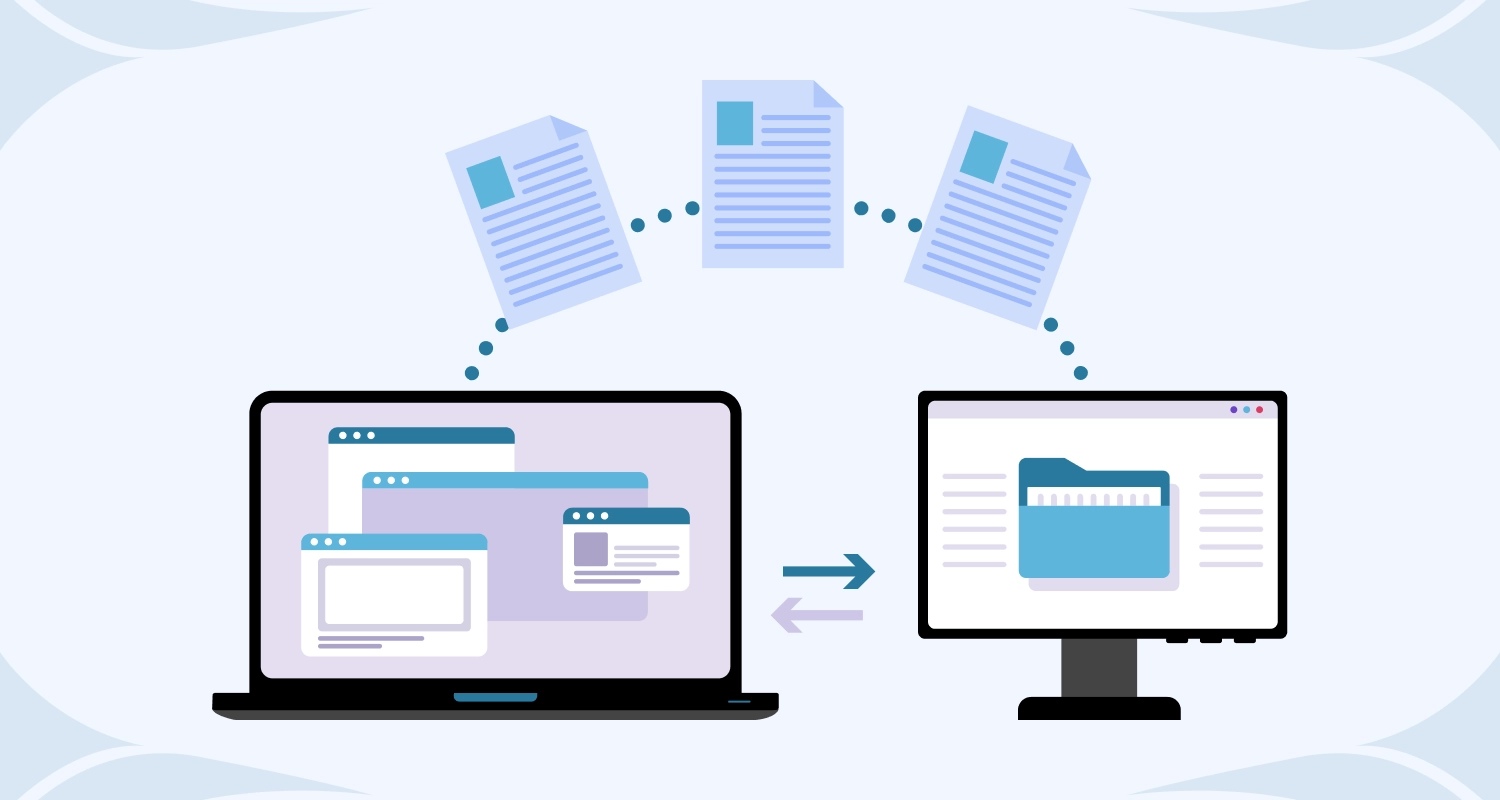
A headless CMS is a back-end-only content management repository. Its core advantage is separating content creation from the presentation layer. By serving structured data natively through an API, it lets businesses push content smoothly across any device ecosystem, including mobile apps, smart devices, and modern web frameworks, without being chained to a built-in front-end layout.
Let us focus on the challenges of WordPress to understand the factors that will propel the demand for headless development.
Challenges with WordPress
The shift toward modern alternative architectures is driven by three major hurdles associated with traditional WordPress setups:
- Limited Architectural Flexibility: Monolithic systems are highly restricted when integrating complex enterprise software like localized logistics, custom CRMs, or heavy e-commerce frameworks. Because WordPress runs on low-level PHP and interconnected database structures, building and keeping up custom additions requires complex, low-level coding from scratch.
- Security & Plugin Dependencies: Traditional sites heavily rely on external plug-ins for core features, introducing major administrative bloat. Security is a growing issue; recent audits show traditional systems suffer thousands of vulnerabilities annually, with 96% of those risks stemming directly from third-party plugins.
- Skyrocketing Enterprise Costs: While open-source frameworks are nominally free, scaling them for large organizations becomes exceptionally pricey. Enterprise-tier managed hosting and support plans routinely jump from a basic small business tier of $25 per month to between $5,000 and $25,000 every single month.
WordPress website builders have limited flexibility. WordPress is mainly utilized by non-technical folks. There are constantly newer WordPress updates, though. Specific requirements are there for several medium and large-scale organizations. These have specific requirements that are required to be integrated into the website.
Either it can be CRM integration, localization solutions, E-commerce as well as logistic solutions. Specific coding absolutely is required by these solutions and features. This is not possible in WordPress. The little to no coding of WordPress does not happen in the platform of WordPress. This is the second.
Instead, in plain PHP and database, it is done. For the developers, this low-level coding makes it harder for maintenance. Also, they have to work more from absolute scratch.
Read More: How to Boost the Speed and Performance of Your WordPress Website?
Content Authoring is limited
Various themes and plugins which might make a website appealing are hugely offered by WordPress. These WordPress plugins and themes are stock which is provided as a package to the user however it is. If the package does not cater to the user’s requirements, then they have to code nevertheless. As mentioned above, coders are not the majority of WordPress users.
The Support for Vendors is Pricey
For WordPress, vendor support can be really expensive for companies. An organization might not choose to opt for hosting and support by third parties. The third parties usually use an open source such as wordpress.org. the organizations can instead go for commercial wordpress.com.
Overall, a Headless CMS Over WordPress provides strategic advantages that can enhance digital presence.
From as low as the US $25 per month for a small business, the standard pricing plan begins. This is categorized as a small business. For larger organizations, the prices can rise up from the US $5,000 every month to US $25,000 per month. The organizations are free to utilize third-party services. However, the quality and pricing will definitely differ mostly from one organization to the next.
For many businesses, a Headless CMS Over WordPress is becoming the preferred choice for content management. considering a Headless CMS Over WordPress might be essential for businesses aiming for future growth and scalability.
The advantages of using a Headless CMS Over WordPress will only continue to grow as technology evolves.
Hence, these are the three significant challenges that businesses think of while utilizing WordPress.
Better Software Architecture with Headless CMS
Headless CMS helps businesses to better achieve software architectures. This is an alternative to WordPress that allows businesses to separate CMS platforms and the content that is published or re-published. There is better security, scalability, as well as the availability of the CMS platform. The road for successful headless architecture is hence paved pretty easily.
There are a huge number of players in the marketplace that offer the best headless CMS to the clients looking at the demand for headless CMS.
Wrapping Up
Looking to hire WordPress developers? The center stone for the success of several websites over the years has been WordPress. The CMS platform is finding it extremely difficult to cope with the changing dynamics of digital business, however. The headless CMS is also designed in order to offer scalability to the users and also flexibility to cater to the dynamic demands of the content.
The content is utilized on the website. Therefore, it is much more likely to say that Headless CMS will soon replace WordPress over the coming decades.
Is Headless CMS better than WordPress?
A headless CMS is generally better for businesses that need multi-platform content deployment, faster page speeds, and custom frontend designs using JavaScript frameworks. WordPress remains a simpler option for non-technical users managing basic, template-driven websites.
Can you use WordPress as a headless CMS?
Yes, WordPress can function as a decoupled CMS by using its built-in REST API or the WPGraphQL plugin. This setup allows you to manage content in the WordPress dashboard while sending that data to a custom frontend application, though it still requires diligent server and security maintenance.
What are the main benefits of a Headless CMS over WordPress?
The core benefits include faster load times due to CDN-delivered JSON data, reduced security vulnerability risks, absolute frontend design freedom, and the ability to send content to multiple channels (web, mobile apps, and IoT devices) from a single dashboard.
Is a headless CMS more expensive than WordPress?
Initial development costs for a headless architecture are often higher because the backend and frontend are built separately. However, for growing enterprises, headless configurations can lower long-term costs by reducing server strains, preventing plugin dependencies, and eliminating expensive security maintenance.